

What is 12 inch bike good for
A 12-inch bike is good for a small beginner who measures about 34–40 in (86–102 cm), usually around ages 3–4, and can control it comfortably.
What “12 inch” tells you
The 12-inch measurement refers to the bicycle’s wheel size. It is a starting point for choosing a child’s bike, not proof that the whole bicycle fits. Two models with the same wheel-size label can still feel different when the child stands over them, reaches the controls and steers.
Use age only as an initial clue. For XBikes sizing, 12-inch bikes correspond to ages 3–4 and rider heights of 34–40 in (86–102 cm). A child outside that height range should be compared with the adjacent wheel sizes rather than placed on a 12-inch bike automatically.
Measure before choosing
Measure the child’s height without shoes, standing straight against a wall. Then measure inseam from the floor to the crotch while the child stands naturally. Height lets you select a likely wheel-size range; inseam helps you assess stand-over clearance and whether the child can put their feet down confidently.
After measuring, have the child try the exact bicycle. Check that they can:
- Stand over the bike without the frame pressing uncomfortably against them.
- Sit in a stable position and reach the handlebar without stretching or crowding.
- Turn the handlebar while remaining balanced and in control.
- Reach and operate the fitted brakes correctly with their hands or feet, as applicable to that exact model.
- Start, stop and put a foot down without panic or loss of control.
Do not buy an oversized bicycle solely for the child to grow into. A bike that is difficult to mount, steer or stop is not made suitable by its longer potential lifespan.
Compare 12, 14 and 16 inches
| Wheel size | XBikes age starting point | Rider height starting point |
|---|---|---|
| 12 Inch | Ages 3–4 | 34–40 in / 86–102 cm |
| 14 Inch | Ages 3–6 | 37–45 in / 94–114 cm |
| 16 Inch | Ages 4–7 | 40–48 in / 102–122 cm |
The overlapping ranges are deliberate comparison zones, not automatic answers. For example, a rider who is 39 in tall falls within both the 12-inch and 14-inch starting ranges. Try both exact bikes and choose according to stand-over fit, reach, brake control and confidence. At 40 in, all three ranges meet, making an individual fit check especially important.
A 12-inch bike may be too small if the child is cramped, cannot steer freely or has already exceeded its height range. A larger listed size may still be too large if the child struggles to stand over it, reach its controls or stop confidently.
How the supplied bikes help with the comparison
The three catalog options are relevant because each is offered with 12 Inch, 14 Inch and 16 Inch SKU labels. That makes them useful for comparing the requested 12-inch size with adjacent sizes while staying within the same listed product. Their supplied categories also distinguish training-wheel models from a kids’ BMX model; those labels describe the products, but they do not replace an in-person fit check.
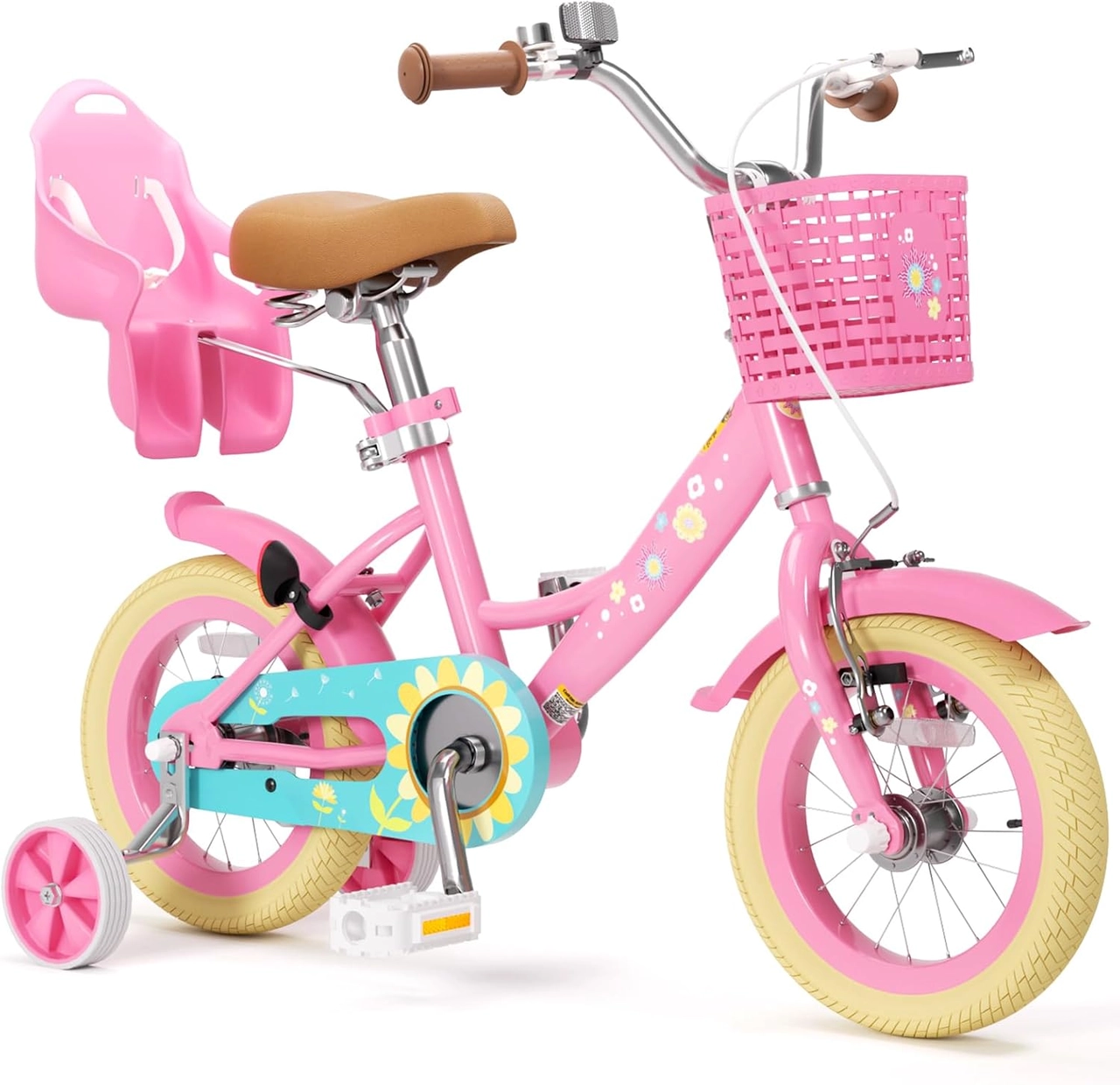 Flower Pink XJD Girls Bike with Doll Seat & Basket
A Training Wheel Bike offered in 12 Inch, 14 Inch and 16 Inch SKU labels, making it relevant for comparing the requested size with adjacent options after measuring the rider.
 Purple XJD Girls' Bike with Doll Seat & Basket
This Training Wheel Bike lists 12 Inch, 14 Inch and 16 Inch choices, so parents can compare size labels while prioritizing the child’s measured fit and control.
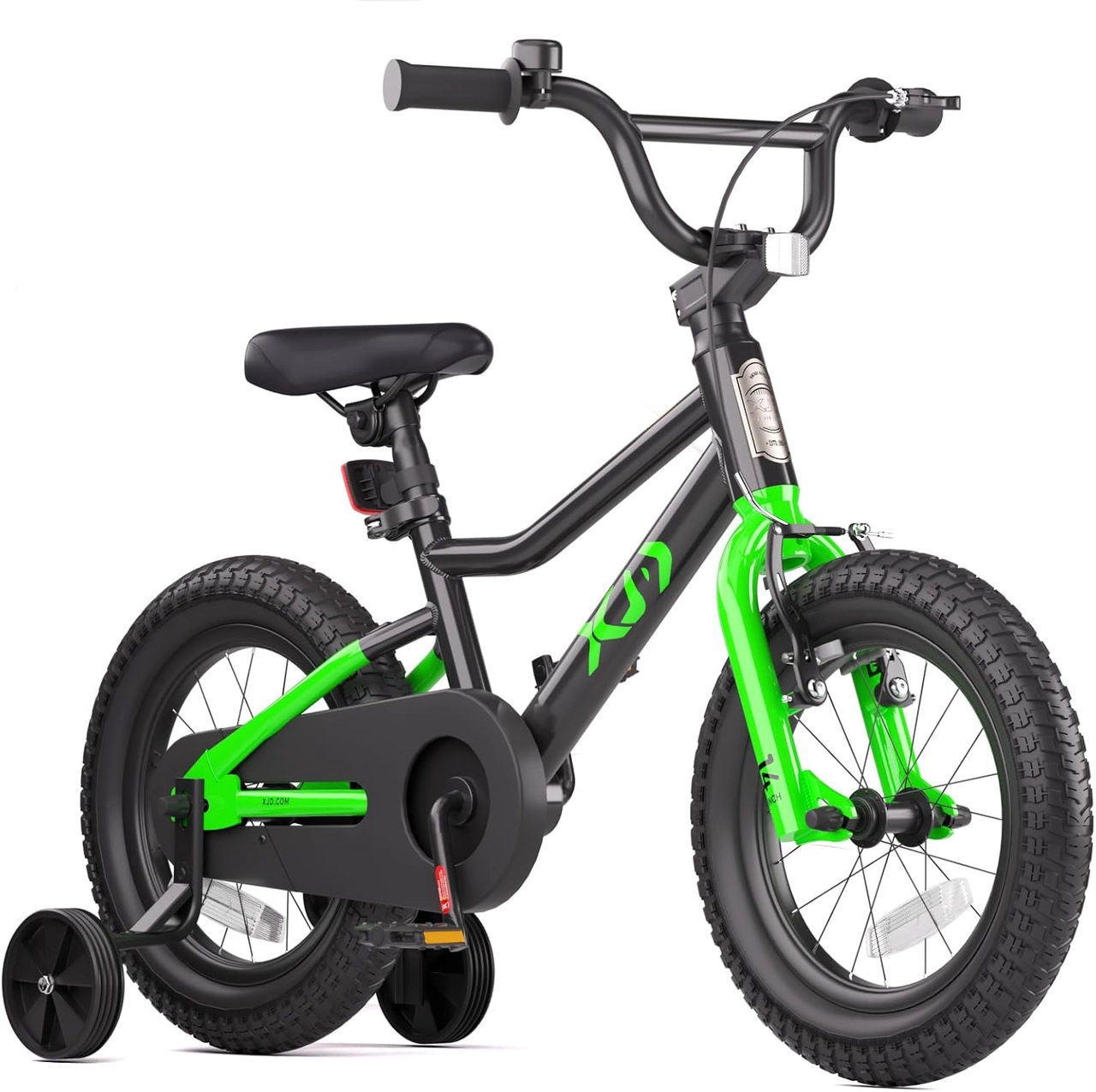 Black XJD Kids' BMX Bicycle with Training Wheels
A Kids' BMX Bike offered with 12 Inch, 14 Inch and 16 Inch SKU labels. Its category provides a style comparison, while individual fit determines the appropriate size.
Flower Pink XJD Girls Bike with Doll Seat & Basket and Purple XJD Girls' Bike with Doll Seat & Basket are categorized as Training Wheel Bikes. Both list 12 Inch, 14 Inch and 16 Inch options. Compare the exact selected SKU label rather than assuming every version has the same fit.
Black XJD Kids' BMX Bicycle with Training Wheels is categorized as a Kids' BMX Bike and likewise lists 12 Inch, 14 Inch and 16 Inch options. Its BMX category is a product distinction, not evidence that a particular child should choose a different size.
Before the first ride
Confirm that the delivered bicycle matches the selected wheel-size label, then follow the exact product manual for assembly, adjustments, maintenance, compatibility and any torque or load instructions. If the manual is unclear or the bicycle cannot be adjusted for confident control, use a qualified bicycle mechanic.
A bicycle helmet must fit properly, sit level and have its straps adjusted according to the helmet manufacturer’s instructions. A helmet does not correct a poor bicycle fit, so check the bike and helmet separately.
Your 12-inch decision
Start with a 12-inch bike when the rider measures 34–40 in (86–102 cm), then validate that starting point on the exact model. Measure height and inseam, compare 14-inch or 16-inch options where the ranges overlap, and watch the child stand, reach, steer and brake. Choose 12 inches only when it gives the child comfortable control today—not because age alone matches or a larger bike promises room to grow.
Bikes for your next adventure
-

Light Pink XJD Girls' Bicycle with Basket & Training Wheels
The Light Pink XJD Girls' Bicycle with Basket & Training Wheels is a retro-style…$109.99
$129.99 -

Kids Bike Helmet by XJD for Girls – Pink
The XJD Kids Bike Helmet in Pink is a lightweight multi-sport helmet for girls r…$59.99
$99 -

Blue XJD Kids Bike Helmet for Boys & Girls
The Blue XJD Kids Bike Helmet is a lightweight, adjustable multi-sport helmet fo…$59.99
$99