

What is the best e bike for teens
The best e-bike for a teen is one that fits the rider now: usually a 24-inch starting point at 54–64 inches tall, or 26-inch above 60 inches, followed by an individual fit check. Do not buy an oversized bicycle for future growth. The supplied XBikes products are conventional training-wheel bikes, not verified e-bikes, so they are not substitutes.
Start with the teen’s measured height
Measure the rider’s height without shoes, then use the XBikes ranges below only to choose a starting wheel size. Age overlaps between sizes and cannot settle the decision.
| Wheel size | XBikes age starting point | Rider height starting point |
|---|---|---|
| 20 Inch | Ages 7–12 | 48–60 in / 122–152 cm |
| 24 Inch | Ages 10–14 | 54–64 in / 137–163 cm |
| 26 Inch | Youth and adults | Over 60 in / 153 cm |
A teen near an overlap should try the actual bicycle rather than choosing from wheel diameter alone. A 24-inch bicycle may be the appropriate starting point for a shorter teen, while a rider over 60 inches can begin by trying a 26-inch model. These sizes are not interchangeable, and frame geometry can change how two bicycles with the same wheel size feel.
Check fit on the actual e-bike
Have the teen wear the shoes they normally ride in and try the complete bicycle. Check stand-over clearance, seated reach, and whether the rider can start, stop, turn and put a foot down without stretching or losing control. The rider should not need to lock the elbows or slide forward simply to reach the handlebar.
Ask the teen to operate every brake control comfortably from the normal riding position. Their hands must reach and use the controls confidently; height alone does not prove this. If stand-over, reach or brake operation is doubtful, try another frame or size. Do not accept poor present fit because the rider may grow into it.
Compare e-bike controls, not just wheel size
Once fit is sound, compare candidates during a supervised tryout. The teen should understand how assistance starts, changes and stops, and should be able to control the bicycle at low speed without surprise. Favor a model whose controls are easy for that particular rider to identify and operate while maintaining a stable riding position.
Also compare the intended riding environment, the teen’s current confidence, and access to competent service. Confirm that the bicycle is permitted for the rider and intended route under applicable local rules. For assembly, maintenance, load limits, component compatibility and torque, follow the exact product manual or use a qualified bicycle mechanic; those details cannot safely be inferred from appearance or wheel size.
What the supplied XBikes products can—and cannot—show
XJD Kids Bike for Girls – Pink, 12/14/16/20 Inch with Training Wheels is listed in Training Wheel Bikes and offers 12-, 14-, 16- and 20-inch SKU labels. XJD Pink Girls' Bike – Kids 12/14/16 Inch Training Wheel Bicycle is also listed in Training Wheel Bikes, with 12-, 14- and 16-inch labels.
These catalog options help define the smaller-wheel boundary in this decision: only the first reaches 20 inches, and neither offers the 24- or 26-inch starting points most relevant to teen sizing. More importantly, neither is identified in the supplied facts as an e-bike. They are comparison points for smaller training-wheel bicycles, not teen e-bike recommendations or substitutes.
 XJD Kids Bike for Girls – Pink, 12/14/16/20 Inch with Training Wheels
A training-wheel bicycle with 12-, 14-, 16- and 20-inch SKU labels. Its 20-inch option is a smaller-size comparison point, but supplied facts do not identify it as an e-bike.
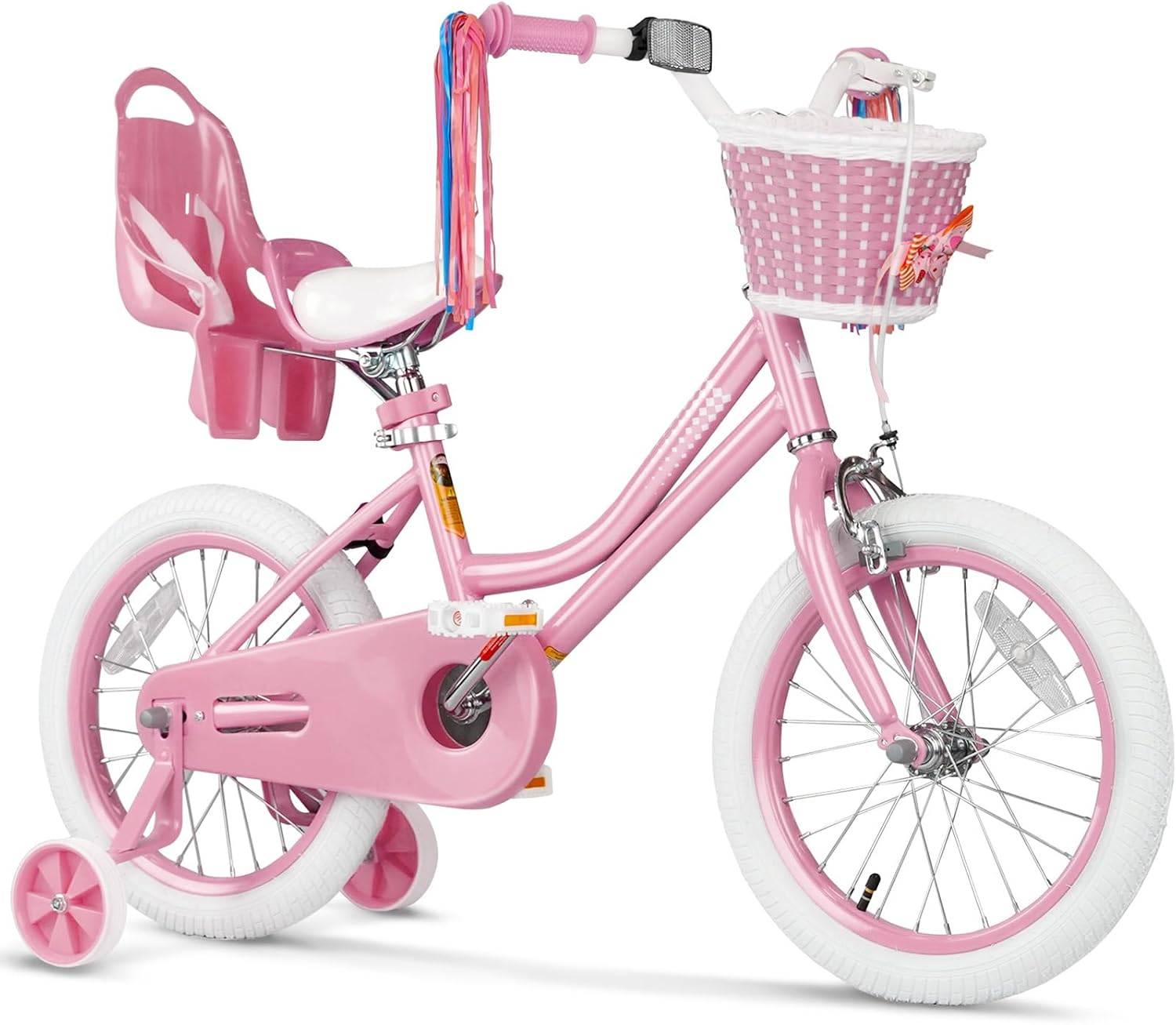 XJD Pink Girls' Bike – Kids 12/14/16 Inch Training Wheel Bicycle
A training-wheel bicycle offered with 12-, 14- and 16-inch SKU labels. These sizes sit below the main 24- and 26-inch teen starting points, and it is not identified as an e-bike.
Include the teen’s present riding ability
Two riders of equal height may need different frames or control setups because reach, hand control and confidence differ. Observe whether the teen looks ahead, steers a predictable line, brakes deliberately and remains composed when starting or stopping. If assistance makes these tasks less controlled, postpone the e-bike choice and build ordinary bicycle skills first.
Training wheels do not establish readiness for an e-bike. Because both supplied products are cataloged as Training Wheel Bikes, they are relevant only when the rider actually needs that category and fits an offered size. Their exact titles and SKU labels do not provide evidence of teen suitability.
Make the final decision safely
- Measure height and use 24 or 26 inches as the appropriate starting point from the XBikes table.
- Try the exact bicycle and reject any model with unsuitable stand-over, reach or brake control.
- Confirm the teen can manage its assistance controls calmly in the intended setting.
- Check the exact manual and applicable local riding rules before use.
- Choose and correctly fit a bicycle helmet that sits level, with straps adjusted according to the helmet manufacturer’s instructions.
The best e-bike for this teen is therefore the correctly sized, legally appropriate model they can control now—not either supplied training-wheel product unless the goal changes to a smaller, non-electric training-wheel bicycle and an individual fit check supports it.
Bikes for your next adventure
-

26-Inch XJD Beach Cruiser Bike for Girls – Purple, V-Brake
This XJD 26-inch purple beach cruiser is sized for big kids and teens — suggeste…$218.49
$229.99 -
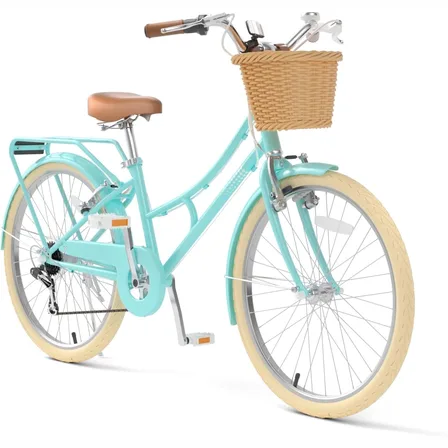
XJD Kids Beach Cruiser Bicycle, Rear Rack & V-Brakes, Mint Green
The XJD Beach Cruiser in Mint Green is a geared, multi-speed cruiser bike for ol…$179.99
$209.99 -
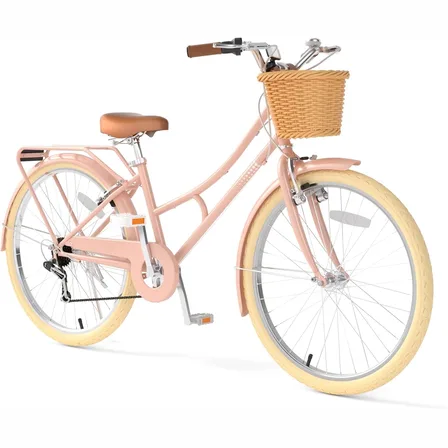
Pink XJD Beach Cruiser Bike, 24"/26", U-Brake
The XJD Pink Beach Cruiser Bike is a single-speed cruiser built for older kids a…$159.99