

What is the best infant child baby bike trailer
The best infant child baby bike trailer is one that explicitly permits your child’s size and developmental stage, fits the towing bicycle, and can be used exactly as its manual directs. No supplied XBikes product is a trailer, so this page provides a selection checklist rather than naming an unverified model.
Start with your child, not the trailer’s marketing
Before comparing trailers, measure your child’s current height and weight and note how well the child can sit and hold their head steady. Ask the trailer manufacturer whether the exact model permits a child at that developmental stage. Terms such as infant, baby and child are not enough by themselves to establish suitability.
Check the exact manual for minimum and maximum passenger requirements, seating instructions, harness adjustment and whether any manufacturer-approved infant support is required. Do not add an unapproved insert, car seat or homemade padding. If the manual is missing or unclear, contact the manufacturer or choose another model.
Measure the passenger space and harness fit
A usable trailer must fit the child today while leaving the restraints and enclosure in their intended positions. Compare your measurements with the manufacturer’s stated limits and inspect these points with the child seated:
- Head clearance: The child’s helmet and head should not press against the frame or canopy.
- Shoulder and hip room: The child should sit in the designed position without being squeezed or shifted sideways.
- Harness placement: Straps should lie where the manual shows, remain untwisted and adjust securely.
- Leg space: Feet and legs should remain inside the passenger compartment and away from moving parts.
A bicycle helmet must fit properly, sit level and use its straps according to the helmet manufacturer’s instructions. Confirm that the trailer manual permits the intended helmet and seating arrangement.
Compare the trailer-to-bike connection
The best trailer is not useful if its hitch is incompatible with your bicycle. Record the towing bike’s exact model, wheel size, axle or hub arrangement, braking setup, and any rack, stand or other hardware near the attachment area. Then compare those details with the trailer manufacturer’s compatibility instructions.
Inspect how the hitch, retention device and trailer arm are intended to connect. Use only specified adapters and hardware. For assembly steps, fastener torque, maintenance intervals, passenger or cargo load limits, and bicycle compatibility, follow the exact product manuals or ask a qualified bicycle mechanic. Do not guess at an adapter or fastening procedure.
Evaluate use beyond basic fit
Compare models by decisions you can verify in their documentation: permitted passengers, harness arrangement, hitch compatibility, enclosure operation, storage or folding procedure, replacement-part availability, and required inspections. Consider the routes you actually expect to ride. Your towing bicycle must remain controllable during starts, turns and braking; stop using the combination if handling feels uncertain.
Before every outing, follow the trailer and bicycle manuals’ inspection instructions. Confirm that attachments and restraints are positioned as directed, the tires are serviceable, and nothing can contact a wheel. Practice with the empty trailer in a traffic-free area before carrying a child. If fit, assembly or handling remains doubtful, have the complete setup checked by a qualified bicycle mechanic.
How the supplied XBikes option relates
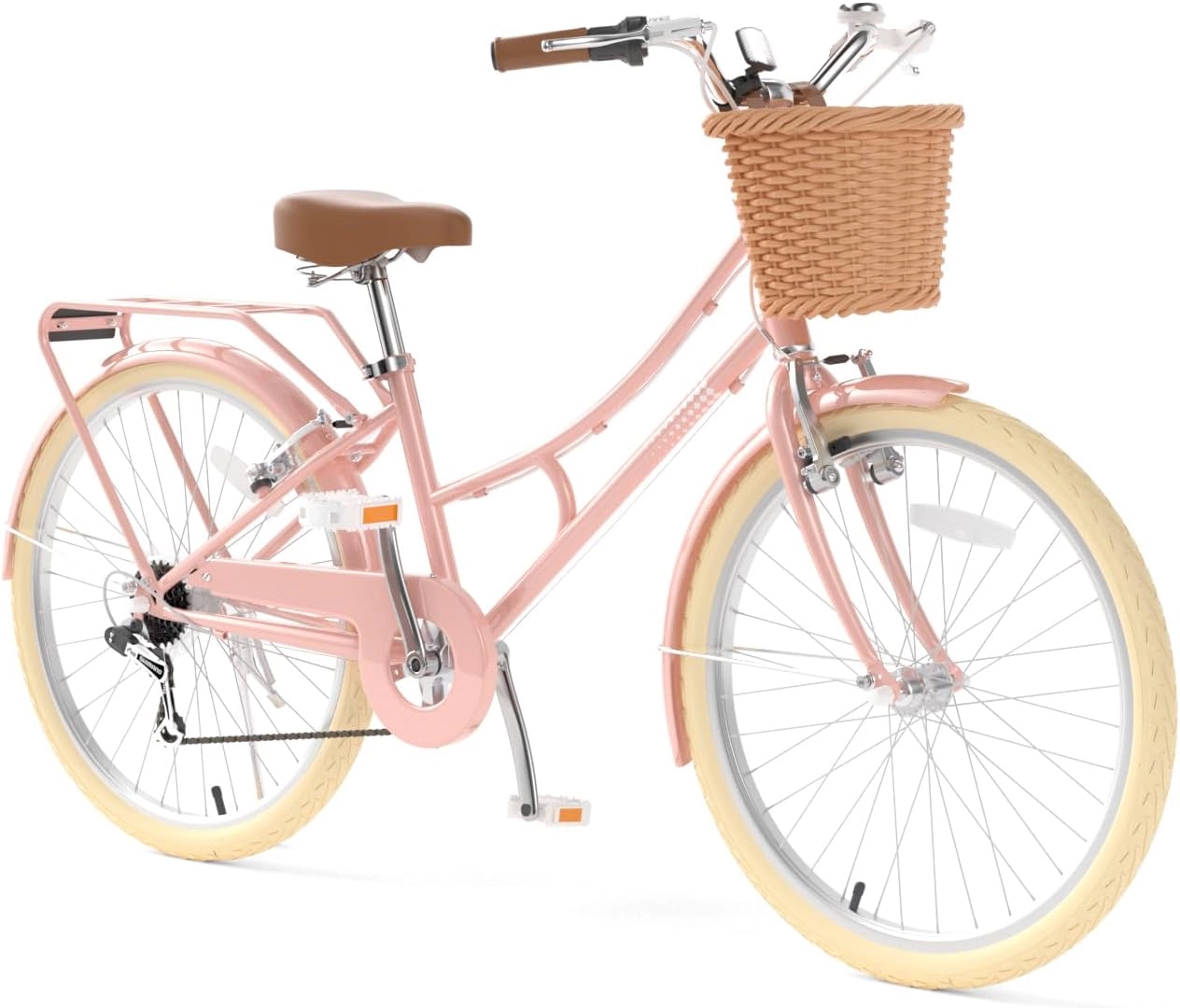
The supplied catalog contains one bicycle rather than an infant trailer: the XJD Pink Beach Cruiser for Girls – Rear Rack & V-Brake. Its catalog facts identify a rear rack, V-brake and 20 Inch, 24 Inch and 26 Inch SKU labels. Those details make it a comparison point for recording a possible towing bicycle’s configuration, but they do not establish trailer compatibility, passenger suitability or a complete towing setup.
This particular catalog option helps answer the title only by showing why wheel size and visible equipment cannot replace a hitch and manual check. It is not an infant trailer, and its listed sizes are nearest-category comparison points rather than substitutes for the requested product.
If the child will ride independently instead
If your real goal is a child’s own bicycle rather than a trailer, measure rider height and complete an individual fit check. XBikes uses these wheel-size starting points:
| Wheel size | Starting age | Rider height |
|---|---|---|
| 12 Inch | 3–4 | 34–40 in / 86–102 cm |
| 14 Inch | 3–6 | 37–45 in / 94–114 cm |
| 16 Inch | 4–7 | 40–48 in / 102–122 cm |
| 18 Inch | 5–9 | 43–52 in / 109–132 cm |
| 20 Inch | 7–12 | 48–60 in / 122–152 cm |
| 24 Inch | 10–14 | 54–64 in / 137–163 cm |
| 26 Inch | Youth and adults | Over 60 in / 153 cm |
Height is more useful than age alone. Have the rider try the bicycle and check stand-over clearance, reach, brake control and current confidence. Do not buy an oversized bicycle merely for growth.
Make the final trailer decision
Choose only after you can answer four questions with the exact manuals: Is your child permitted and properly restrained? Is there adequate seated clearance? Is the hitch compatible with the specific towing bicycle? Can you assemble, inspect and operate the combination exactly as directed? If any answer is unknown, do not treat the trailer as the best choice yet; obtain the documentation or a mechanic’s fit check first.
Bikes for your next adventure
-

Kids Bike Helmet by XJD for Girls – Pink
The XJD Kids Bike Helmet in Pink is a lightweight multi-sport helmet for girls r…$59.99
$99 -

Blue XJD Kids Bike Helmet for Boys & Girls
The Blue XJD Kids Bike Helmet is a lightweight, adjustable multi-sport helmet fo…$59.99
$99 -
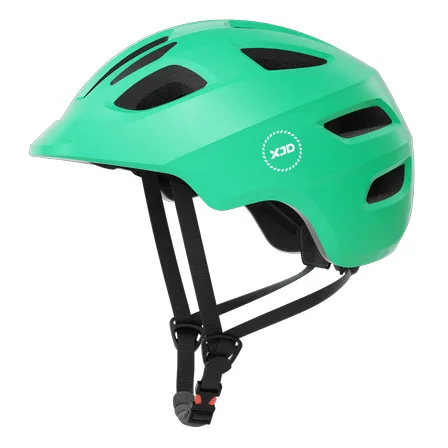
Green XJD Kids Bike Helmet for Boys & Girls
The Green XJD Kids Bike Helmet is a lightweight multi-sport helmet for toddlers …$59.99
$99