

What kids bicycle trailer has a solid floor
A kids bicycle trailer has a solid floor only if its manufacturer describes a rigid, load-supporting base under the passenger area. None of the supplied XBikes products is a trailer, so no specific trailer can be confirmed here.
What “solid floor” should mean
Do not rely on a photograph or on words such as reinforced, supportive or footwell. A fabric footwell suspended from the frame is not necessarily a solid floor. Look for an explicit statement in the exact trailer’s product documentation that the passenger compartment has a rigid or hard base.
The documentation should also make clear whether that base spans the whole passenger area or protects only a smaller footwell. If the description is ambiguous, ask the manufacturer to identify the floor construction in writing before buying.
Measure the child and the intended load
Measure rather than estimating. With the child seated naturally, record seated height from the sitting surface to the top of the head, shoulder width, hip-to-knee length and shoe-to-knee height. Compare those measurements with the trailer’s internal seat width, headroom, legroom and harness positions.
Then account for every passenger and permitted item you expect to carry. Use only the manufacturer’s stated passenger, cargo and total load limits. Do not infer capacity from the apparent thickness of the floor or from the number of seats.
- Check that the helmet has clearance from the roof and rear panel.
- Confirm that knees, shoes and shoulders do not press against the enclosure.
- Verify that the harness positions correctly for each passenger.
- Check whether cargo has a separate approved area and securing method.
Compare the floor, frame and everyday access
A solid base is only one part of the decision. Compare how the floor attaches to the frame, whether the manual permits it to be removed, and how the manufacturer says it should be inspected and cleaned. Look underneath for exposed damage, sharp deformation or missing attachment points before each use, following the manual’s inspection instructions.
Also examine the entry opening and seat arrangement. A rigid base may make footing more predictable while loading, but it does not prove that a trailer is stable, compatible or appropriate for a particular child. Never treat floor construction as a substitute for the complete operating instructions.
Confirm bicycle and hitch compatibility
Before choosing a trailer, identify the towing bicycle’s exact make, model, wheel size, axle or mounting arrangement, and any accessories near the proposed hitch location. Compare those details with the trailer and hitch documentation. If compatibility, assembly, load limits or torque requirements are absent or unclear, use the exact product manual or ask a qualified bicycle mechanic.
Do not improvise adapters, mounting points or fastener settings. After correct assembly, perform the manual’s prescribed checks and practice starting, stopping and turning without a passenger before carrying a child. A properly fitting bicycle helmet should sit level and use its straps according to the helmet manufacturer’s instructions.
Why the listed XBikes bicycles are comparison points only
The catalog choices below help define what is—and is not—being selected: they are children’s bicycles in 12 Inch, 14 Inch and 16 Inch sizes, not bicycle trailers. Their listings provide no trailer-floor, hitch, passenger-capacity or towing-compatibility facts. They may be relevant only if the separate decision is to choose a bicycle for a child to ride independently.
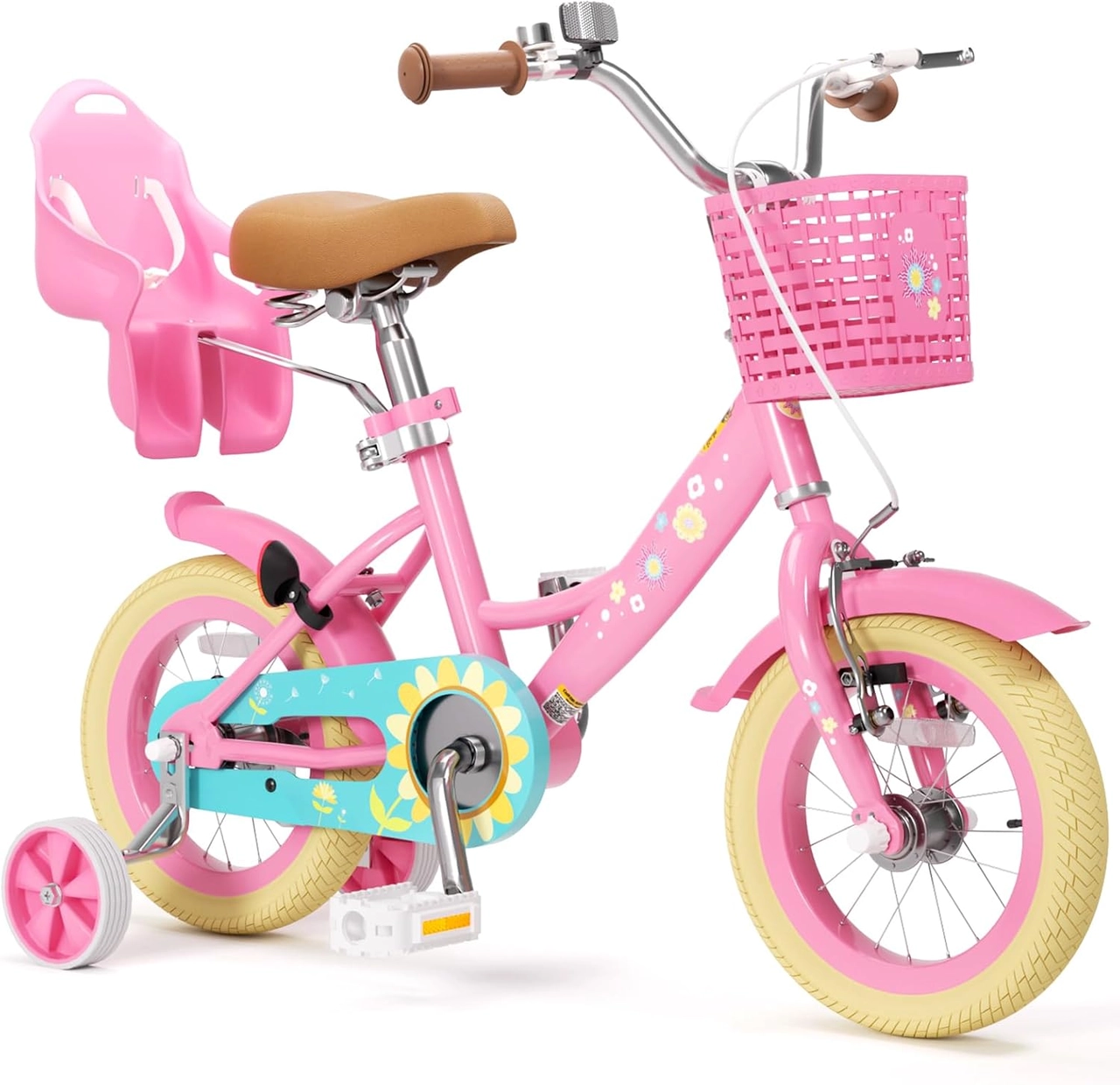 Flower Pink XJD Girls Bike with Doll Seat & Basket
A Training Wheel Bike offered in 12 Inch, 14 Inch and 16 Inch labels. It is relevant only as an independent-riding comparison; supplied facts do not identify it as a trailer or establish towing compatibility.
 Purple XJD Girls' Bike with Doll Seat & Basket
This Training Wheel Bike has 12 Inch, 14 Inch and 16 Inch SKU labels. It does not answer the trailer-floor question, because no trailer construction, hitch or passenger-capacity facts are supplied.
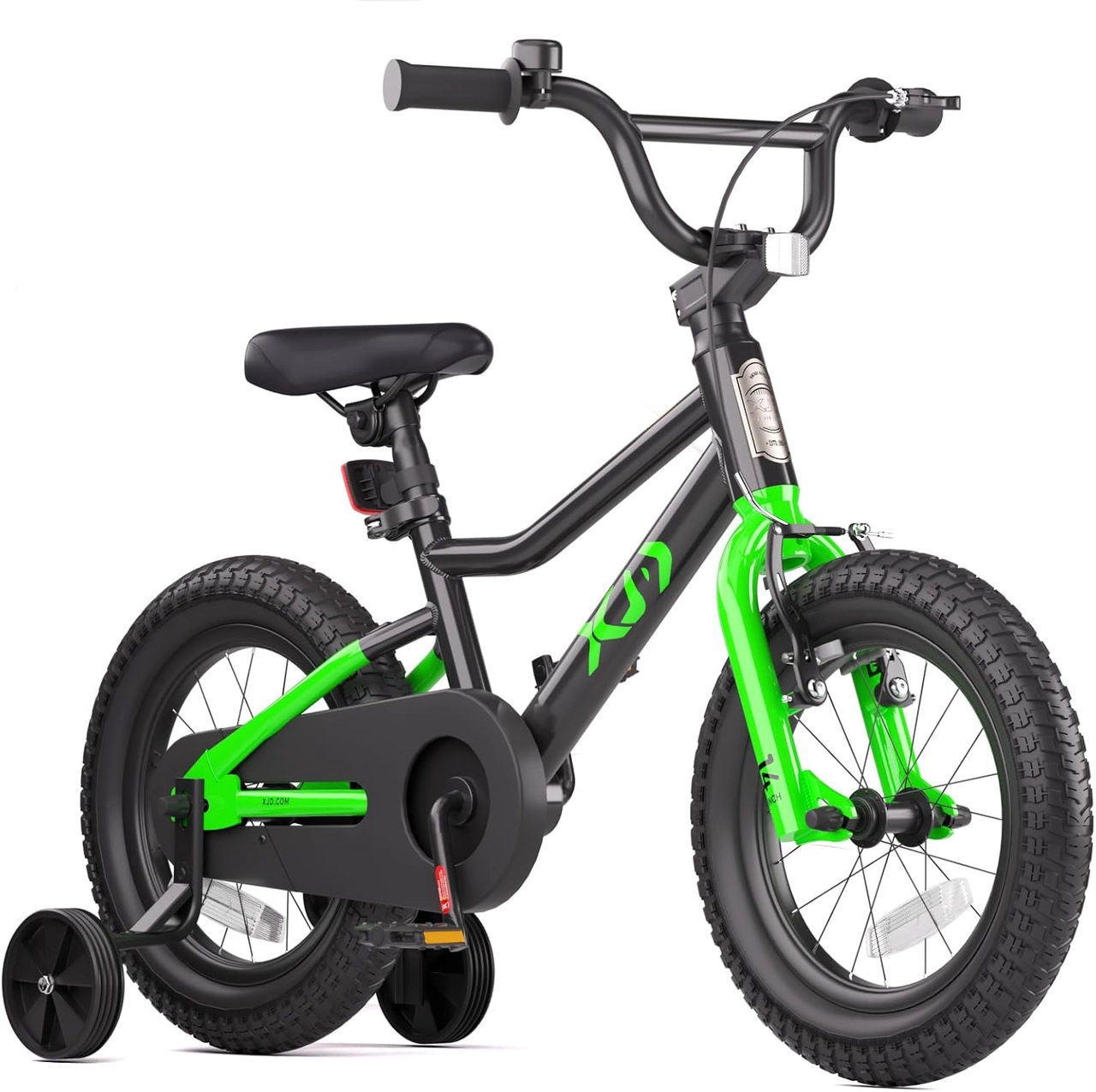 Black XJD Kids' BMX Bicycle with Training Wheels
Cataloged under Kids' BMX Bikes and offered in 12 Inch, 14 Inch and 16 Inch labels. It is a bicycle comparison point, not a confirmed solid-floor trailer or a proven towing bicycle.
Flower Pink XJD Girls Bike with Doll Seat & Basket and Purple XJD Girls' Bike with Doll Seat & Basket are cataloged as Training Wheel Bikes, each with 12 Inch, 14 Inch and 16 Inch SKU labels. Black XJD Kids' BMX Bicycle with Training Wheels is cataloged under Kids' BMX Bikes with the same three size labels. None substitutes for a trailer or confirms which bicycle can tow one.
If the child will ride instead of using a trailer
Use wheel size only as a starting point. XBikes associates 12 Inch with heights of 34–40 in (86–102 cm), 14 Inch with 37–45 in (94–114 cm), and 16 Inch with 40–48 in (102–122 cm). The overlapping ranges make an individual fit check essential.
Have the child try the bicycle. Prioritize measured height, inseam, stand-over clearance, reach, brake control and current confidence over age alone; do not buy an oversized bicycle merely for growth. Any age wording in a product title is a catalog label, not proof of fit.
The decision to make next
If carrying a child is the goal, shortlist only trailers whose manuals explicitly confirm a rigid passenger-area floor, adequate measured interior space, suitable load limits and compatibility with the exact towing bicycle. If the documentation cannot answer all four points, do not assume: obtain confirmation from the manufacturer or take the bicycle and trailer specifications to a qualified mechanic.
Bikes for your next adventure
-

Kids Bike Helmet by XJD for Girls – Pink
The XJD Kids Bike Helmet in Pink is a lightweight multi-sport helmet for girls r…$59.99
$99 -

Blue XJD Kids Bike Helmet for Boys & Girls
The Blue XJD Kids Bike Helmet is a lightweight, adjustable multi-sport helmet fo…$59.99
$99 -
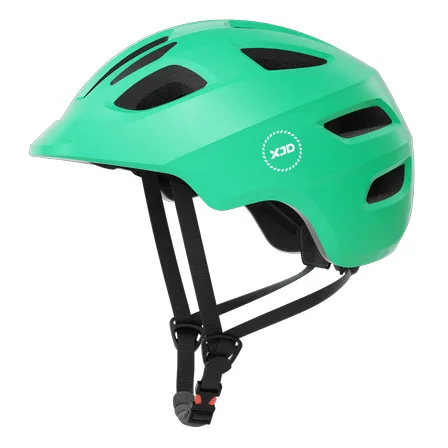
Green XJD Kids Bike Helmet for Boys & Girls
The Green XJD Kids Bike Helmet is a lightweight multi-sport helmet for toddlers …$59.99
$99