

What kind of bikes r good for pulling kids
For pulling kids, choose a properly fitted adult cargo bike or an adult bicycle explicitly approved for the exact child trailer or passenger system you plan to use. Do not use a child’s training-wheel bike as the towing bicycle.
Which kind of bike fits the job?
A purpose-built cargo bike is the most direct option when children ride on the bicycle itself. An adult bicycle paired with a compatible child trailer separates the passenger compartment from the bike. A trailer-cycle is different again: it is intended for a child who can sit, hold on and participate as its instructions require.
The useful choice depends on how the child will ride, not simply on wheel size. Compare the complete systems: bicycle, passenger equipment, attachment hardware and any required accessories. The bicycle and child carrier must be approved for use together by their manufacturers.
Do not assume that any strong-looking bicycle can tow any trailer. For attachment points, passenger limits, total load limits, assembly, maintenance and fastener torque, follow the exact manuals or ask a qualified bicycle mechanic.
Measure before comparing bicycles
First measure the adult rider’s height and inseam while wearing normal riding shoes. During an in-person fit check, confirm comfortable stand-over clearance, a natural reach to the handlebar, reliable brake control and enough confidence to start, steer, stop and put a foot down. The added passenger system must not prevent normal control.
Then record what the bicycle must carry or pull: the number of children, each child’s current measurements, the carrier or trailer being considered, and any everyday cargo. Check those facts against the manuals rather than estimating compatibility from appearance.
- For a cargo bike: verify that the exact passenger seating or enclosure is approved for that model.
- For a trailer: verify the bicycle, hitch and trailer are mutually compatible.
- For a trailer-cycle: check both the towing-bike requirements and the child-rider requirements.
What to compare on a test ride
Try the bicycle before buying it, initially without passengers and in a controlled area. Compare low-speed balance, turning room, braking control, mounting and dismounting, and whether the rider can start smoothly. A setup that feels manageable when empty may respond differently when used within its approved passenger and load limits.
Inspect the complete route as well. Tight storage access, curbs, hills and narrow turns can affect whether a longer cargo bicycle or a bicycle-and-trailer combination is practical. Never exceed a stated limit, and never add a child seat, trailer or improvised attachment when the relevant manual does not permit it.
Where the supplied XBikes option fits
The Purple XJD Girls' Bike with Doll Seat & Basket is listed as a Training Wheel Bike in 12 Inch, 14 Inch and 16 Inch sizes. It is relevant as a comparison for a child who may be ready to ride a separate bicycle; the supplied catalog facts do not establish it as suitable for towing or carrying a child.
These catalog options help answer the title by showing the difference between a child’s independent training-wheel bicycle and the adult bicycle or purpose-built system needed to pull a child. Its three sizes can support an individual fit comparison for the young rider.

If considering this bicycle for independent riding, use measured height as the starting point: 12 Inch corresponds to 34–40 in (86–102 cm), 14 Inch to 37–45 in (94–114 cm), and 16 Inch to 40–48 in (102–122 cm). The respective age starting points are 3–4, 3–6 and 4–7, but age alone does not establish fit.
Fit and helmet checks for the child
The American Academy of Pediatrics advises having a child try the bicycle rather than buying an oversized model for growth. Check stand-over clearance, reach, brake access and control, and current confidence. Overlapping wheel-size ranges are comparison points, not permission to skip that check.
Each rider should use an appropriate bicycle helmet. Following U.S. Consumer Product Safety Commission guidance, make sure the helmet fits properly, sits level and has its straps adjusted according to the helmet manufacturer’s instructions. Also follow the passenger system’s instructions for restraints, protective equipment and riding position.
Make the final decision
- Decide whether the child will ride on a cargo bike, in a trailer, on a trailer-cycle or independently.
- Measure the adult rider and test stand-over, reach, braking and low-speed control.
- Confirm written compatibility and load requirements for every part of the proposed system.
- Have a qualified bicycle mechanic check the setup when the manuals are unclear or the attachment requires verification.
Choose the Purple XJD Girls' Bike with Doll Seat & Basket only for a separately fitted young rider, not as the pulling bicycle. To pull kids, proceed only with an adult-sized cargo or towing setup whose exact manual approves the intended child-passenger arrangement.
Bikes for your next adventure
-

Flower Pink XJD Girls Bike with Doll Seat & Basket
The XJD Flower Pink girls' bike is made for riders 71–122 cm tall (roughly ages …$69.99
-
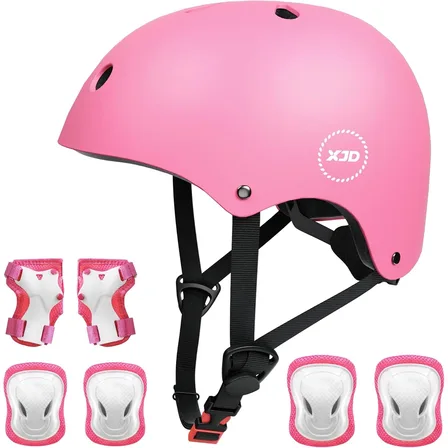
XJD Kids Helmet & Protective Gear Set for Girls, Pink
The XJD Kids Helmet & Protective Gear Set in Pink is a complete safety kit for g…$24.64
-

Kids Bike Helmet by XJD for Boys & Girls – Black, Blue, Green, Pink, Purple
The XJD Kids Bike Helmet covers a wide 2-to-8-year age range thanks to two head-…$59.99