

What kind of bike do i need for baby seat
You need an adult-sized bicycle that fits you, gives you confident brake control, and is explicitly compatible with your baby seat and its mounting system.
Choose by compatibility, not bike style
A city bike, hybrid, or cruiser may work, but the category name does not establish baby-seat compatibility. Start with the seat: identify whether it attaches at the front, to the frame behind the rider, or to a rear rack. Then check the exact seat manual and bicycle manual together.
Both must permit the intended installation. Confirm that the frame or rack has the required mounting points, shape, clearances, and load capacity. If either manual is missing or unclear, ask the manufacturer or have a qualified bicycle mechanic inspect the combination. Do not improvise clamps, substitute hardware, or guess at torque settings.
Measure the adult rider first
The correct bicycle is sized for the person steering and braking, not for the child in the seat. Measure the rider’s height and inseam, then try the bicycle with ordinary riding shoes. Check that the rider can stand over it appropriately, reach the handlebar without straining, operate both brakes comfortably, and start and stop under control.
XBikes lists 26-inch bicycles as a starting point for youth and adults over 60 inches (153 cm). That is only an initial comparison: inseam, reach, brake control, and current confidence still decide whether an individual bicycle fits. Following HealthyChildren guidance, try the bicycle rather than buying an oversized model for future growth.
Check the baby-seat mounting area
Before ordering either item, compare these details with the exact manuals:
- Mount type: front, frame-mounted rear, or rack-mounted rear.
- Available space: measure the mounting area and check for interference from cables, brakes, the saddle, wheels, or steering.
- Rack requirements: a rack-mounted seat needs a rack that the seat maker accepts; the rack’s presence alone is not proof.
- Limits: verify the bicycle, rack, seat, and mounting system limits. The lowest applicable limit governs.
- Installation: use only the specified hardware and follow the stated assembly and torque instructions.
Also consider how the bicycle behaves when stationary. You must be able to hold it upright, mount, dismount, and operate any stand without relying on the child seat for support. After installation, a mechanic can check clearances, fasteners, braking, and wheel contact before the first ride.
How the supplied XBikes option helps
The 26-Inch XJD Beach Cruiser Bike for Girls – Purple, V-Brake is a useful size and brake-control comparison for riders considering a 26-inch cruiser. Its supplied catalog labels also include 20-inch and 24-inch options in Mint Green or Pink, plus 26-inch labels in Mint Green, Pink, and Purple. Those labels do not establish baby-seat compatibility, mounting points, load limits, rider fit, or availability. The exact bicycle and seat manuals must answer those questions.
This catalog option helps you compare wheel-size labels and assess whether a 26-inch cruiser fits the adult rider; it should not be treated as a confirmed baby-seat bicycle without the required manual checks.

Do a controlled fit and handling check
First test the bicycle without the child seat. Confirm comfortable stand-over clearance, steering reach, and easy access to both brake controls. Do not proceed if the bicycle feels too tall, the reach pulls the rider forward, or either brake cannot be operated decisively.
Once a compatible seat has been installed exactly as directed, inspect every required attachment and clearance. Practice mounting, walking, starting, stopping, turning, and dismounting in a traffic-free area using an appropriate non-child test load only if the seat manufacturer’s instructions permit it. Never invent a testing method or exceed a stated limit.
Helmet and final decision
Use a bicycle helmet that fits properly, sits level, and has its straps adjusted according to the helmet manufacturer’s instructions, consistent with U.S. Consumer Product Safety Commission guidance. Follow the baby-seat maker’s instructions for child eligibility, restraints, clothing, and riding conditions; ask the child’s pediatrician when developmental readiness is uncertain.
Your next step is to write down the adult rider’s height and inseam, identify the seat’s exact mount type, and compare both manuals line by line. Buy the combination only when the bicycle fits the rider and every mounting, clearance, load, and brake-control requirement is explicitly satisfied.
Bikes for your next adventure
-
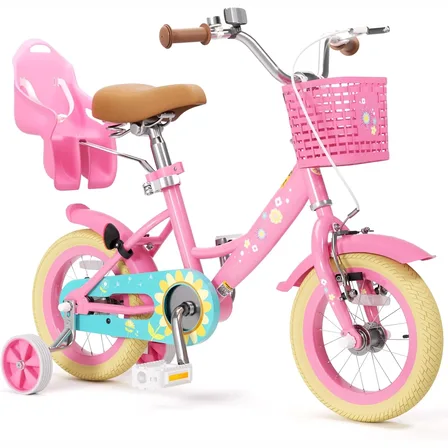
Flower Pink XJD Girls Bike with Doll Seat & Basket
The XJD Flower Pink girls' bike is made for riders 71–122 cm tall (roughly ages …$69.99
-
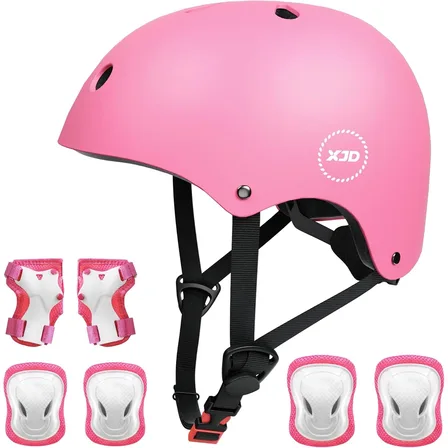
XJD Kids Helmet & Protective Gear Set for Girls, Pink
The XJD Kids Helmet & Protective Gear Set in Pink is a complete safety kit for g…$24.64
-

Kids Bike Helmet by XJD for Boys & Girls – Black, Blue, Green, Pink, Purple
The XJD Kids Bike Helmet covers a wide 2-to-8-year age range thanks to two head-…$59.99