

What's the best size bike for a 6 year old
For a 6-year-old, start by comparing a measured height with 16-inch and 18-inch bikes. Choose by actual fit and control, not age alone.
The short answer by height
A 16-inch bike is the usual starting point for a child who is 40–48 inches (102–122 cm) tall. An 18-inch bike is the next comparison for a child who is 43–52 inches (109–132 cm) tall. Because those ranges overlap, height narrows the choice but does not settle it.
A smaller 14-inch bike may still fit a shorter 6-year-old measuring 37–45 inches (94–114 cm). A 20-inch bike generally starts at 48 inches (122 cm) and ages 7–12, so it should not be chosen early merely to allow room for growth.
| Wheel size | XBikes starting range | Relevance at age 6 |
|---|---|---|
| 14 Inch | Ages 3–6; 37–45 in / 94–114 cm | Check for a shorter rider |
| 16 Inch | Ages 4–7; 40–48 in / 102–122 cm | Strong starting comparison |
| 18 Inch | Ages 5–9; 43–52 in / 109–132 cm | Compare when height and control support it |
| 20 Inch | Ages 7–12; 48–60 in / 122–152 cm | Consider only from the stated height range and after a fit check |
Measure before choosing
Measure the child without shoes, standing straight against a wall, to get total height. Then measure inseam from the floor to the crotch with the feet slightly apart. Record both measurements rather than relying on clothing size or a recent estimate.
Use height to select the likely wheel-size range, then use inseam during an in-person fit check. Wheel diameter alone does not reveal stand-over clearance, seat position or how a particular frame will feel. Geometry can vary between bicycles carrying the same wheel-size label.
What to check on the actual bike
Have the child try the bicycle. The American Academy of Pediatrics advises against buying an oversized bike for a child to grow into. During the check, look for these practical signs:
- Stand-over: the child can straddle the bicycle without the frame interfering with a comfortable, stable stance.
- Starting and stopping: the child can get moving and put a foot down without panic or an awkward lunge.
- Reach: the handlebars can be held while the rider remains balanced and relaxed, rather than stretched forward.
- Brake control: the child can reach and operate the bicycle’s actual braking controls confidently.
- Steering: the rider can turn, look ahead and maintain a controlled line at low speed.
If two sizes match the height table, choose the one the child can control now. More growing room does not compensate for poor stand-over, strained reach or unreliable braking.
How the supplied 12/14/16-inch options help
The two catalog bicycles provide 12-inch, 14-inch and 16-inch SKU labels, making their 14-inch and 16-inch versions relevant comparison points for many 6-year-olds. They do not include an 18-inch option, so they cannot substitute when an individual fit check points to 18 inches.
XJD Pink Girls' Bike – Kids 12/14/16 Inch Training Wheel Bicycle is categorized as a training-wheel bike and is offered in 12-inch, 14-inch and 16-inch labels. XJD Girls Bike for Kids Ages 3-8, 12/14/16 Inch with Training Wheels – Purple is also categorized as a training-wheel bike with the same three size labels. The age wording in the second product’s title is a catalog label, not evidence that every child in that span will fit.
These particular catalog options help answer the question when measurements indicate a 14-inch or 16-inch starting point and the family is specifically comparing training-wheel bicycles. Their supplied facts do not establish frame dimensions, brake type, adjustability or an exact fit for any individual child.
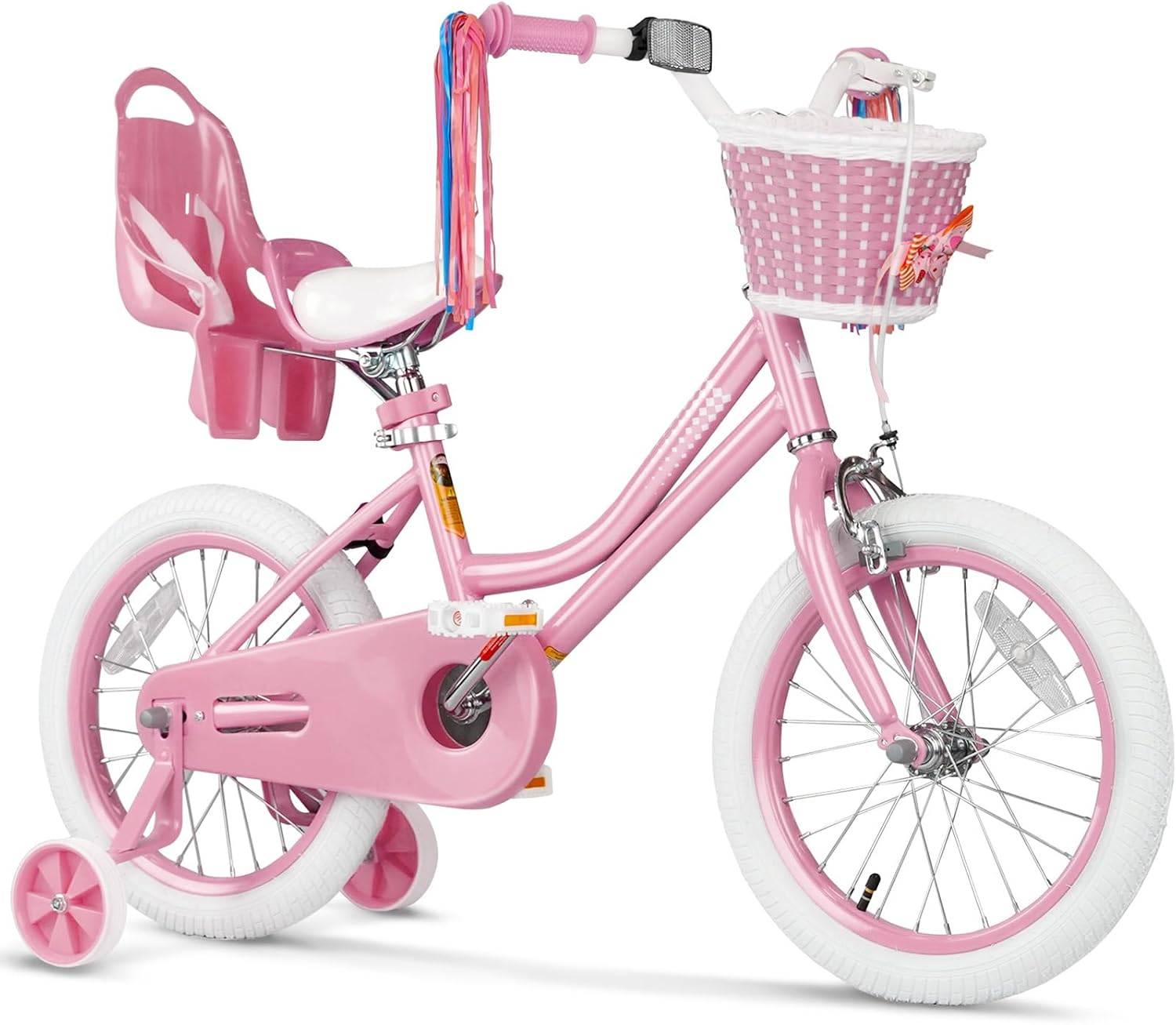 XJD Pink Girls' Bike – Kids 12/14/16 Inch Training Wheel Bicycle
A training-wheel bicycle offered with 12-inch, 14-inch and 16-inch SKU labels. Its 14-inch and 16-inch versions are relevant comparison points when the rider's measurements and individual fit check support those sizes.
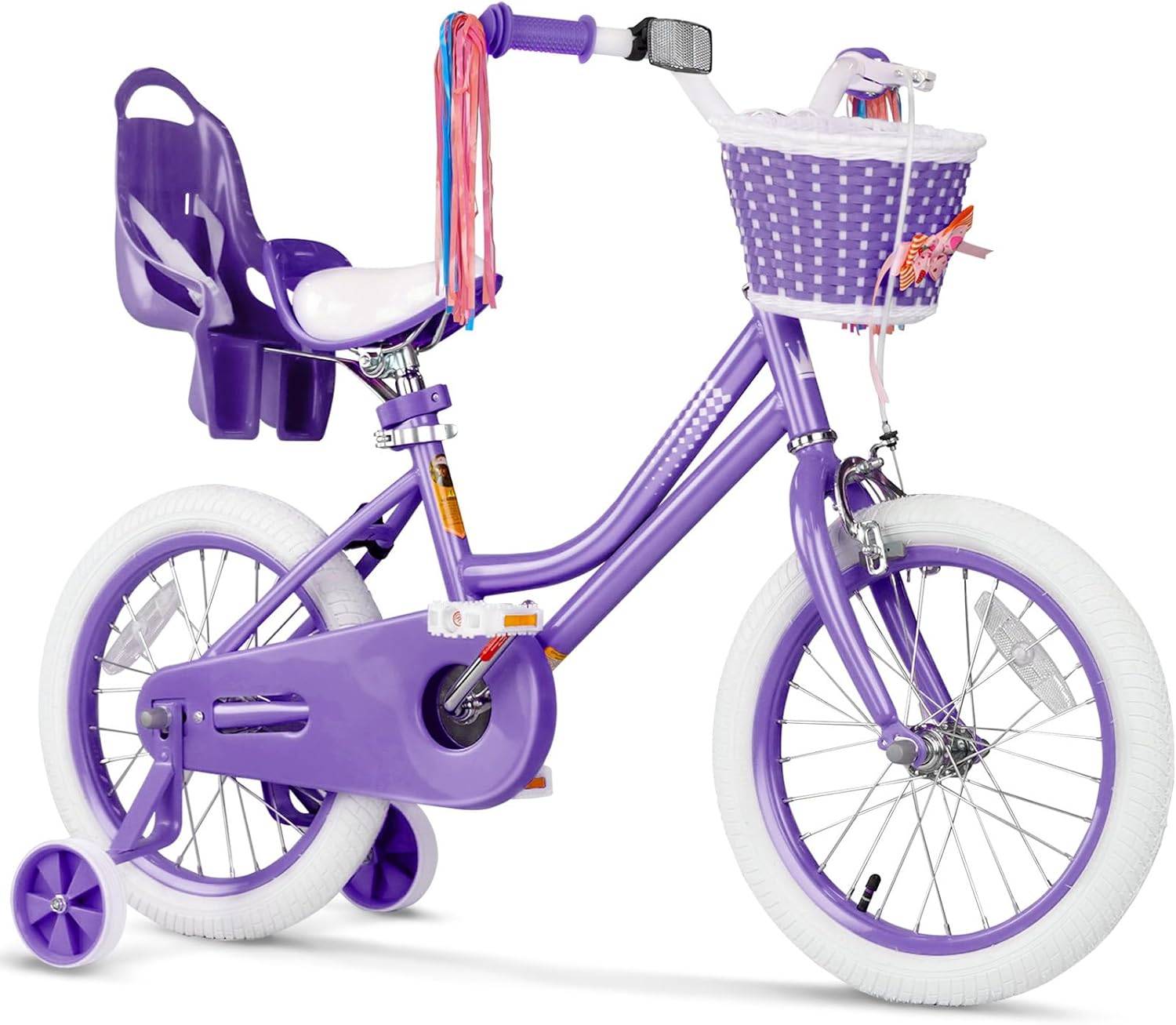 XJD Girls Bike for Kids Ages 3-8, 12/14/16 Inch with Training Wheels – Purple
A purple training-wheel bicycle offered in 12-inch, 14-inch and 16-inch labels. The age wording in its title is only a catalog label; choose among its sizes using measured height and an individual fit check.
When these products are not the right comparison
Do not select either supplied product solely because the rider is six. A 12-inch version starts at ages 3–4 and 34–40 inches (86–102 cm), so it is generally below the stated starting range for a 6-year-old unless the child’s measurements and an individual fit check genuinely support it.
If the child measures within the 18-inch range and controls an 18-inch bicycle better, the supplied products are nearest-size comparison points only; their 16-inch versions are not equivalent to an 18-inch bike. Likewise, a child at least 48 inches (122 cm) tall may compare a 20-inch bike, but only if stand-over, reach, brakes and confidence all work.
Make the final decision
Put a properly fitted bicycle helmet on the child level on the head, with its straps adjusted according to the helmet manufacturer’s instructions. For assembly, maintenance, limits or adjustments not stated here, follow the exact bicycle manual or use a qualified bicycle mechanic.
Measure height and inseam today, shortlist 14, 16 or 18 inches from the table, and have the child try the shortlisted sizes. For a 6-year-old, buy the size that permits comfortable stand-over, easy reach, dependable brake operation and calm control now—not the larger bike intended for later.
Bikes for your next adventure
-

Flower Pink XJD Girls Bike with Doll Seat & Basket
The XJD Flower Pink girls' bike is made for riders 71–122 cm tall (roughly ages …$69.99
-

Pink Girls' 12/14/16" Bike by XJD – Basket & Doll Seat
The XJD Pink Girls' Bike with Basket & Doll Seat is made for riders 71–122 cm ta…$75.99
$99.99 -

Black XJD Toddler Bike Helmet, Adjustable – Kids' Protective Helmet
The XJD Toddler Bike Helmet in black is an adjustable protective helmet for kids…$20.39