

What's the suggested height for a 24 inch bike
A 24 inch bike is suggested for a rider about 54–64 inches (137–163 cm) tall, typically ages 10–14. Measure the child and confirm fit on the actual bicycle before buying.
Start with height, not age
Have the rider stand barefoot against a wall, looking straight ahead, with heels on the floor. Mark the top of the head and measure vertically from the floor. Compare that result with the 54–64 inch (137–163 cm) starting range for a 24 inch bicycle.
Age is only a rough reference. Children of the same age can differ considerably in proportions, coordination and confidence. A shorter 14-year-old may not yet fit a particular 24 inch frame, while a tall 9-year-old may be ready to try one. The individual fit check decides.
Measure inseam and check stand-over space
Height narrows the search, but inseam helps reveal whether the frame itself works. With the rider barefoot, place a book firmly between the legs as though it were a bicycle saddle. Measure from the floor to the top edge of the book.
Then have the child try the fully assembled bicycle. While straddling the top tube with both feet flat on the ground, the rider should have clear space rather than being pressed against the frame. Frame shapes vary, so wheel diameter alone cannot establish suitable stand-over clearance.
If the child cannot straddle the bicycle comfortably, do not treat tiptoes or leaning the bike sharply as an acceptable fit. Try a different frame or wheel-size option instead of buying an oversized bicycle for future growth.
Confirm reach, steering and brake control
Seat the rider in a normal riding position and look for relaxed control. The child should be able to hold the handlebar without locking the elbows, stretching the torso excessively or losing a stable seated position. They should also be able to turn the handlebar without the knees or body interfering.
- Ask the rider to operate each brake control comfortably and deliberately.
- Check that starting, stopping and placing a foot down feel controlled.
- Watch for strained shoulders, an overextended reach or hesitation caused by the bicycle feeling too large.
- Consider current confidence as well as physical dimensions.
A rider who falls within the height range can still have unsuitable reach or brake access on a specific frame. Conversely, being close to the range does not justify skipping an actual test.
How nearby sizes help with the decision
The XBikes starting points place 20 inch bicycles at 48–60 inches (122–152 cm), 24 inch bicycles at 54–64 inches (137–163 cm), and 26 inch bicycles for youth and adults over 60 inches (153 cm). The overlapping ranges are a reason to compare fit, not evidence that the sizes are interchangeable.
| Wheel label | XBikes height starting point | How to use it |
|---|---|---|
| 20 Inch | 48–60 in / 122–152 cm | Compare when a 24 inch bicycle feels too tall or difficult to control. |
| 24 Inch | 54–64 in / 137–163 cm | Try when measured height is in range, then verify the complete fit. |
| 26 Inch | Over 60 in / 153 cm | Compare only when the rider is tall enough and can control the actual frame. |
The XJD Kids Beach Cruiser Bicycle, Rear Rack & V-Brakes, Mint Green is relevant because its available SKU labels include 20 Inch, 24 Inch and 26 Inch. Those catalog options let a family compare the requested 24 Inch label with neighboring sizes while keeping in mind that each size requires its own fit check.

Select the 24 Inch option only if that is the exact SKU label being considered and the rider passes the height, stand-over, reach and brake-control checks. The 20 Inch and 26 Inch options are comparison points, not equivalent substitutes.
What to do before the first ride
- Record the rider’s current height and inseam rather than relying on an old measurement.
- Try the exact bicycle and confirm comfortable stand-over, reach, steering and access to the brakes.
- Reject a fit that requires the rider to stretch, balance awkwardly or struggle with controlled stops.
- Follow the exact product manual for assembly, adjustments, maintenance, compatibility, load limits and torque, or use a qualified bicycle mechanic.
- Fit a bicycle helmet so it sits level and secure the straps according to the helmet manufacturer’s instructions.
The practical decision is simple: begin with 54–64 inches (137–163 cm), but choose a 24 inch bike only after the child demonstrates comfortable clearance, natural reach, reliable brake operation and confident control on that exact bicycle.
Bikes for your next adventure
-

26-Inch XJD Beach Cruiser Bike for Girls – Purple, V-Brake
This XJD 26-inch purple beach cruiser is sized for big kids and teens — suggeste…$218.49
$229.99 -
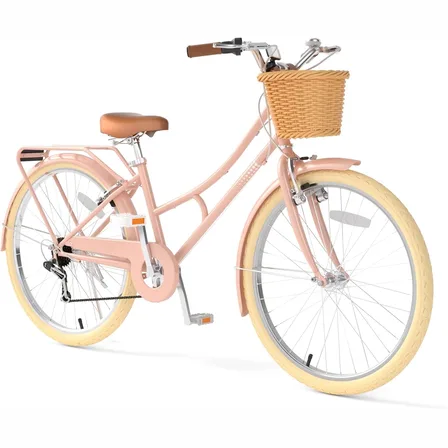
Pink XJD Beach Cruiser Bike, 24"/26", U-Brake
The XJD Pink Beach Cruiser Bike is a single-speed cruiser built for older kids a…$159.99
-

XJD Pink Beach Cruiser for Girls – Rear Rack & V-Brake
The XJD Pink Beach Cruiser for girls is the step-up bike for riders who've outgr…$179.99
$209.99