

What size bike 6 yr old
For most 6-year-olds, start by comparing a 16-inch and 18-inch bike. Measure the child first: height, inseam, reach and brake control decide the fit—not age alone.
Choose the starting size from measured height
Measure the child barefoot, standing straight against a wall. Record total height from the floor to the top of the head. Then measure inseam from the floor to the crotch while the child stands with feet slightly apart. Use height to select likely wheel sizes, then use inseam and an actual try-on to check stand-over.
| Wheel size | XBikes starting age | Rider height |
|---|---|---|
| 14 Inch | 3–6 | 37–45 in / 94–114 cm |
| 16 Inch | 4–7 | 40–48 in / 102–122 cm |
| 18 Inch | 5–9 | 43–52 in / 109–132 cm |
| 20 Inch | 7–12 | 48–60 in / 122–152 cm |
A 6-year-old measuring 40–48 inches will usually begin with a 16-inch comparison. At 43–48 inches, both 16-inch and 18-inch starting ranges apply, so test both. From 48 inches upward, compare 18-inch and 20-inch bikes, but choose 20 inches only if stand-over, reach, braking and handling all work for this individual rider. A child under 40 inches may need a 14-inch comparison.
Check the bike with the child on it
Wheel size narrows the search; it does not confirm fit. Have the child try the exact bicycle. The American Academy of Pediatrics advises against buying an oversized bike merely to allow room for growth. A bike that is difficult to mount, balance or steer is not made suitable by a promising age label.
- Stand-over: With the child standing over the bicycle, confirm that the frame does not prevent comfortable, stable footing. Compare this position with the measured inseam.
- Reach: The child should reach the handlebar without stretching, locking the arms or losing a centered riding position.
- Brake control: Confirm that the child can comfortably reach and operate the bicycle’s brakes as provided.
- Starting and stopping: Ask the child to demonstrate a controlled start, steer at low speed and stop without panic or loss of balance.
If any check fails, adjust the comparison rather than assuming the child will adapt. Follow the exact product manual for permitted adjustments, assembly and maintenance, or ask a qualified bicycle mechanic.
Let confidence break a size tie
Overlapping height ranges are normal. When both 16-inch and 18-inch bikes appear plausible, current confidence becomes important. A newer or hesitant rider may control one size much more naturally, while a practiced rider may be comfortable on the other. The deciding evidence is what the child can control now.
Do not use a sixth birthday as a reason to size up. Likewise, do not keep a child on a smaller wheel solely because its age range still includes six. Compare the child’s measured height with the table, then confirm inseam clearance, reach, braking and real-time control on each candidate.
How the supplied catalog option helps
The XJD Light Purple Girls Bike with Basket, Training Wheels, 12/14/16/20 Inch is listed in the Training Wheel Bikes category. Its supplied available SKU labels are 12 Inch, 14 Inch and 16 Inch. For this question, the 14-inch and 16-inch versions can provide relevant comparison points when the child’s measured height falls within those XBikes ranges. Although 20 Inch appears in the exact catalog title, 20 Inch is not among the supplied available SKU labels, so availability should not be inferred from the title.
These catalog options help a parent compare the smaller starting sizes commonly considered around age six, especially when measurements point to 14 or 16 inches.

No supplied product has an available 18-inch SKU label. If the child’s measurements and fit check point to 18 inches, the displayed 14-inch or 16-inch versions are comparison points, not equivalent substitutes. If measurements point toward 20 inches, do not treat the product title alone as evidence that a 20-inch option is available.
Finish with a helmet and one clear decision
Use a bicycle helmet every ride. The U.S. Consumer Product Safety Commission advises that the helmet must fit properly, sit level and have its straps used according to the helmet manufacturer’s instructions. A helmet cannot correct a poorly fitting bicycle, so check both separately.
Your next step is simple: measure the 6-year-old’s height and inseam, shortlist the overlapping wheel sizes from the table, and have the child try them. Choose the size on which the child has comfortable stand-over, natural reach, usable brakes and confident control today; do not buy the larger option solely for future growth.
Bikes for your next adventure
-

XJD Girls Bike for Kids Ages 3-8, 12/14/16 Inch with Training Wheels – Purple
The XJD Girls Bike in Purple is a training-wheel bicycle for kids ages 3 to 8, f…$149
$169 -

Pink Girls' 12/14/16" Bike by XJD – Basket & Doll Seat
The XJD Pink Girls' Bike with Basket & Doll Seat is made for riders 71–122 cm ta…$75.99
$99.99 -
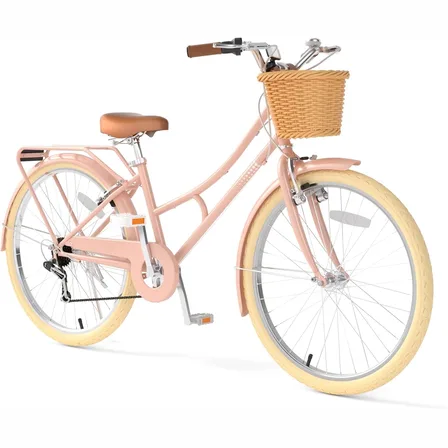
Pink XJD Beach Cruiser Bike, 24"/26", U-Brake
The XJD Pink Beach Cruiser Bike is a single-speed cruiser built for older kids a…$159.99