

What size bike does a 9 year old ride
Most 9-year-olds should start by trying an 18-inch or 20-inch bike, then choose by measured height, inseam, reach, brake control and confidence—not age alone.
The likely size for a 9-year-old
Under the XBikes starting points, an 18-inch bike covers ages 5–9 and rider heights of 43–52 inches (109–132 cm). A 20-inch bike covers ages 7–12 and heights of 48–60 inches (122–152 cm). The ranges overlap, so a 9-year-old near 48–52 inches should try both sizes rather than deciding from the age label.
A child below 48 inches may fit the 18-inch starting point more naturally. From 48 inches upward, a 20-inch bike becomes a relevant comparison, but it is suitable only if the child can stand over, steer, start, stop and reach the brakes comfortably. Do not buy an oversized bicycle merely to leave growing room.
Measure before comparing bikes
Measure the child while they are wearing the shoes they normally use for riding. Record their full height against a wall, then measure the inseam from the floor to the crotch. Height identifies the wheel-size range to investigate; inseam helps determine whether the individual frame offers adequate stand-over clearance.
- Height: Have the child stand straight against a wall and measure from the floor to the top of the head.
- Inseam: Measure vertically from the floor to the crotch without adding extra allowance.
- Current control: Note whether the rider starts, turns and stops independently or still needs substantial support.
Wheel size does not establish frame geometry, saddle range or reach. Those details must be checked on the actual bicycle and against its exact product manual.
Use a hands-on fit check
The American Academy of Pediatrics advises having the child try the bicycle and checking stand-over, control and brake reach. With the child straddling the frame, confirm that they can stand securely rather than balancing on tiptoe or being pressed against the bicycle.
Next, place the child in the riding position. They should reach the handlebars without an exaggerated forward stretch, steer through turns without losing posture and operate the available brakes with control. Have them demonstrate a calm start, straight-line ride, turn and controlled stop in a traffic-free area. If the larger option makes any of these tasks noticeably harder, it is too large now even if its published height range includes the rider.
How the supplied XBikes options compare
The Pink 12/14/16/20" XJD Girls Bike with Training Wheels & Basket and Light Pink XJD Girls' Bicycle with Basket & Training Wheels both offer 20-inch SKU labels alongside smaller sizes. The 26-Inch XJD Beach Cruiser Bike for Girls – Purple, V-Brake has 20-, 24- and 26-inch SKU labels in its supplied variants. These options help because they provide a 20-inch comparison for the common nine-year-old range and show larger steps that should be considered only when the measurements and hands-on fit support them.
 Pink 12/14/16/20" XJD Girls Bike with Training Wheels & Basket
Offers a 20-inch SKU label relevant to the usual nine-year-old comparison, plus 12-, 14- and 16-inch labels. The child still needs an individual stand-over, reach, braking and control check.
 26-Inch XJD Beach Cruiser Bike for Girls – Purple, V-Brake
Supplied variants include 20-, 24- and 26-inch SKU labels. Start with 20 inches for most nine-year-old comparisons; consider larger labels only when the XBikes height starting point and hands-on fit both support them.
 Light Pink XJD Girls' Bicycle with Basket & Training Wheels
Its supplied SKU labels include 12, 14, 16 and 20 inches. The 20-inch option can be compared for a nine-year-old, but it does not replace an unavailable 18-inch size when that is the better fit.
For a rider who fits the 18-inch starting point, none of these supplied products offers an 18-inch SKU label. Their 20-inch versions are nearest-size comparison points, not substitutes for an 18-inch bicycle. A difficult stand-over position, excessive reach or poor control is a reason to seek an actual 18-inch option.
A 24-inch bike is an XBikes starting point for ages 10–14 and heights of 54–64 inches (137–163 cm). A tall nine-year-old may fall inside that height band, but age and height alone do not approve the size: compare it directly with a 20-inch bike and reject it if control or brake reach suffers. A 26-inch bike is the starting point for youth and adults over 60 inches (153 cm), so the 26-inch variants are relevant only when that height threshold and the individual fit checks are satisfied.
Check safety and setup before riding
A properly fitted bicycle still needs correct setup. Follow the exact product manual for assembly, adjustments, maintenance, load limits, compatibility and any torque requirements. When the instructions are unavailable or the setup is uncertain, use a qualified bicycle mechanic rather than guessing.
The U.S. Consumer Product Safety Commission advises that the bicycle helmet must fit properly, sit level and have its straps used according to the helmet manufacturer’s instructions. Recheck fit as the child grows and whenever riding control changes.
Make the size decision
Measure first, shortlist 18 and 20 inches from the XBikes ranges, and have the child try the relevant bikes. Choose 20 inches only when stand-over, reach, braking and riding control are comfortable; otherwise choose an actual 18-inch bike. Consider 24 or 26 inches only when the stated height starting point and a complete hands-on fit check both support that step.
Bikes for your next adventure
-

Light Purple XJD Toddler Bike Helmet, Adjustable, Size XS (46–51 cm)
This Light Purple XJD toddler bike helmet is made for the smallest riders — the …$20.39
-

XJD Boys 12/14/16" Training Wheel Bike – Blue
The XJD Boys Bike in Blue is a training wheel bike for riders 71–122 cm tall—rou…$169
$199 -
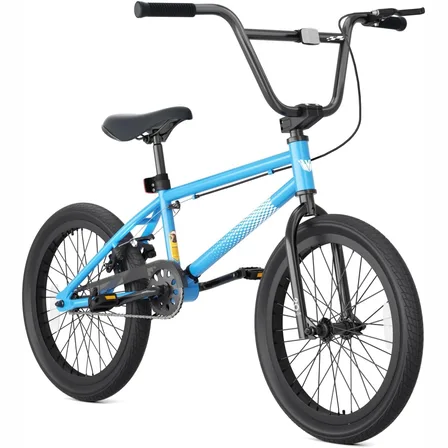
Blue XJD Freestyle BMX Bike, 20-Inch – No Pegs
The XJD 20-Inch Blue Freestyle BMX is an entry-level BMX bike for boys and girls…$189.99