

What size bike does my 11 year old need
Most 11-year-olds should start by comparing 20-inch and 24-inch bikes: use 20 inches for heights of 48–60 in (122–152 cm), and 24 inches for 54–64 in (137–163 cm). A rider over 60 in (153 cm) can also compare a 26-inch bike. Height overlap means the final choice depends on inseam, reach, brake control and confidence—not age alone.
Measure your 11-year-old first
Measure the child barefoot, standing straight against a wall, from the floor to the top of the head. Then measure inseam from the floor to the crotch while the child stands with feet slightly apart. Record both measurements rather than relying on clothing size or an estimate.
Height identifies the wheel sizes worth trying. Inseam helps you assess stand-over clearance and whether mounting, stopping and putting a foot down feel manageable. It does not produce an automatic wheel-size answer because bicycle frame shapes can differ even when their wheel labels match.
Compare the relevant wheel sizes
| Wheel size | XBikes starting range | What it means at age 11 |
|---|---|---|
| 20 Inch | Ages 7–12; 48–60 in / 122–152 cm | Compare when the measured height falls in this range, particularly if the rider is smaller or less confident. |
| 24 Inch | Ages 10–14; 54–64 in / 137–163 cm | Compare when the measured height falls in this range; many 11-year-olds will begin here. |
| 26 Inch | Youth and adults over 60 in / 153 cm | Consider only when the rider is over the stated height threshold and can control the actual bicycle. |
A child between 54 and 60 inches (137–152 cm) falls within both the 20-inch and 24-inch starting ranges. Do not settle the overlap by choosing the larger bike “for growth.” Have the child try both appropriate sizes and select the one they can control comfortably now.
Use a hands-on fit check
Ask the child to wear the shoes they normally use for riding and try the complete bicycle. Check these points before deciding:
- Stand-over: the child can straddle the bicycle without the frame preventing a stable stance.
- Starting and stopping: mounting, setting off and putting a foot down are controlled rather than hesitant or awkward.
- Reach: the handlebars can be held without excessive stretching, locked elbows or an uncomfortable posture.
- Brakes: the child can reach and operate the brake controls confidently while maintaining steering control.
- Handling: turning, riding a straight line and stopping feel predictable at the child’s current skill level.
If the child cannot pass those checks, that bicycle is not a suitable current fit even if age and height charts appear to match. Do not compensate for poor control by assuming the child will quickly grow into it.
How the supplied XBikes options compare
The catalog choices provide useful 20-, 24- and 26-inch comparison points around the likely range for an 11-year-old. Their listed sizes help narrow what to try, but the product titles and category labels do not establish individual fit.
 Pink 12/14/16/20" XJD Girls Bike with Training Wheels & Basket
The 20-inch option is relevant for an 11-year-old measuring 48–60 inches; its smaller listed sizes fall below the usual comparison range for this age question.
 26-Inch XJD Beach Cruiser Bike for Girls – Purple, V-Brake
Its listed 20-, 24- and 26-inch options provide comparison points across the height thresholds relevant to an 11-year-old, subject to an individual fit and control check.
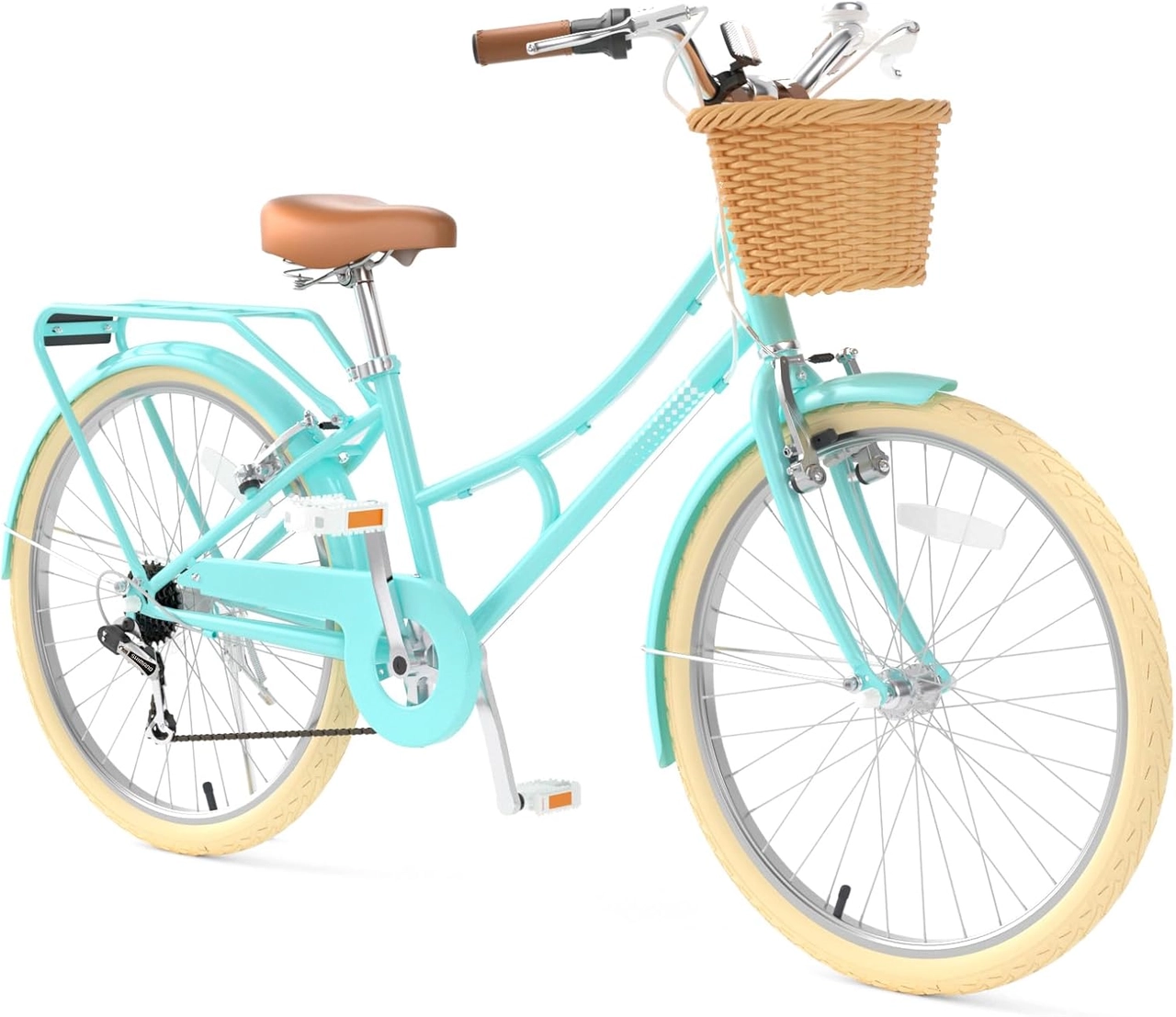 XJD 24-Inch Green Beach Cruiser Bike with U-Brake
Its 24-inch options suit comparison at 54–64 inches, while the listed 26-inch option is relevant only when the rider is over 60 inches and passes a fit check.
The Pink 12/14/16/20" XJD Girls Bike with Training Wheels & Basket is available in 12-, 14-, 16- and 20-inch labels. For this question, only its 20-inch option overlaps the usual comparison range for an 11-year-old, and only when the rider measures 48–60 inches (122–152 cm). Its Training Wheel Bikes category may be relevant to a rider whose present confidence calls for that type of bicycle; age alone does not establish that need.
The XJD 24-Inch Green Beach Cruiser Bike with U-Brake has Green / 24 Inch, Pink / 24 Inch and Pink / 26 Inch labels. Its 24-inch choices correspond to the 54–64-inch (137–163 cm) starting range, while its 26-inch choice is a comparison only for a rider over 60 inches (153 cm).
The 26-Inch XJD Beach Cruiser Bike for Girls – Purple, V-Brake offers 20-, 24- and 26-inch labels across its listed colors, including Purple / 26 Inch. That makes it useful for comparing all three relevant thresholds, but color and the age implied by “girls” are not evidence of fit. Judge each selected size on the actual child’s measurements and control.
Make the final decision
Shortlist every available size that contains the child’s measured height, then arrange an individual fit check. If two sizes overlap, prefer the bicycle the child can straddle, reach, steer and brake with greater confidence today. Follow the exact product manual or use a qualified bicycle mechanic for assembly, adjustment, compatibility, maintenance and torque questions not covered by the catalog facts.
Complete the setup with a properly fitting bicycle helmet. It should sit level and its straps should be used according to the helmet manufacturer’s instructions.
For your 11-year-old, the next action is simple: measure height and inseam now, compare 20 and 24 inches if the height falls in their overlap, add 26 inches only above 60 inches, and buy only after the child passes the hands-on control check.
Bikes for your next adventure
-
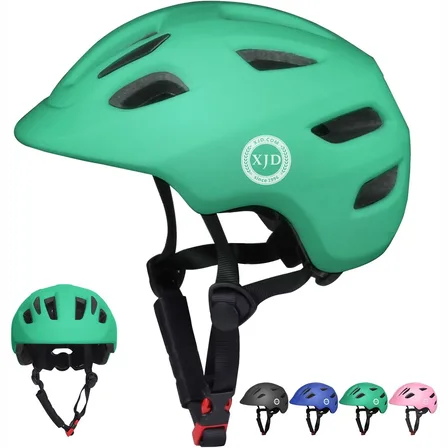
Green XJD Toddler Bike Helmet with Adjustable Fit, XS (46–51 cm)
The XJD toddler bike helmet in Green is built for the youngest riders — the size…$20.39
$23.99 -

Kids Bike Helmet by XJD for Boys & Girls – Black, Blue, Green, Pink, Purple
The XJD Kids Bike Helmet covers a wide 2-to-8-year age range thanks to two head-…$59.99
-

Kids Bike Helmet by XJD for Girls – Pink
The XJD Kids Bike Helmet in Pink is a lightweight multi-sport helmet for girls r…$59.99
$99