

What size bike for 18 inch inseam
An 18-inch inseam does not determine one bike size. Measure the child’s full height, compare the wheel-size ranges below, then confirm stand-over clearance, reach, brake control and confidence on the actual bicycle.
What an 18-inch inseam tells you
Inseam is the distance from the floor to the crotch, measured in socks with the child standing straight. It helps you judge whether the child can stand over a bicycle without the frame pressing into the body. It is not the same measurement as wheel diameter, so an 18-inch inseam does not automatically call for an 18 Inch bike.
There is no supplied inseam-to-wheel-size formula that would make a single size certain. Use the measurement to reject frames that are too tall, then use measured rider height to choose which wheel sizes deserve an in-person fit check.
Measure before comparing sizes
- Have the child remove shoes and stand with their back against a wall.
- Place a straight-edged book gently between the legs, level with the floor, to represent the bicycle’s top tube.
- Measure from the floor to the top edge of the book. Repeat once to confirm the 18-inch result.
- Measure full standing height separately, without shoes.
Do not add extra inches for growth. The American Academy of Pediatrics advises having the child try the bicycle rather than buying an oversized model for future use. A larger bike can make starting, stopping, steering and reaching the brakes more difficult now.
Compare measured height with wheel size
Use these XBikes ranges only as starting points. Where ranges overlap, the correct choice depends on the individual bicycle’s frame shape and the child’s control—not age alone.
| Wheel size | Starting age | Rider height |
|---|---|---|
| 12 Inch | 3–4 | 34–40 in / 86–102 cm |
| 14 Inch | 3–6 | 37–45 in / 94–114 cm |
| 16 Inch | 4–7 | 40–48 in / 102–122 cm |
| 18 Inch | 5–9 | 43–52 in / 109–132 cm |
| 20 Inch | 7–12 | 48–60 in / 122–152 cm |
If the child’s measured height is below 43 inches, the XBikes starting range does not point to an 18 Inch wheel even though the inseam measures 18 inches. If height falls within 43–52 inches, an 18 Inch bike becomes a size to try, but it is not confirmed until the child passes the physical fit and control checks. At an overlap, compare both relevant sizes rather than assuming the larger one is preferable.
Check the bicycle with the child on it
First, have the child straddle the frame with both feet flat and stable on the floor. The frame must not interfere with comfortable stand-over. Because top-tube shapes vary, the same wheel size can fit differently across bicycles.
Next, seat the child and check that they can reach the handlebar without stretching, turn it while remaining balanced, and operate every fitted brake control comfortably. Ask them to start, steer and stop in a controlled area. A bike should be rejected if they cannot manage it confidently, even when their height appears in the listed range.
- Too large: unstable stand-over, stretched reach, difficulty reaching controls or hesitant starts and stops.
- Worth fitting: stable stand-over, natural reach, usable brake controls and controlled steering.
- Too small: cramped posture or restricted comfortable movement; confirm adjustments and limits in the exact product manual.
How the supplied bikes help with this decision
Neither supplied catalog product has an 18 Inch SKU. They are nearest-size comparison points, not substitutes for an 18 Inch bike. The XJD Boys 12/14/16" Training Wheel Bike – Blue offers 12 Inch, 14 Inch and 16 Inch labels. The XJD Kids Bike for Girls – Pink, 12/14/16/20 Inch with Training Wheels offers those three labels plus 20 Inch. These options can help a parent compare adjacent starting ranges when measured height falls below or above the 18 Inch range.
 XJD Boys 12/14/16" Training Wheel Bike – Blue
Available in 12 Inch, 14 Inch and 16 Inch labels, this training-wheel bike is useful only as a smaller-size comparison; it does not offer the requested 18 Inch size.
 XJD Kids Bike for Girls – Pink, 12/14/16/20 Inch with Training Wheels
Its 12 Inch, 14 Inch, 16 Inch and 20 Inch labels provide adjacent comparison options, but none is an 18 Inch SKU or an automatic substitute for one.
A 16 Inch version may be relevant to try when measured height is 40–48 inches; a 20 Inch version may be relevant at 48–60 inches. Neither should be treated as equivalent to an unavailable 18 Inch version. The words “Boys” and “Girls” are parts of the exact catalog titles, not evidence of fit; choose by measurements and control.
Make the final size decision
Record the child’s confirmed 18-inch inseam and measured full height. Use height to identify the candidate wheel range, then require successful stand-over, reach, brake and riding-control checks. Follow the exact product manual for assembly, adjustments, load limits and maintenance, or use a qualified bicycle mechanic where needed.
Before riding, fit a bicycle helmet that sits level and uses its straps according to the helmet manufacturer’s instructions, as advised by the U.S. Consumer Product Safety Commission. For this specific 18-inch-inseam decision, choose only the wheel size the child can straddle and control now; if an 18 Inch bike is indicated, keep searching for that exact size rather than substituting a catalog option.
Bikes for your next adventure
-
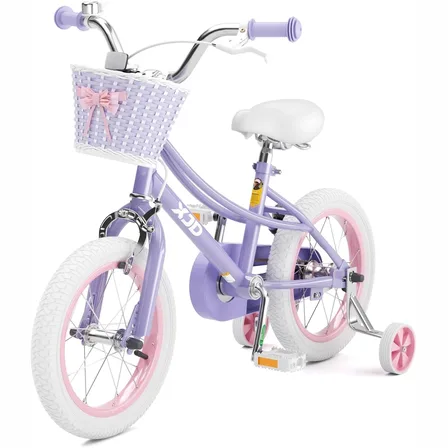
Girls' Training Wheel Bike by XJD with Basket – Purple
If you're shopping for a first bike for a girl roughly 3 to 12 years old (91–152…$75.99
-
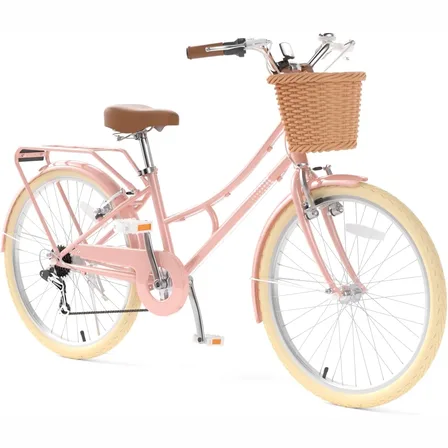
XJD Pink Beach Cruiser for Girls – Rear Rack & V-Brake
The XJD Pink Beach Cruiser for girls is the step-up bike for riders who've outgr…$179.99
$209.99 -
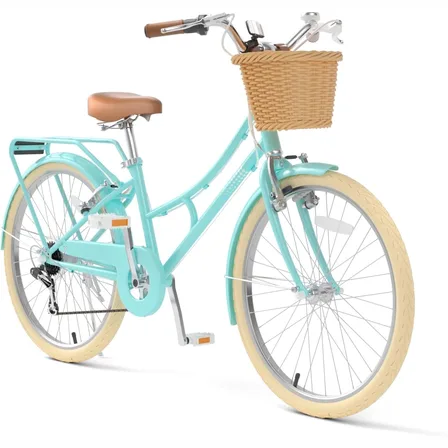
XJD Kids Beach Cruiser Bicycle, Rear Rack & V-Brakes, Mint Green
The XJD Beach Cruiser in Mint Green is a geared, multi-speed cruiser bike for ol…$179.99
$209.99