

What size bike for 5 year old
For a 5-year-old, the right bike should make starting, balancing, braking and stopping feel manageable. Age gives parents a useful search phrase, but it cannot account for a child’s height, inseam or previous riding experience. A smaller bike that is easy to control is usually more helpful than a larger model chosen only because it may last longer.
What size bike usually fits a 5-year-old?
Most families compare 16-inch wheels first. Some shorter beginners may still be more comfortable on a 14-inch bike, while a tall, confident rider may be ready to inspect a 20-inch option. The deciding test is not whether the child can touch the ground with one toe; it is whether they can sit balanced, reach the bars and use the brakes without fear or excessive stretching.
A simple fit check before choosing
- Have the child sit on the saddle with both hands on the handlebar.
- Check that the elbows are relaxed and the grips are not too far away.
- Confirm the brake levers can be squeezed with the child’s fingers.
- Ask the child to stand over the frame and check for comfortable clearance.
- Let them make a slow turn and controlled stop before committing.
Training wheels can help some beginners develop pedal timing, but they should not hide an incorrectly sized frame. If the bike feels heavy or the child has to lean to turn, adjust the size decision before adding accessories.
When 14, 16 and 20 inches overlap
| Possible size | When it may make sense | What to watch |
|---|---|---|
| 14-inch | Shorter or newer riders | Enough room for pedals and a stable saddle position |
| 16-inch | Common first comparison around age five | Brake reach, stand-over and steering confidence |
| 20-inch | Taller, experienced riders | Do not accept a stretched reach just for growth room |
How to compare the XBikes recommendations
The linked products are useful comparisons because they represent different fit and riding approaches. Look at the listed wheel size and frame proportions, then relate them to the child’s height and confidence. A model with a comfortable saddle position and reachable brakes may be a better first bike than one with a larger wheel and more impressive growth promise.
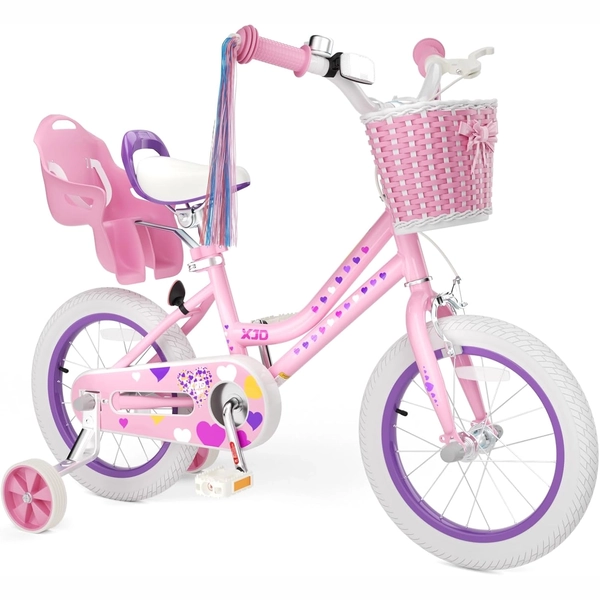 Light Pink XJD Girls' Bicycle with Basket & Training Wheels
Why it fits: Its smaller-wheel or training-wheel configuration is a useful match for early pedal practice, where stable starts and stops matter most.
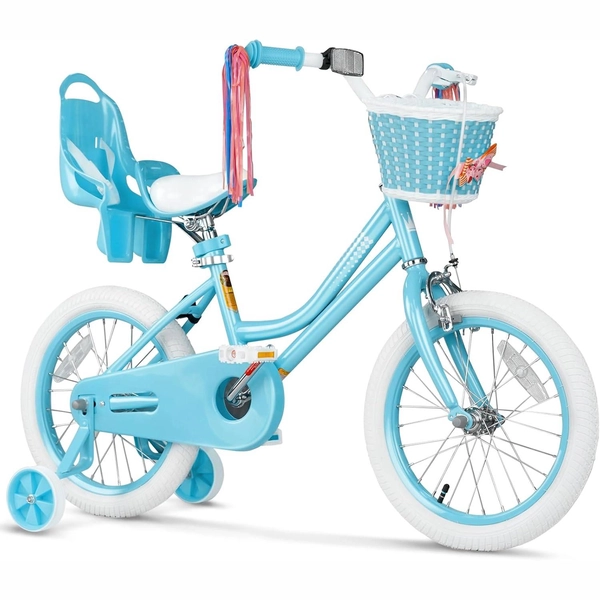 Blue XJD Girls Bike with Training Wheels – 12/14/16 Inch
Why it fits: Its smaller-wheel or training-wheel configuration is a useful match for early pedal practice, where stable starts and stops matter most.
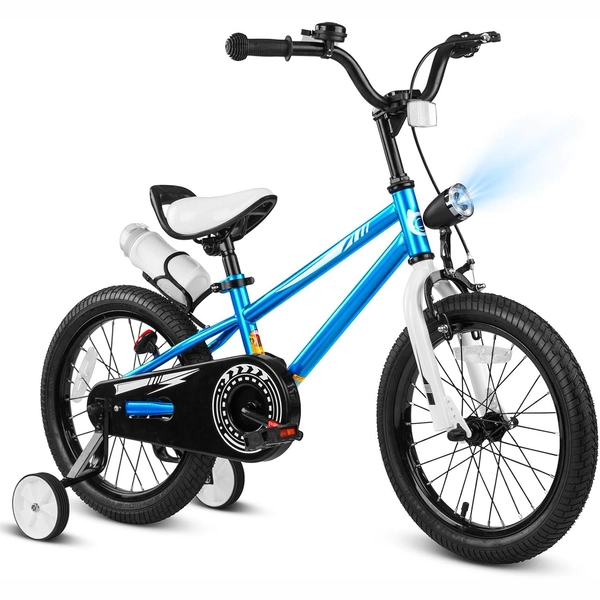 XJD Boys 12/14/16" Training Wheel Bike – Blue
Why it fits: Its smaller-wheel or training-wheel configuration is a useful match for early pedal practice, where stable starts and stops matter most.
First-ride checklist
- Set the saddle and handlebar before the child rides independently.
- Practice braking and dismounting on a flat, quiet surface.
- Check tire pressure, pedals, chain and fasteners regularly.
- Use a level, properly fitted helmet and supervise early rides.
Questions parents ask
Should I buy a larger bike for growth?
Only when the child can already control it. A little adjustment room is useful; a frame that makes braking and turning difficult is not.
Are training wheels required?
No. Some children benefit from them while learning pedal coordination, while others progress more naturally with balance practice and close supervision. Choose based on the child’s current skills.
Source note: HealthyChildren.org recommends checking control, clearance and brake reach instead of buying an oversized bicycle.
Bikes for your next adventure
-

Pink Girls' 12/14/16" Bike by XJD – Basket & Doll Seat
The XJD Pink Girls' Bike with Basket & Doll Seat is made for riders 71–122 cm ta…$75.99
$99.99 -

Light Purple XJD Toddler Bike Helmet, Adjustable, Size XS (46–51 cm)
This Light Purple XJD toddler bike helmet is made for the smallest riders — the …$20.39
-

Black XJD Toddler Bike Helmet, Adjustable – Kids' Protective Helmet
The XJD Toddler Bike Helmet in black is an adjustable protective helmet for kids…$20.39