

What size bike for 52 tall child
For a child who is 52 inches (132 cm) tall, start by trying a 20-inch bike. An 18-inch bike also reaches 52 inches in the XBikes chart, so compare both when possible; choose by actual stand-over clearance, reach, brake control and confidence—not age or room to grow.
Why 20 inches is the starting point
The XBikes starting range for a 20-inch wheel bike is 48–60 inches (122–152 cm), placing a 52-inch child within that range. An 18-inch bike covers 43–52 inches (109–132 cm), putting the same child exactly at its upper limit.
This overlap does not mean the sizes fit equally. A confident rider with suitable reach and control may fit a 20-inch model, while a child who cannot comfortably manage it may need to compare an 18-inch bike. Do not move up to 24 inches just for growth: that range begins at 54 inches (137 cm).
Measure before comparing bikes
Confirm the child’s height without shoes, standing straight against a wall. Then measure inseam from the floor to the crotch while the child stands naturally. Wheel-size charts use overall height as a starting point, but inseam helps you evaluate clearance over the frame and the usable seat position.
Record both measurements and bring the child to the fit check. Two children who are both 52 inches tall can have different leg, torso and arm proportions, so the same wheel size may not give both children the same control.
What the child must be able to do
- Stand over the bike: The child should be able to straddle it securely rather than balance awkwardly on tiptoes.
- Reach the controls: Hands should reach the grips and brakes without stretching or shifting forward.
- Steer and stop: The child should turn the handlebar, operate the brakes and stop predictably while remaining in control.
- Start confidently: Mounting, pushing off and putting a foot down should not feel intimidating.
The American Academy of Pediatrics advises having the child try the bicycle and avoiding an oversized bike bought merely for future growth. If the fit requires unusual adjustment or the controls remain difficult to use, consult the exact product manual or a qualified bicycle mechanic.
How the supplied XBikes options compare
These catalog options provide one directly relevant 20-inch choice and two smaller-wheel comparison points, helping you separate a plausible starting size from options that are likely below the chart range for a 52-inch rider.
 XJD Light Purple Girls Bike with Basket, Training Wheels, 12/14/16/20 Inch
The 12, 14 and 16 Inch available versions are below the XBikes height ranges that include a 52-inch rider, making them smaller-size comparison points rather than substitutes.
 XJD Kids Beach Cruiser Bicycle, Rear Rack & V-Brakes, Mint Green
The available 20 Inch version matches the starting range for a 52-inch child; the 24 and 26 Inch versions begin above this rider’s stated height.
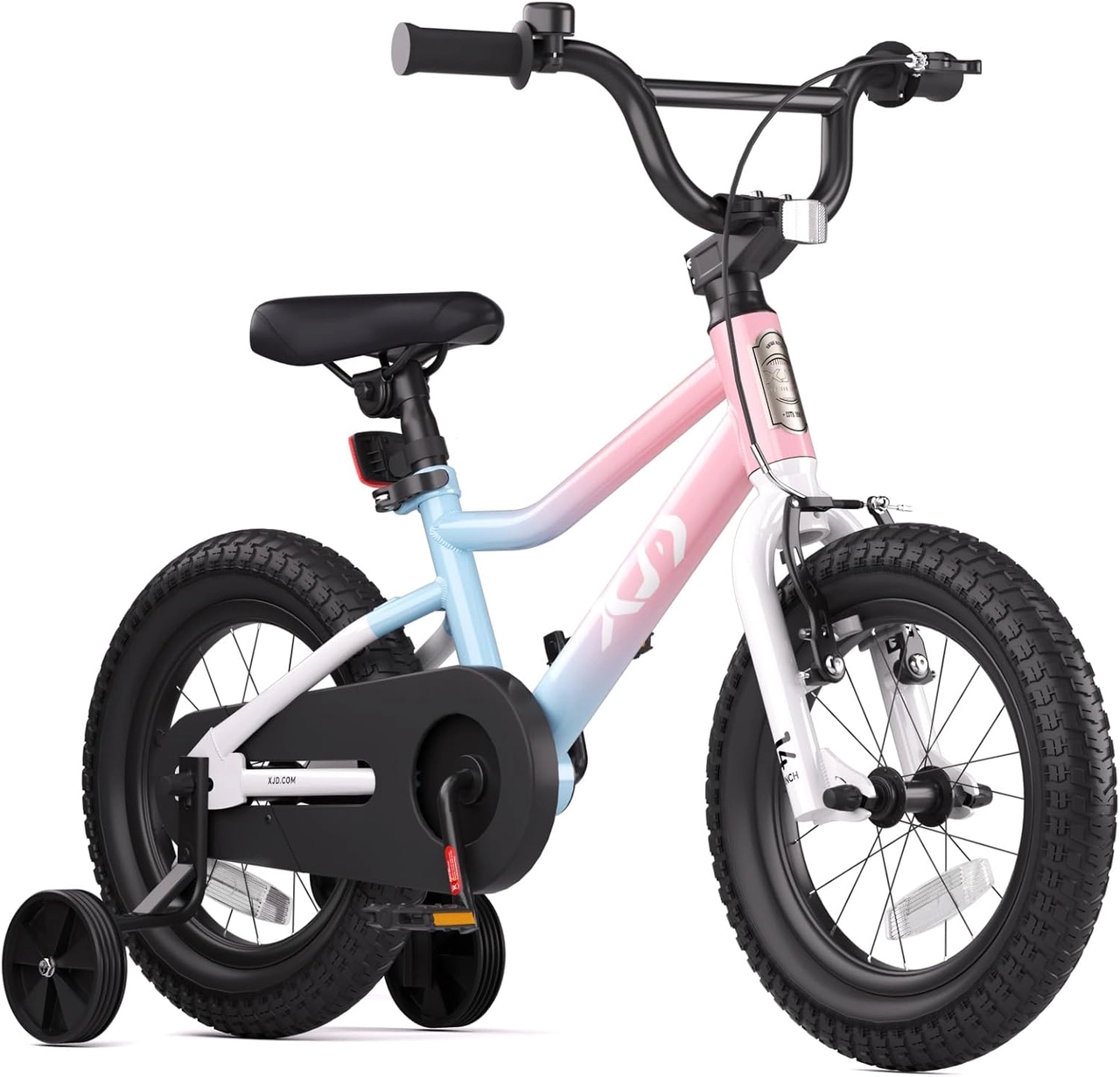 XJD Girls BMX Bike 12/14/16 Inch with Training Wheels – Pink Blue
The largest available label is 16 Inch, whose XBikes starting range ends at 48 inches, so this product is not the chart starting point for a 52-inch rider.
XJD Kids Beach Cruiser Bicycle, Rear Rack & V-Brakes, Mint Green is offered in 20 Inch, 24 Inch and 26 Inch labels. Its 20 Inch version is the relevant one to try first for a 52-inch child. The 24 Inch range starts at 54 inches, while 26 Inch is for riders over 60 inches, so neither should be treated as a growth-room substitute.
XJD Light Purple Girls Bike with Basket, Training Wheels, 12/14/16/20 Inch is supplied here with 12 Inch, 14 Inch and 16 Inch SKU labels. For a 52-inch child, those available versions sit below the XBikes height ranges that include 52 inches, so they are smaller-size comparison points rather than recommended substitutes.
XJD Girls BMX Bike 12/14/16 Inch with Training Wheels – Pink Blue is also available in 12 Inch, 14 Inch and 16 Inch labels. Its largest supplied option is 16 Inch, whose starting range ends at 48 inches (122 cm); it is therefore not the chart starting point for this rider.
Run a side-by-side fit check
- Try a 20-inch bike with the seat and controls adjusted only as permitted by its manual.
- Check stand-over position, handlebar reach and whether the child can operate the brakes without strain.
- Have the child demonstrate controlled starting, steering and stopping in a suitable low-risk area.
- If the 20-inch bike is not manageable, compare an 18-inch bike rather than forcing the larger fit. None of the supplied products has an 18 Inch SKU label, so the listed models are not substitutes for that exact size.
For assembly, adjustment limits, maintenance, compatibility and torque requirements, follow the exact bicycle manual or ask a qualified bicycle mechanic; those details cannot be inferred from wheel size.
Make the 52-inch decision
Choose the 20-inch bike only if the child passes every control check. If the child lacks clearance, reach or confident braking, compare an 18-inch model despite being at the top of its height range. Do not jump to 24 inches before the child reaches its stated range and can control the bike.
Finish by fitting a bicycle helmet. U.S. Consumer Product Safety Commission guidance calls for a properly fitting helmet worn level, with straps used according to the helmet manufacturer’s instructions. For this 52-inch rider, the next action is simple: measure height and inseam, try 20 inches, and size down to compare 18 inches if control is not secure.
Bikes for your next adventure
-

XJD Girls Bike for Kids Ages 3-8, 12/14/16 Inch with Training Wheels – Purple
The XJD Girls Bike in Purple is a training-wheel bicycle for kids ages 3 to 8, f…$149
$169 -

XJD Kids Bike for Girls – Pink, 12/14/16/20 Inch with Training Wheels
The XJD Kids Bike for Girls in Pink is a training-wheel bike built to carry your…$139
$159 -

Black XJD Kids Bike for Boys – 12, 14 & 16 Inch Sizes
For a son between roughly 3 and 8 years old, the XJD Kids Bike in Black covers t…$169
$199