

What size bike for a 16 inch inseam
A 16-inch inseam does not automatically mean a 16-inch bike. Measure the child’s height and inseam, then try 12-, 14- and 16-inch wheel bikes for safe stand-over, reach, braking and control.
Start with the correct measurement
“16 inch” can describe either the rider’s inseam or a bicycle’s wheel size, but those measurements are not interchangeable. A child with a 16-inch inseam may fit different wheel sizes depending on total height, body proportions, reach and confidence.
Measure the child barefoot, standing straight with feet slightly apart. Place a firm, thin book between the legs and raise it gently to the crotch, as a bicycle saddle would sit. Measure vertically from the floor to the top edge of the book. That is the inseam. Measure total standing height separately.
Repeat the inseam measurement once to catch positioning errors. Use the result to judge stand-over and starting confidence during an actual fit check—not to select a wheel diameter by matching the two numbers.
Compare height with XBikes wheel-size starting points
XBikes uses the following ranges as initial comparison points. Height is more useful than age, but neither replaces trying the bicycle.
| Wheel size | Starting age | Rider height |
|---|---|---|
| 12 Inch | 3–4 | 34–40 in / 86–102 cm |
| 14 Inch | 3–6 | 37–45 in / 94–114 cm |
| 16 Inch | 4–7 | 40–48 in / 102–122 cm |
| 18 Inch | 5–9 | 43–52 in / 109–132 cm |
| 20 Inch | 7–12 | 48–60 in / 122–152 cm |
If the child’s measured height falls within overlapping ranges, compare those adjacent sizes in person. The child’s inseam, reach, ability to operate the brakes and present riding confidence should decide between them. Do not choose a larger bicycle merely because the child may grow into it.
What to check when the child tries the bike
Have the child wear the shoes normally used for riding. A useful fit check answers four questions:
- Stand-over: Can the child straddle the bicycle securely and remain stable rather than being forced onto tiptoes or against the frame?
- Starting and stopping: Can the child get on, set off and put a foot down without struggling?
- Reach and steering: Can the child hold and turn the handlebar while keeping a controlled, comfortable posture?
- Brake control: If the bicycle has hand controls, can the child reach and operate them reliably without losing grip or balance?
A bike is too large if the child cannot stand over it securely, reach its controls or stop confidently. A bike can also be unsuitable if its riding position feels cramped or interferes with steering. Follow the exact product manual for permitted adjustments and assembly; use a qualified bicycle mechanic when fit or setup is uncertain.
How the supplied XBikes options help
The catalog includes two training-wheel bicycle models with adjacent wheel-size choices, so they are useful for comparing 12-, 14- and 16-inch options against the child’s measured height and real fit. Their size labels remain wheel sizes, not inseam recommendations.
 Pink 12/14/16/20" XJD Girls Bike with Training Wheels & Basket
Available in 12, 14, 16 and 20 Inch SKUs; its smaller three sizes provide useful neighboring comparison points for a child with a 16-inch inseam, subject to measured height and an individual fit check.
 Black XJD Kids Bike for Boys – 12, 14 & 16 Inch Sizes
Available in 12, 14 and 16 Inch SKUs, allowing comparison across adjacent XBikes height ranges. A 16 Inch SKU should not be selected solely because the child has a 16-inch inseam.
The Pink 12/14/16/20" XJD Girls Bike with Training Wheels & Basket is listed in 12 Inch, 14 Inch, 16 Inch and 20 Inch SKUs. For this question, its 12-, 14- and 16-inch versions provide the most relevant comparison; the 20-inch version starts from a substantially taller XBikes height band.
The Black XJD Kids Bike for Boys – 12, 14 & 16 Inch Sizes is listed in 12 Inch, 14 Inch and 16 Inch SKUs. Those three sizes also let a parent compare neighboring XBikes height ranges instead of assuming a 16-inch inseam requires the 16 Inch SKU.
These catalog facts do not establish which model or size fits a particular child. They also do not provide geometry, brake type, adjustment limits or assembly procedures. Check the exact product manual for those details and arrange an individual try-out before deciding.
Make the size decision
- Record the child’s barefoot inseam and total height.
- Use total height to identify the likely wheel-size range in the XBikes table.
- Try that size and any adjacent size whose height range overlaps.
- Reject any option that compromises stand-over, starting, stopping, steering reach or brake operation.
- Choose the bike the child can control confidently now, rather than an oversized bike intended for future growth.
Before riding, add a bicycle helmet that fits properly, sits level and has its straps adjusted according to the helmet manufacturer’s instructions. For a 16-inch inseam, the next action is therefore to measure total height and compare real 12-, 14- and possibly 16-inch fits—not to order a 16-inch wheel bike from the inseam number alone.
Bikes for your next adventure
-
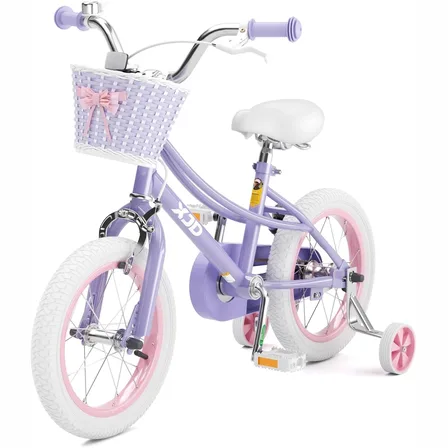
Girls' Training Wheel Bike by XJD with Basket – Purple
If you're shopping for a first bike for a girl roughly 3 to 12 years old (91–152…$75.99
-
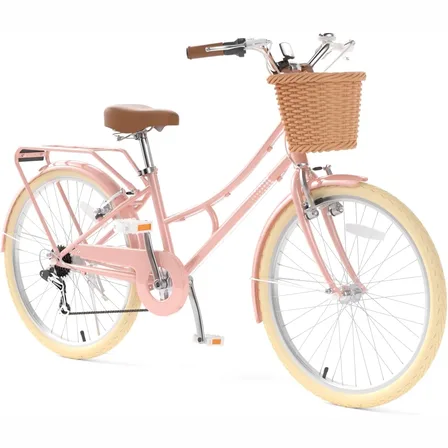
XJD Pink Beach Cruiser for Girls – Rear Rack & V-Brake
The XJD Pink Beach Cruiser for girls is the step-up bike for riders who've outgr…$179.99
$209.99 -

Blue XJD Girls Bike with Training Wheels – 12/14/16 Inch
If you're shopping for a first pedal bike for a daughter roughly 3 to 8 years ol…$149
$169