

What size bike for 60 inch child
A 60-inch child should start by trying a 20-inch bike and a 24-inch bike. Height alone cannot decide: measure inseam and check clearance, reach, braking and control before choosing.
Why 60 inches falls between two starting points
Under the XBikes sizing standard, a 20-inch bike covers rider heights of 48–60 inches (122–152 cm), while a 24-inch bike covers 54–64 inches (137–163 cm). A child who is exactly 60 inches tall is therefore at the upper edge of the 20-inch range and within the 24-inch range.
That overlap makes both wheel sizes reasonable to compare, but it does not make them interchangeable. Body proportions, bike geometry and riding ability can change which one is manageable. Do not automatically select the larger bike for extra growing room; the child should be able to control the bicycle comfortably now.
Measure height and inseam first
Measure the child without shoes, standing straight against a wall. Record total height from the floor to the top of the head. For inseam, have the child stand with feet slightly apart and measure from the floor to the crotch area, using a firm, level object to represent the bicycle saddle.
Compare the measured height with the XBikes starting ranges, then use inseam during the physical fit check. An inseam number alone cannot select a wheel size because stand-over height varies between bicycle frames.
| Wheel size | XBikes rider-height range | Meaning at 60 inches |
|---|---|---|
| 20 Inch | 48–60 in / 122–152 cm | At the top of the starting range |
| 24 Inch | 54–64 in / 137–163 cm | Within the starting range |
| 26 Inch | Over 60 in / 153 cm | Not the starting point at exactly 60 inches |
What to check during a test fit
Have the child try each candidate bicycle rather than deciding from the size label. Use the bicycle’s exact product manual for permitted adjustments, assembly details, compatibility and torque specifications. If setup or adjustment is uncertain, use a qualified bicycle mechanic.
- Stand-over: With the child standing over the frame, confirm there is comfortable clearance and no pressure against the body.
- Starting and stopping: The rider should mount, start, stop and put a foot down without panic or a loss of balance.
- Reach: Seated in a normal riding position, the child should reach the handlebar without stretching, locking the elbows or leaning excessively.
- Brake control: The child must be able to reach and operate the bicycle’s brakes reliably. Check the actual bicycle because controls and adjustment ranges differ.
- Turning: Ask the child to make controlled turns at low speed. The front end should not feel too heavy or difficult to direct.
If the 24-inch bike compromises clearance, reach or control, it is too large for current use even though 60 inches falls within its height range. If the 20-inch bike feels cramped or restricts comfortable control, compare a properly adjusted 24-inch model.
How the supplied catalog option relates
The Light Pink XJD Girls' Bicycle with Basket & Training Wheels is available in 12 Inch, 14 Inch, 16 Inch and 20 Inch SKU labels. Its 20 Inch option provides a relevant catalog comparison because 60 inches is the upper boundary of the XBikes 20-inch height range. No supplied product has a 24 Inch option, so this product cannot provide the other size needed for a complete side-by-side fit comparison.
These particular catalog options help answer the question by showing the available 20 Inch endpoint alongside smaller training-wheel sizes; for a 60-inch child, only the 20 Inch label is within the supplied height standard, subject to an individual fit check.

The 12 Inch, 14 Inch and 16 Inch versions are not appropriate starting points for a 60-inch rider under the supplied standard. Their maximum rider heights are 40, 45 and 48 inches respectively. The product title and training-wheel category do not establish fit, confidence or readiness, so assess the child rather than relying on the catalog wording.
Use confidence to break the tie
A child near the boundary who is still developing balance, starts or braking may control a correctly fitted 20-inch bicycle more readily than a larger option. A confident rider with suitable stand-over clearance, comfortable reach and dependable brake operation may fit a 24-inch bicycle better. Confidence matters, but it cannot make an oversized frame acceptable.
Whichever bicycle fits, add a properly fitting helmet. It should sit level on the child’s head, and its straps should be adjusted and used according to the helmet manufacturer’s instructions.
The decision to make now
For a child measuring exactly 60 inches, arrange real fit checks on both 20-inch and 24-inch bicycles. Choose the one the child can stand over, reach, steer and brake confidently today. Do not move to 26 inches solely because the child is close to its over-60-inch starting point, and do not buy a 24-inch bike merely for future growth.
Bikes for your next adventure
-

XJD Kids Bike for Girls – Pink, 12/14/16/20 Inch with Training Wheels
The XJD Kids Bike for Girls in Pink is a training-wheel bike built to carry your…$139
$159 -
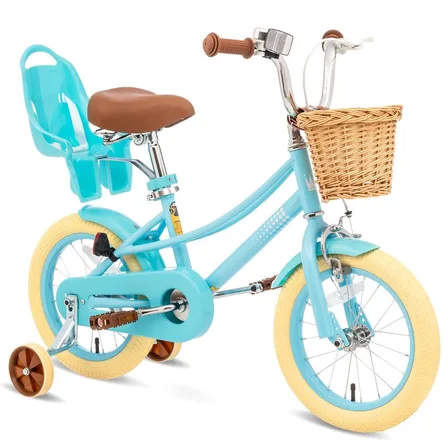
Girls' Training Wheel Bike by XJD, 12–20 Inch Wheels – Blue
This XJD girls' training wheel bike in Blue covers one of the widest fit ranges …$139
$159 -
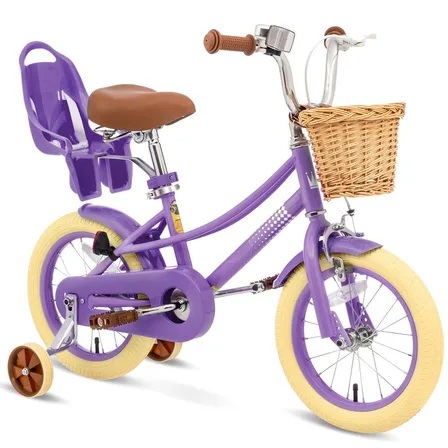
XJD Girls' Bike with Training Wheels, 12/14/16/20 Inch – Purple
The XJD girls' bike with training wheels in Purple is built to grow with your ri…$139
$159