

What size bike for a 17 year old
For most 17-year-olds over 60 in (153 cm), start with a 26 Inch bike, then confirm stand-over clearance, reach, brake control and confidence.
Choose by height, not by age alone
Seventeen is not enough information to determine bicycle size. Measure the rider rather than assuming that every teenager needs the same wheel size. Under the XBikes starting points, 26 Inch is for youth and adults over 60 in (153 cm). A rider at or below that threshold may need a smaller starting point, while riders in an overlapping height range should compare both possibilities in person.
Do not buy an oversized bicycle simply to leave room for growth. The rider should try the bicycle and demonstrate comfortable control before it is chosen.
Measure the rider before comparing bikes
- Height: Have the rider stand straight without shoes against a wall. Measure from the floor to the top of the head.
- Inseam: With feet slightly apart, measure from the floor to the crotch. Use this to assess clearance over the bicycle rather than trying to convert it into an unsupported frame-size formula.
- Reach: On the bicycle, check that the rider can hold the handlebar without stretching, locking the elbows or leaning awkwardly.
- Brake control: Confirm that the rider can reach and operate the brake controls while maintaining a secure grip.
- Confidence: Ask the rider to start, steer, stop and dismount in a controlled manner. Current ability matters alongside physical measurements.
Compare the measurements with XBikes starting points
| Wheel size | XBikes age starting point | Rider-height starting point |
|---|---|---|
| 20 Inch | Ages 7–12 | 48–60 in / 122–152 cm |
| 24 Inch | Ages 10–14 | 54–64 in / 137–163 cm |
| 26 Inch | Youth and adults | Over 60 in / 153 cm |
The age columns are only starting points. For a 17-year-old, measured height and the individual fit check take priority. If the rider is over 60 in, begin with 26 Inch. Between 60 and 64 in, the listed height ranges overlap, so compare 24 Inch and 26 Inch without assuming they fit equally. If the rider is under 60 in, use the applicable height range as the starting point and verify the fit carefully.
What a successful fit check looks like
First, check stand-over clearance. The rider must be able to straddle the bicycle without the frame interfering with a safe, controlled stop. Exact clearance requirements can vary by bicycle, so follow the product manual or ask a qualified bicycle mechanic rather than relying on an invented universal number.
Next, watch the rider sit and hold the handlebar. The posture should allow easy steering and access to the controls. Have the rider operate each brake control, start, turn, stop and place a foot down. A wheel-size label that matches the height chart is not enough if reach, control or confidence is poor.
Reject a bike that requires the rider to stretch for the handlebar or brakes, struggles to clear when standing over it, or feels difficult to start and stop. If adjustments, assembly, compatibility or torque are in question, use the exact product manual or a qualified bicycle mechanic.
How the supplied catalog option helps
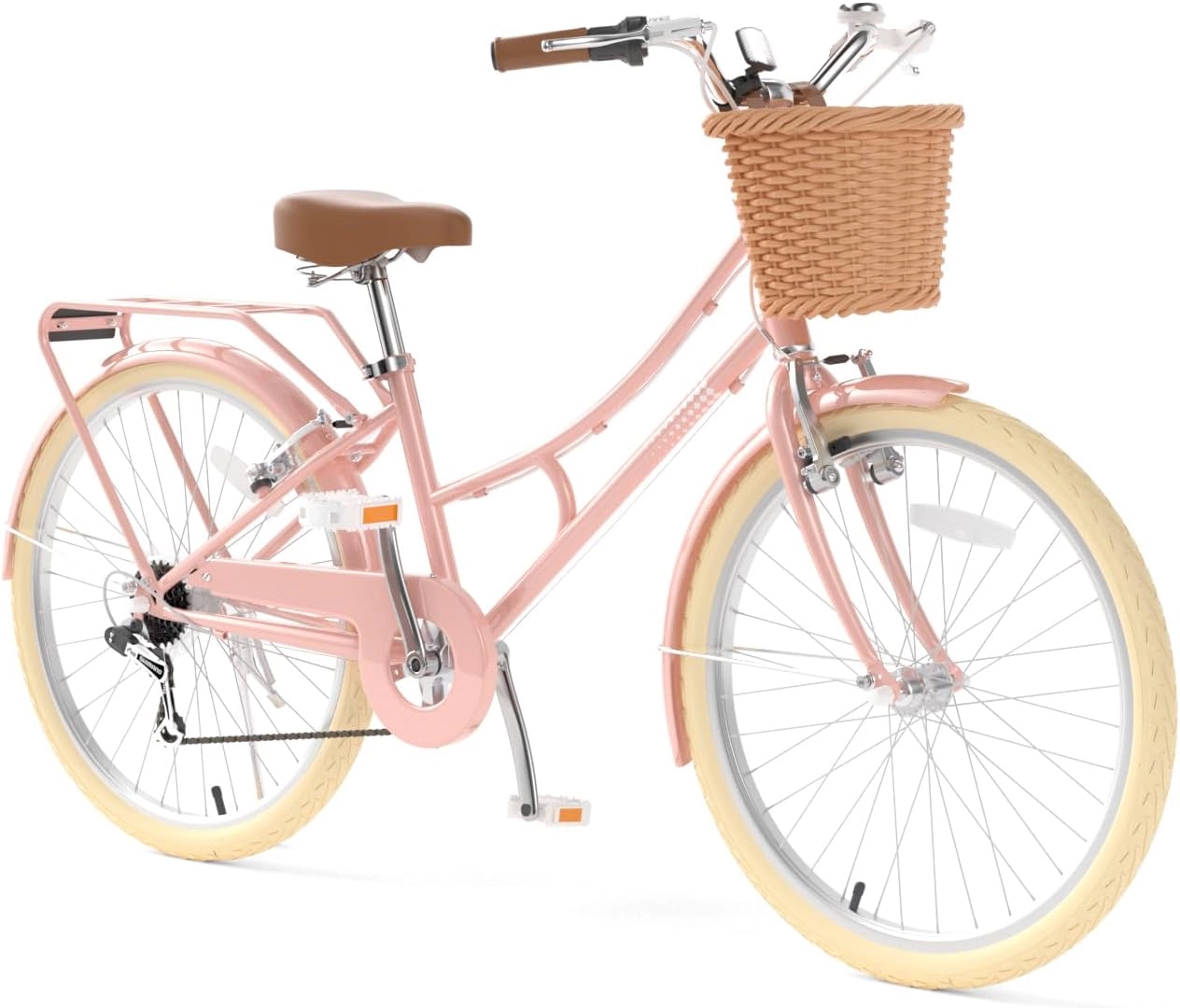
The XJD Pink Beach Cruiser for Girls – Rear Rack & V-Brake is relevant because its supplied size labels include 20 Inch, 24 Inch and 26 Inch. Those options let a family compare the wheel-size starting points that could bracket a shorter or taller 17-year-old. Its catalog category is Beach Cruiser Bikes, and its title identifies a rear rack and V-brake; neither detail proves fit. The rider must still try the selected size and pass the same clearance, reach, braking and control checks.
Make the final decision
Measure height and inseam first. For a 17-year-old over 60 in (153 cm), try the 26 Inch option first; in the 60–64 in overlap, compare 24 Inch and 26 Inch directly. Consider 20 Inch or 24 Inch only when the rider’s measured height falls within the supplied range, never merely because it is available. Choose only the bike on which this particular rider can stand over, reach, steer, brake and stop confidently.
Before riding, use a bicycle helmet that fits properly, sits level and has its straps adjusted according to the helmet manufacturer’s instructions. The correct next step is therefore simple: take the measurements to the bicycle, perform the control check, and decline any size that the 17-year-old cannot manage comfortably.
Bikes for your next adventure
-

XJD Kids Bike for Girls – Pink, 12/14/16/20 Inch with Training Wheels
The XJD Kids Bike for Girls in Pink is a training-wheel bike built to carry your…$139
$159 -

Blue XJD Girls Bike with Training Wheels – 12/14/16 Inch
If you're shopping for a first pedal bike for a daughter roughly 3 to 8 years ol…$149
$169 -
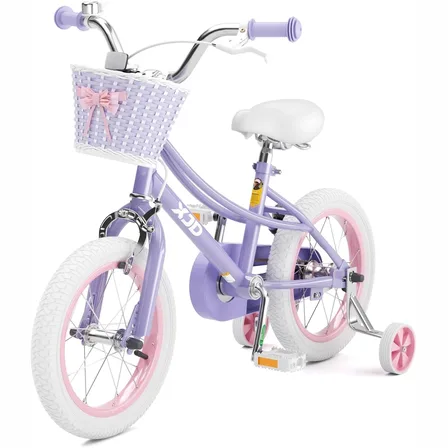
Girls' Training Wheel Bike by XJD with Basket – Purple
If you're shopping for a first bike for a girl roughly 3 to 12 years old (91–152…$75.99