

What size bike for a 42 inch child
A 42-inch child should usually start by trying both a 14-inch and a 16-inch bike. Their height falls within both XBikes ranges, so choose by actual fit, reach, brake control and confidence—not age or room to grow.
Why two wheel sizes may fit
XBikes lists a 14-inch bike for riders 37–45 inches tall and a 16-inch bike for riders 40–48 inches tall. A child who is 42 inches tall sits in the overlap. Wheel size is therefore a useful starting point, but it does not decide the fit by itself.
| Wheel size | XBikes starting range | Meaning at 42 inches |
|---|---|---|
| 12 Inch | Ages 3–4; height 34–40 in | Below the listed height range |
| 14 Inch | Ages 3–6; height 37–45 in | Within the listed range |
| 16 Inch | Ages 4–7; height 40–48 in | Within the listed range |
| 18 Inch | Ages 5–9; height 43–52 in | Below the listed starting height |
Do not move directly to an 18-inch bike merely because the child is close to its range. At 42 inches, the child is below the listed 43-inch starting point. Likewise, a 12-inch bike is below the relevant range because its listed rider height ends at 40 inches.
Measure the child before comparing bikes
Measure height without shoes, with the child standing straight against a wall. Then measure inseam from the floor to the crotch while the child stands naturally. Record both measurements and take them to the fit check; height identifies likely wheel sizes, while inseam helps assess stand-over and starting position.
Do not select from age alone. Children of the same age can have different leg length, arm reach, coordination and confidence. The age bands in the XBikes table are only starting points, while the measured child must control the actual bicycle.
Perform the fit check in person
Have the child try each candidate bicycle in ordinary riding clothes and closed-toe shoes. Follow the exact product manual when adjusting the seat or other components. If assembly, adjustment or compatibility is uncertain, use a qualified bicycle mechanic rather than improvising a procedure.
- Check stand-over: With the child straddling the bike, confirm that they can stand securely and are not forced onto tiptoes by the frame.
- Check starting and stopping: The child should be able to get into position, set off and stop without the bicycle overwhelming them.
- Check reach: Seated normally, they should reach the handlebar without stretching, locking their elbows or leaning excessively.
- Check brake control: Confirm that they can comfortably reach and operate the bicycle's brake controls. Do not assume a reachable handlebar means the brakes are manageable.
- Check steering: Ask for slow turns in both directions. The child should remain composed and steer without fighting the bike.
If the 16-inch bicycle makes starting, stopping, steering or brake use noticeably harder, choose the properly fitting 14-inch bicycle. If both fit correctly and the child controls the 16-inch model confidently, the 16-inch option may be appropriate. Do not buy an oversized bike solely for future growth.
How the supplied catalog option helps
The XJD Girls BMX Bike 12/14/16 Inch with Training Wheels – Pink Blue is relevant because its available SKU labels include both 14 Inch and 16 Inch, the two starting sizes that overlap at 42 inches. Its 12 Inch SKU also illustrates a nearby size whose listed height range has already ended. These labels support comparison only; each SKU still needs an individual fit check.
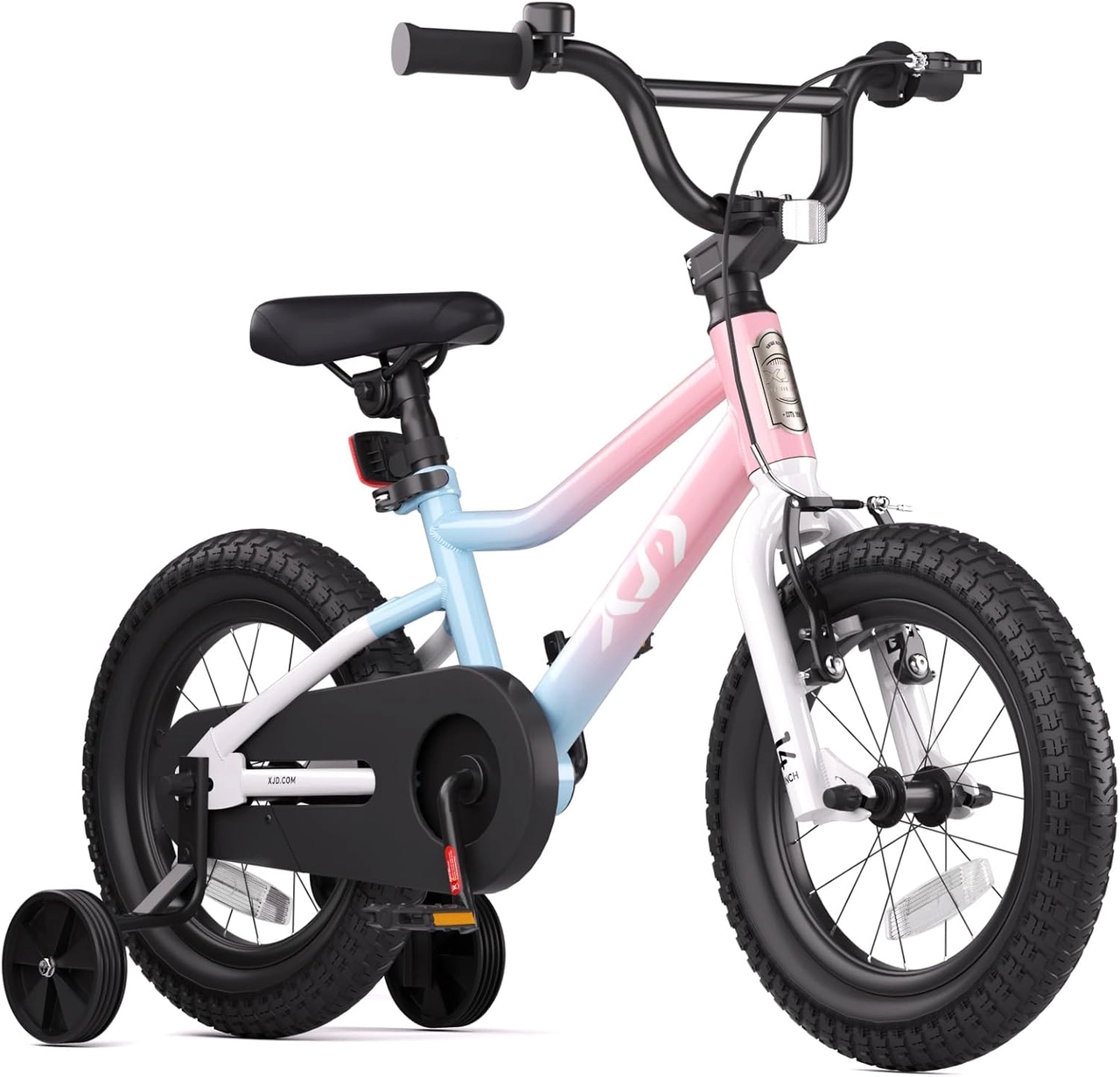
Training wheels appear in the product title, but that wording does not establish fit or eliminate the need to test balance, reach, stand-over and brake control. Use the exact product manual for assembly, adjustments, compatibility, maintenance and any limits not supplied here.
Complete the safety check
Before riding, provide a bicycle helmet that fits the child properly. It should sit level, and its straps should be used according to the helmet manufacturer's instructions. Also inspect the completed bicycle as directed by its manual; a qualified bicycle mechanic can check work that is unclear or incomplete.
The decision for a 42-inch child
Compare a 14-inch and a 16-inch bike first. Measure height and inseam, then have the child try both. Select the one they can straddle, reach, steer, start, stop and brake with present confidence. Rule out the 16-inch option if control is compromised, and do not step up to 18 inches while the child remains below its listed starting height.
Bikes for your next adventure
-

Kids Bike Helmet by XJD for Boys & Girls – Black, Blue, Green, Pink, Purple
The XJD Kids Bike Helmet covers a wide 2-to-8-year age range thanks to two head-…$59.99
-

Kids Bike Helmet by XJD for Girls – Pink
The XJD Kids Bike Helmet in Pink is a lightweight multi-sport helmet for girls r…$59.99
$99 -

XJD Kids Bike for Girls – Pink, 12/14/16/20 Inch with Training Wheels
The XJD Kids Bike for Girls in Pink is a training-wheel bike built to carry your…$139
$159