

What size bike for a 42 inch tall child
A 42-inch-tall child should usually compare a 14-inch bike with a 16-inch bike. Height fits both XBikes ranges, so choose only after a hands-on fit check.
Why two wheel sizes can fit at 42 inches
XBikes uses wheel size as a starting point, not a final prescription. Its 14-inch range covers riders 37–45 inches (94–114 cm), while its 16-inch range covers riders 40–48 inches (102–122 cm). A child who is 42 inches tall sits inside both ranges.
That overlap is useful: it tells you to compare two bicycles rather than automatically selecting the larger one. Age should not settle the decision. XBikes lists 14-inch bikes for ages 3–6 and 16-inch bikes for ages 4–7, but measured height, inseam, reach, brake control and current confidence matter more than age alone.
Measure the child before comparing bikes
Measure without shoes if possible, using a wall and a hard, level floor. Record current standing height rather than relying on an older medical or clothing measurement. Then measure inseam from the floor to the crotch with the child standing naturally.
- Height: Confirm that the child is about 42 inches tall and therefore within both starting ranges.
- Inseam: Use it to judge stand-over clearance on each actual frame; wheel diameter does not reveal frame height.
- Reach: Check whether the child can hold the handlebars without stretching, locking the elbows or leaning awkwardly.
- Hand control: Confirm that the child can reach and operate the fitted brake controls as directed for that bicycle.
- Confidence: Note whether the child is starting, stopping and balancing independently or still needs extra stability and close assistance.
Bring these measurements to the fit check. Geometry can differ between bicycles carrying the same wheel-size label, so a tape measurement alone cannot approve a bike.
Try 14-inch and 16-inch bikes in that order
Start with a 14-inch model, then repeat the same checks on a 16-inch model. With the child straddling each bicycle, look for suitable stand-over clearance. Have the child sit in a normal riding position and check steering reach, posture and access to the controls.
The right candidate is the one the child can mount, steer, stop and dismount under control now. Do not buy an oversized bicycle merely to allow room for growth. If the 16-inch bike makes the child stretch, struggle with the controls or lose confidence, it is not the right current fit even though 42 inches falls within its starting range.
If both candidates permit sound control, compare the complete fit and the child’s present riding ability. If neither does, do not force a choice based on the wheel-size chart; try a different frame or seek help from a qualified bicycle mechanic.
How the supplied XBikes options help
The XJD Boys & Girls BMX Bike with Training Wheels, 12/14/16" – Blue is relevant because its supplied sizes include both 14 Inch and 16 Inch, the two sizes that overlap at 42 inches. Its 12 Inch option is labeled for a 34–40-inch height starting range, so it falls below a measured height of 42 inches and should not be treated as equivalent.
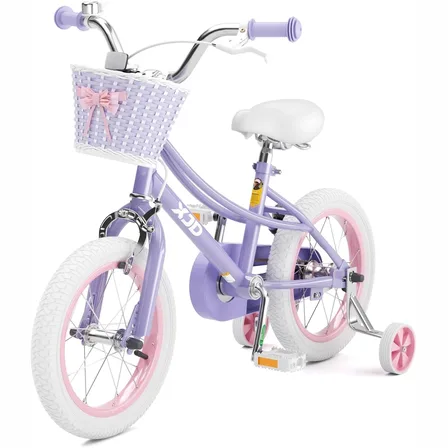
The Girls' Training Wheel Bike by XJD with Basket – Purple also supplies 14 Inch and 16 Inch comparison options. Its 20 Inch option begins at 48 inches under the XBikes standard, so it is outside the starting range for a 42-inch child. These catalog options help because their supplied size labels let a parent compare the relevant wheel sizes, while the actual frame and controls still require an individual check.
 XJD Boys & Girls BMX Bike with Training Wheels, 12/14/16" – Blue
Available in 12 Inch, 14 Inch and 16 Inch. The 14 Inch and 16 Inch labels are relevant comparison points for a 42-inch rider, subject to an individual fit and control check.
 Girls' Training Wheel Bike by XJD with Basket – Purple
Available in 14 Inch, 16 Inch and 20 Inch. Compare its 14 Inch and 16 Inch options for a 42-inch rider; the 20 Inch starting range begins at 48 inches.
The presence of training wheels in both product titles describes the catalog products; it does not prove that either bicycle fits a particular child. Follow the exact product manual for assembly, adjustment, maintenance, compatibility and any limits not supplied here, or use a qualified bicycle mechanic.
Complete a short control and helmet check
Before deciding, have the child demonstrate the basic actions in a controlled area with close adult supervision. The child should be able to get into position, hold a steady posture, turn the handlebars without overreaching, operate the brakes, place feet as needed and get off without being trapped or destabilized.
- Reject a bike that lacks suitable stand-over room.
- Reject a bike whose controls cannot be reached and operated reliably.
- Reject a bike that visibly compromises steering or stopping control.
- Recheck fit after any permitted adjustment, following the product manual.
A bicycle helmet is also essential. It must fit properly, sit level and have its straps used according to the helmet manufacturer’s instructions. A helmet cannot correct a bicycle that is too large or otherwise poorly fitted.
The decision for a 42-inch rider
Put 14-inch and 16-inch bicycles side by side and choose from demonstrated control, not anticipated growth. Select the 14-inch option if the larger bicycle compromises stand-over, reach, braking or confidence. Consider the 16-inch option only if the child passes every hands-on fit and control check comfortably. If the result remains unclear, pause the purchase and have a qualified bicycle mechanic assess the child on the exact bicycle.
Bikes for your next adventure
-

XJD Kids Bike for Girls – Pink, 12/14/16/20 Inch with Training Wheels
The XJD Kids Bike for Girls in Pink is a training-wheel bike built to carry your…$139
$159 -

Blue XJD Girls Bike with Training Wheels – 12/14/16 Inch
If you're shopping for a first pedal bike for a daughter roughly 3 to 8 years ol…$149
$169 -
Girls' Training Wheel Bike by XJD with Basket – Purple
If you're shopping for a first bike for a girl roughly 3 to 12 years old (91–152…$75.99