

What size bike for a 46 inch child
For a child who is 46 inches tall, compare 16-inch and 18-inch bikes first. Both XBikes height ranges include 46 inches, so measure inseam and check real-world control before choosing.
Why two wheel sizes can fit a 46-inch child
The XBikes starting range for a 16-inch bike is 40–48 inches (102–122 cm), while the range for an 18-inch bike is 43–52 inches (109–132 cm). A 46-inch rider falls inside both ranges. Height therefore narrows the search, but it does not settle the choice by itself.
Age should not override the measurements. The XBikes age starting points are 4–7 for a 16-inch bike and 5–9 for an 18-inch bike, but children of the same age can differ substantially in leg length, reach and confidence.
Measure height and inseam accurately
- Measure standing height: Have the child stand barefoot, upright and against a wall. Record the floor-to-head measurement. Confirm that 46 inches is the child's height, rather than an estimate or clothing size.
- Measure inseam: With feet slightly apart, place a firm, thin book between the legs and raise it gently to simulate the saddle. Measure from the floor to the top edge of the book.
- Keep both figures: Compare height with the wheel-size ranges, then use inseam during an actual stand-over and saddle-height check. Wheel diameter alone does not reveal frame clearance or riding position.
If the child will wear normal riding shoes, use those shoes during the final bicycle trial even though barefoot measurement provides a consistent starting figure.
Compare 16-inch and 18-inch fit in person
| Starting point | XBikes rider range | What it means at 46 inches |
|---|---|---|
| 16 Inch | 40–48 in / 102–122 cm | Within range; compare if the child can stand over, reach and control it comfortably. |
| 18 Inch | 43–52 in / 109–132 cm | Also within range; accept it only if the child retains confident control. |
Have the child try each available candidate. Check that there is suitable stand-over clearance, that mounting and stopping do not look strained, and that the child can reach the handlebars without stretching. They should be able to steer smoothly and operate the brakes reliably with their hands in a normal riding position.
Confidence matters. A hesitant beginner may control the smaller candidate more easily, while another 46-inch child with a longer inseam, comfortable reach and stronger current skills may fit the larger candidate. Do not buy an oversized bicycle merely to leave growth room. If either size compromises clearance, reach or braking, reject it despite the height chart.
How the supplied 12-, 14- and 16-inch bikes help
The supplied catalog options each come in 12 Inch, 14 Inch and 16 Inch labels, making their 16-inch versions relevant candidates for a 46-inch rider. Their smaller versions provide size comparisons, but 46 inches is above the XBikes height ranges for both 12 Inch (34–40 inches) and 14 Inch (37–45 inches). These products do not offer an 18-inch label, so they cannot substitute for an 18-inch bike when that size produces the better individual fit.
Use these particular catalog options to compare their available 16-inch versions against the child's measurements and control; use the 12- and 14-inch labels only to understand why moving down would fall outside the stated height starting ranges.
 Purple XJD Girls' Bike with Doll Seat & Basket
Available in 12-, 14- and 16-inch labels. For a 46-inch child, only the 16-inch option falls within the supplied height starting range, and it still requires an individual fit and control check.
 Black XJD Kids' BMX Bicycle with Training Wheels
This Kids' BMX Bike comes in 12-, 14- and 16-inch labels. Its 16-inch version is a relevant candidate for a 46-inch rider, provided stand-over, reach, braking and confidence are suitable.
 Pink Girls' 12/14/16" Bike by XJD – Basket & Doll Seat
This Training Wheel Bike is available in 12-, 14- and 16-inch labels. At 46 inches tall, compare only its 16-inch option as a starting point and confirm the child's individual fit.
Purple XJD Girls' Bike with Doll Seat & Basket is categorized as a Training Wheel Bike and is offered in 12 Inch, 14 Inch and 16 Inch labels. Only its 16-inch option falls within the supplied height range for a 46-inch child.
Black XJD Kids' BMX Bicycle with Training Wheels is categorized as a Kids' BMX Bike and has the same three size labels. Its 16-inch version is relevant to the initial comparison, subject to stand-over, reach, braking and confidence checks.
Pink Girls' 12/14/16" Bike by XJD – Basket & Doll Seat is categorized as a Training Wheel Bike and is likewise available in 12 Inch, 14 Inch and 16 Inch labels. Treat the title's numbers as catalog labels, not proof of fit.
Complete the decision before buying
- Confirm the child's current standing height and inseam.
- Try a 16-inch candidate and an 18-inch candidate when both are available.
- Verify comfortable stand-over clearance, natural reach, stable steering and dependable brake operation.
- Choose the bicycle the child can control now, rather than one intended primarily for future growth.
Fit a bicycle helmet as part of the setup: it should fit properly, sit level and have its straps adjusted according to the helmet manufacturer's instructions. Follow the exact bicycle manual or consult a qualified bicycle mechanic for assembly, maintenance, compatibility, load limits and torque details.
For a 46-inch child, proceed with a 16-inch bike only if the individual checks succeed; otherwise compare a true 18-inch model and choose it only when the child can stand over, reach, brake and ride with equal confidence.
Bikes for your next adventure
-

Kids Bike Helmet by XJD for Girls – Pink
The XJD Kids Bike Helmet in Pink is a lightweight multi-sport helmet for girls r…$59.99
$99 -
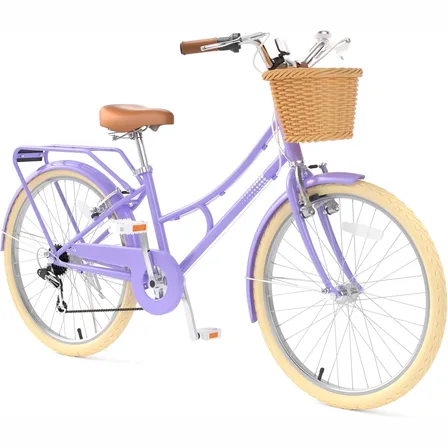
24-Inch Purple XJD Beach Cruiser Bike with U-Brake
The XJD 24-Inch Purple Beach Cruiser is built for girls and young women roughly …$159.99
-

Light Purple XJD Toddler Bike Helmet, Adjustable, Size XS (46–51 cm)
This Light Purple XJD toddler bike helmet is made for the smallest riders — the …$20.39