

What size bike for a small 6 year old
For a small 6-year-old, start by comparing a 14-inch and 16-inch bike. Choose from measured height and an actual fit check, not age alone.
Start with height, then confirm the fit
Measure the child without shoes, standing straight against a wall. Record total height from the floor to the top of the head. The XBikes starting points place a 14-inch bike at 37–45 in (94–114 cm) and a 16-inch bike at 40–48 in (102–122 cm). Because those ranges overlap, height narrows the choice but does not settle it.
Also measure inseam: have the child stand naturally and measure from the floor to the crotch. Compare that measurement with the bicycle’s stand-over clearance and lowest usable saddle position. The child should be able to straddle the bike comfortably rather than balance on tiptoes against the frame. Check the exact bicycle manual or ask a qualified bicycle mechanic when model-specific dimensions are unavailable.
How to choose between 14 and 16 inches
| Wheel size | XBikes starting point | What it means for a small 6-year-old |
|---|---|---|
| 14 Inch | Ages 3–6; 37–45 in / 94–114 cm | Compare this first when the rider is below 40 in / 102 cm or has limited confidence, then verify the complete fit. |
| 16 Inch | Ages 4–7; 40–48 in / 102–122 cm | Consider this when the rider is at least 40 in / 102 cm, provided stand-over, reach and controls remain manageable. |
| 18 Inch | Ages 5–9; 43–52 in / 109–132 cm | This may enter the comparison at 43 in / 109 cm, but it should not be chosen merely to allow room for growth. |
A child near a boundary can fit differently from another child of the same height because inseam, arm length and confidence vary. Never assume that moving up a wheel size is automatically better. HealthyChildren guidance supports having the child try the bicycle and avoiding an oversized bike bought for future growth.
Perform a hands-on fit check
Have the child try each realistic candidate in a controlled area with adult supervision. Look for these signs:
- Stand-over: The child can straddle the bicycle comfortably and bring it under control when stopping.
- Starting and stopping: The rider can get moving and stop without the bicycle’s size overwhelming them.
- Reach: Hands reach the handlebars while the child remains balanced, without an exaggerated stretch or cramped posture.
- Brake control: The child can reach and operate the fitted braking controls reliably. Do not assume that merely touching a lever is sufficient control.
- Steering: The rider can turn, look ahead and correct direction without fighting the bicycle.
- Confidence: The child remains composed during mounting, riding and stopping rather than freezing or repeatedly losing control.
If the 16-inch bicycle fails one of these checks while a 14-inch bicycle passes, choose the properly fitting 14-inch option. If both pass, compare which one the child controls more naturally now. Growth room should never override present control.
Where the supplied XBikes options fit
The two catalog models are useful because each offers 12 Inch, 14 Inch and 16 Inch SKU labels, allowing the likely 14-versus-16-inch comparison for a small 6-year-old. They do not include an 18 Inch option, so they are not substitutes if an individual fit check points to 18 inches.
The XJD Pink Girls' Bike – Kids 12/14/16 Inch Training Wheel Bicycle is categorized as a training wheel bike and is offered in 12 Inch, 14 Inch and 16 Inch labels. The XJD Girls Bike for Kids Ages 3-8, 12/14/16 Inch with Training Wheels – Purple is also categorized as a training wheel bike with the same three size labels. The “Ages 3-8” wording is part of that product’s catalog title; it is not evidence that every child in that span fits it.
These particular options help answer the question when the measured rider belongs in the 14-inch or 16-inch starting range and a training wheel bike is relevant to the family’s needs. Select the size only after checking the child on that exact bicycle.
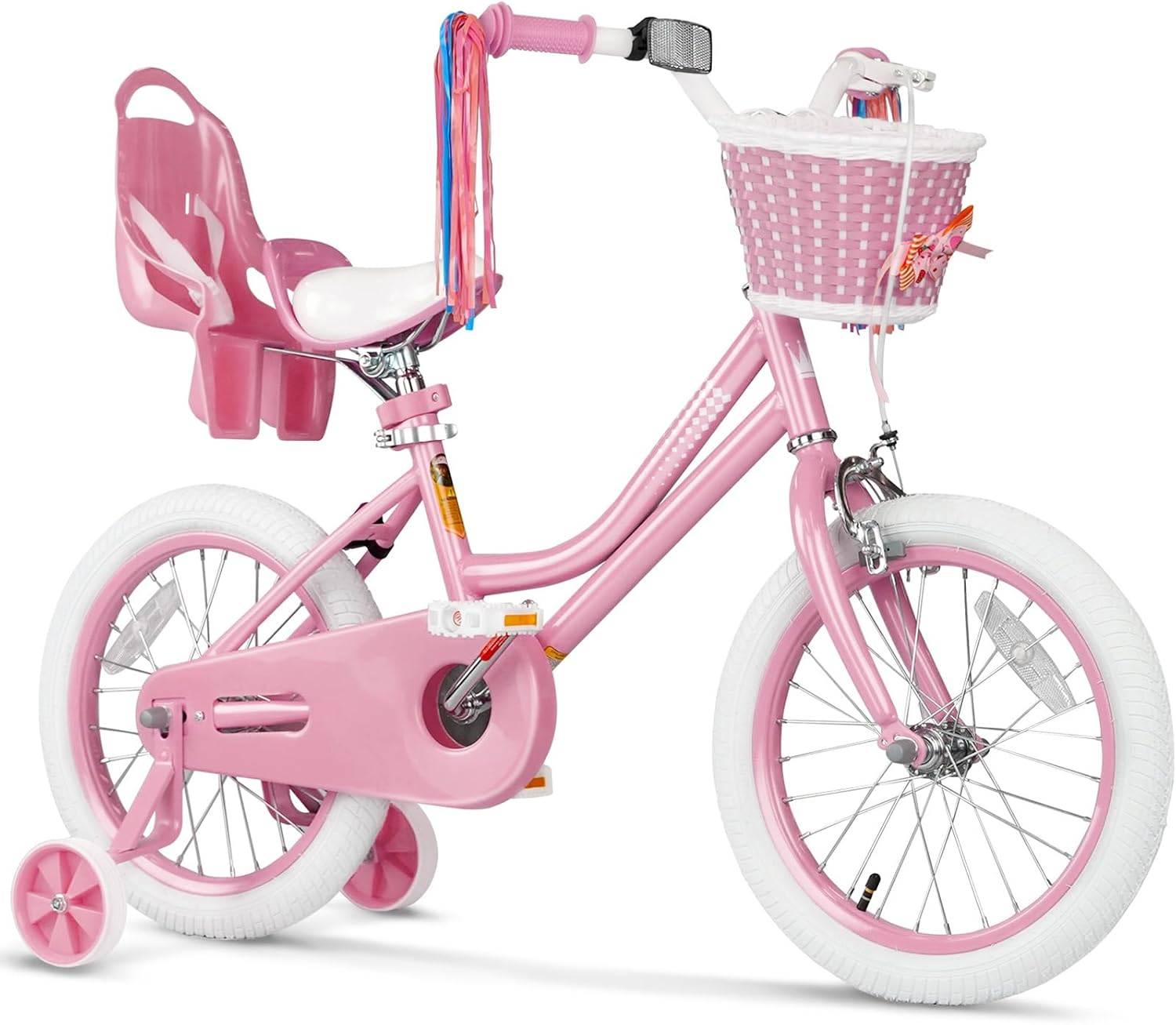 XJD Pink Girls' Bike – Kids 12/14/16 Inch Training Wheel Bicycle
A training wheel bike offered in 12 Inch, 14 Inch and 16 Inch labels, making it relevant when a measured fit check points to the likely 14- or 16-inch range.
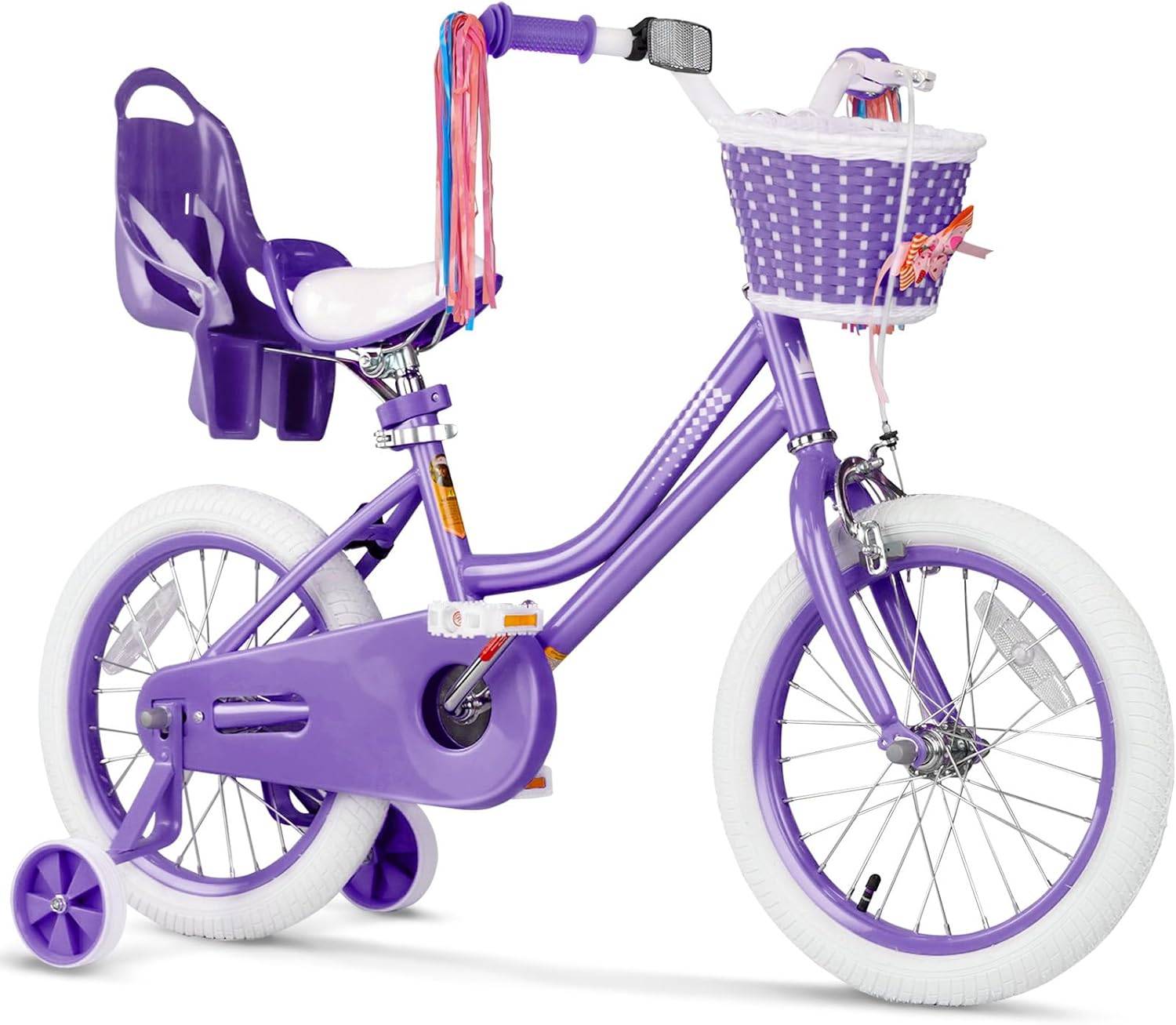 XJD Girls Bike for Kids Ages 3-8, 12/14/16 Inch with Training Wheels – Purple
This training wheel bike has 12 Inch, 14 Inch and 16 Inch labels. Its catalog-title age wording is not fit evidence; use the child’s measurements and an individual fit check.
The supplied facts do not establish frame dimensions, saddle range, brake type, assembly procedure, load limit or compatibility. Consult the exact product manual or a qualified bicycle mechanic for those details, especially before changing or fitting components.
Make the final decision safely
Before riding, provide a bicycle helmet that fits properly, sits level and has its straps adjusted according to the helmet manufacturer’s instructions, as advised by the U.S. Consumer Product Safety Commission. Supervise the child in an appropriate practice area while they become familiar with starting, braking and turning.
For a small 6-year-old, measure height and inseam today, try 14-inch and 16-inch bicycles that match the height range, and buy only the size the child can straddle, reach, brake and steer confidently now. If neither passes every check, do not force the choice; try a different bicycle or seek a mechanic’s fitting help.
Bikes for your next adventure
-

XJD Girls Bike for Kids Ages 3-8, 12/14/16 Inch with Training Wheels – Purple
The XJD Girls Bike in Purple is a training-wheel bicycle for kids ages 3 to 8, f…$149
$169 -

Pink Girls' 12/14/16" Bike by XJD – Basket & Doll Seat
The XJD Pink Girls' Bike with Basket & Doll Seat is made for riders 71–122 cm ta…$75.99
$99.99 -

Light Purple XJD Toddler Bike Helmet, Adjustable, Size XS (46–51 cm)
This Light Purple XJD toddler bike helmet is made for the smallest riders — the …$20.39