

What size bike for my 12 year old
For a 12-year-old, start with a 20-inch, 24-inch or 26-inch bike according to measured height—not age alone. Use 20 inches at 48–60 in (122–152 cm), 24 inches at 54–64 in (137–163 cm), and 26 inches above 60 in (153 cm), then confirm fit and control on the actual bike.
Measure your child before choosing
Measure height without shoes, with the child standing straight against a wall. Also measure inseam from the floor to the crotch while the child stands naturally. Height identifies the wheel sizes worth trying; inseam helps you check clearance over the frame and whether the child can start and stop comfortably.
Do not choose from age or wheel diameter alone. Two 12-year-olds can need different bikes because their height, leg length, arm length and confidence differ. Wheel size is only a starting point, and frame geometry can vary between bicycles with the same wheel label.
Compare the height with these starting points
| Wheel size | XBikes starting height | What it means at age 12 |
|---|---|---|
| 20 Inch | 48–60 in / 122–152 cm | Consider it if the measured height is within this range and the bike passes the fit check. |
| 24 Inch | 54–64 in / 137–163 cm | Consider it when the child is within this range; overlap with 20 inches means both may be worth trying. |
| 26 Inch | Over 60 in / 153 cm | Consider it for a rider above this threshold, subject to comfortable clearance, reach and control. |
If height falls in the 54–60 in (137–152 cm) overlap, do not automatically choose 24 inches for growth. Compare both 20-inch and 24-inch bicycles in person. The correct choice is the one the child can control now without stretching, leaning awkwardly or struggling to stop.
Perform the fit check on the actual bike
Have the child try the bicycle rather than relying on a chart or catalog label. The American Academy of Pediatrics advises against buying an oversized bicycle simply for a child to grow into. Check these points before deciding:
- Stand-over: The child should be able to straddle the bicycle without the frame preventing secure footing or a controlled dismount.
- Seated position: Adjust the seat only within the limits stated in the product manual. The rider should be able to pedal without excessive hip rocking or cramped knees.
- Reach: Hands should meet the handlebar comfortably without locked elbows, a stretched torso or loss of steering control.
- Brakes: The child must be able to reach and operate the brake controls confidently. Do not assume a control can be adjusted unless the exact manual permits it.
- Low-speed control: Ask the child to start, steer, stop and put a foot down in a safe, traffic-free area. Hesitation or instability can indicate that the bicycle is too large or otherwise unsuitable.
If either overlapping size appears possible, repeat the same checks on both. A smaller wheel label is not automatically too small, and a larger one is not automatically a better long-term purchase.
How the supplied catalog option relates
The XJD Kids Bike for Girls – Pink, 12/14/16/20 Inch with Training Wheels is listed in the Training Wheel Bikes category and offers 12-inch, 14-inch, 16-inch and 20-inch SKU labels. For this question, only its 20-inch option is a plausible comparison, and only when the rider measures 48–60 in (122–152 cm). The smaller options correspond to younger, shorter starting ranges and should not be treated as substitutes for a 24-inch or 26-inch fit.
This product helps parents compare an available 20-inch training-wheel model with the size indicated by their child's measurements. It is relevant only if training wheels suit the child's current confidence and the actual bicycle passes the stand-over, reach, brake-control and riding checks. It is not a replacement when the fit check points to 24 or 26 inches.

Check setup and riding readiness
Follow the exact product manual for assembly, adjustments, maintenance, compatibility and any load or torque limits. If instructions are missing, unclear or conflict with the bicycle in front of you, use a qualified bicycle mechanic rather than guessing.
A properly fitting helmet is required for the final riding check. The U.S. Consumer Product Safety Commission advises that the helmet fit properly, sit level on the head and have its straps used according to the manufacturer's instructions. A helmet cannot compensate for an oversized or poorly controlled bicycle.
Make the final size decision
- Measure the 12-year-old's height and inseam.
- Shortlist 20 inches at 48–60 in, 24 inches at 54–64 in, or 26 inches above 60 in.
- Try the shortlisted bicycle or bicycles with the child.
- Reject any option that compromises stand-over clearance, steering reach, brake operation, starting or stopping.
- Choose the size the child controls comfortably today, even if a larger bike appears to offer more growing room.
For your 12-year-old, the answer is therefore measurement-led: compare 20 and 24 inches in the overlap, move to 26 inches only above the stated height threshold, and buy only after the child demonstrates secure fit and control.
Bikes for your next adventure
-
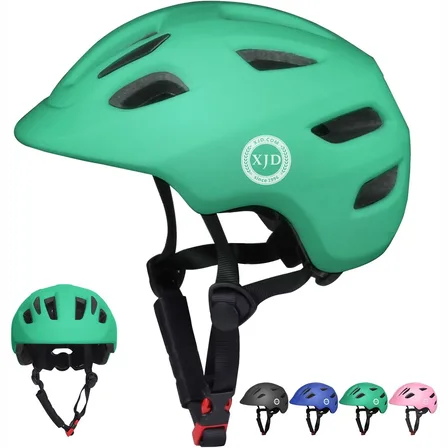
Green XJD Toddler Bike Helmet with Adjustable Fit, XS (46–51 cm)
The XJD toddler bike helmet in Green is built for the youngest riders — the size…$20.39
$23.99 -

Kids Bike Helmet by XJD for Boys & Girls – Black, Blue, Green, Pink, Purple
The XJD Kids Bike Helmet covers a wide 2-to-8-year age range thanks to two head-…$59.99
-

Kids Bike Helmet by XJD for Girls – Pink
The XJD Kids Bike Helmet in Pink is a lightweight multi-sport helmet for girls r…$59.99
$99