

What size bike for my toddler
For most toddlers ready for a pedal bike, start by comparing a 12 Inch bike with the child’s measured height: XBikes places it at 34–40 in (86–102 cm), ages 3–4. Age is only a starting point; confirm inseam clearance, reach, brake control and confidence on the actual bike.
Measure your toddler before choosing
Measure the child’s standing height without shoes, against a wall. Then measure inseam from the floor to the crotch while the child stands naturally. Use height to identify a starting wheel size and inseam to check whether the child can stand over and manage the particular frame.
Do not convert the inseam measurement into a wheel size by itself. Frames with the same wheel diameter can fit differently, and no product-specific frame dimensions are supplied here. Compare the measurement with the exact bicycle’s sizing information or manual, then have the child try it.
Compare the measurement with XBikes sizes
| Wheel size | XBikes rider height | Age starting point |
|---|---|---|
| 12 Inch | 34–40 in / 86–102 cm | 3–4 |
| 14 Inch | 37–45 in / 94–114 cm | 3–6 |
| 16 Inch | 40–48 in / 102–122 cm | 4–7 |
| 18 Inch | 43–52 in / 109–132 cm | 5–9 |
| 20 Inch | 48–60 in / 122–152 cm | 7–12 |
These ranges overlap because height alone cannot establish a complete fit. If your toddler is below 34 in (86 cm), this standard does not identify a suitable pedal-bike size. Do not simply choose 12 Inch; wait, seek an individually fitted alternative, or ask a qualified bicycle shop to assess readiness.
If the child falls into both the 12 Inch and 14 Inch ranges, try both rather than choosing the larger bike for future growth. A bike that is oversized now can make starting, stopping and steering harder.
Perform the fit check on the actual bike
Have the child wear ordinary riding shoes and try the bicycle with an adult holding it steady. Check four things before accepting the size:
- Stand-over: the child should be able to straddle the frame without being forced onto tiptoes or contacting the top tube.
- Reach: seated naturally, the child should reach the handlebar without stretching, locking the elbows or leaning far forward.
- Brake control: the child must be able to reach and operate the fitted braking controls. Follow the exact product manual for adjustment; use a qualified bicycle mechanic if the controls cannot be set correctly.
- Current confidence: ask the child to start, steer, stop and get off under close supervision. Fear, awkwardness or repeated loss of control means the apparent size is not yet a good fit.
A smaller currently suitable size is preferable to an oversized bicycle bought solely for growth. Recheck fit as the child grows, particularly after any seat or handlebar adjustment.
How the supplied bicycles help you compare
The catalog options are useful because all three offer 12 Inch, 14 Inch and 16 Inch labels, letting families compare the sizes most likely to overlap with the upper toddler and early-child ranges. Their training-wheel category describes the products, but it does not replace the individual fit and control checks.
 Light Pink XJD Girls' Bicycle with Basket & Training Wheels
Available in 12 Inch, 14 Inch, 16 Inch and 20 Inch labels. Its smaller listed sizes provide relevant comparison points for a toddler who meets the corresponding XBikes height range and passes an individual fit check.
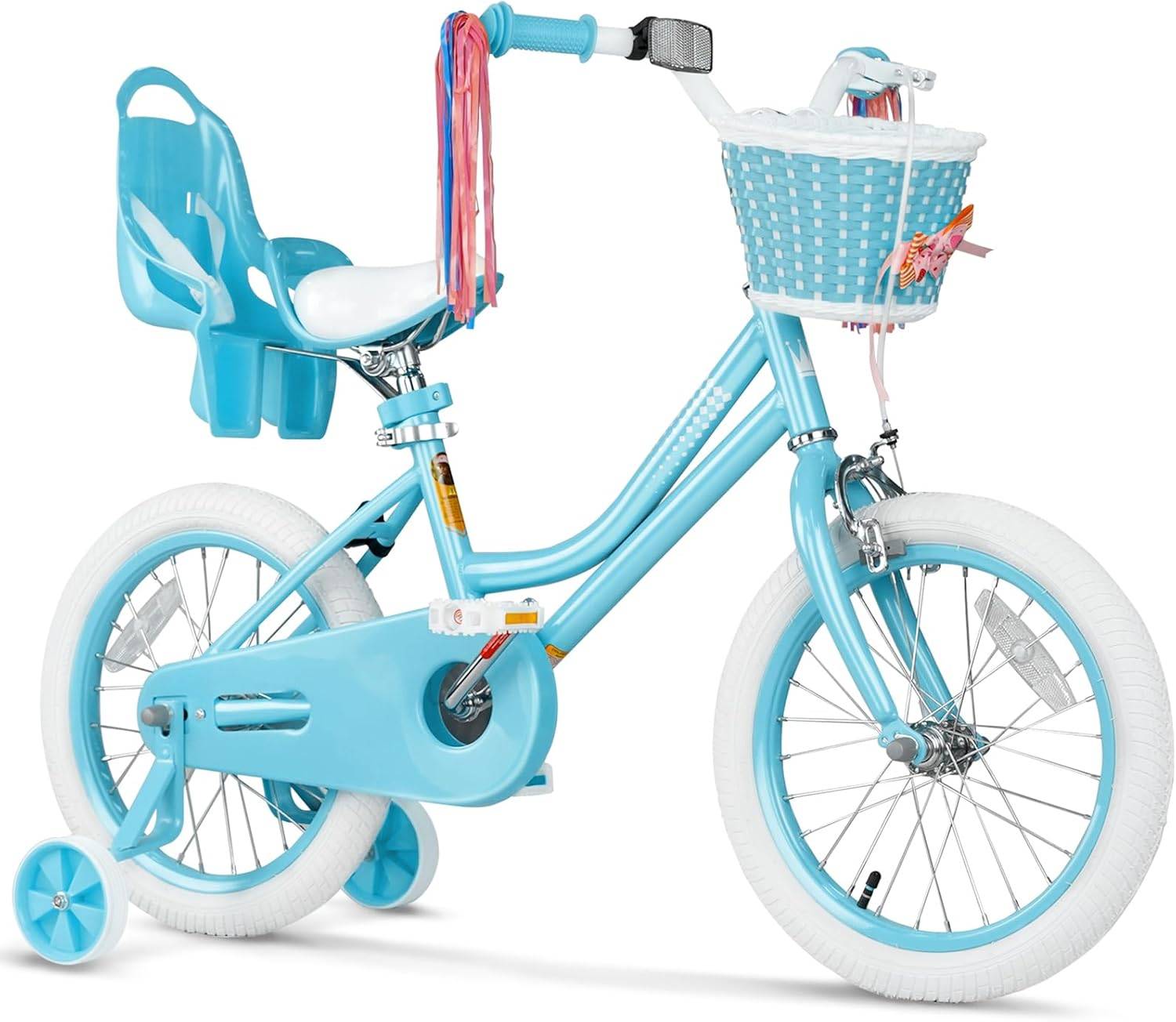 Blue XJD Girls Bike with Training Wheels – 12/14/16 Inch
Available in 12 Inch, 14 Inch and 16 Inch labels. Compare its 12 Inch version first for a toddler measuring 34–40 in (86–102 cm), while still checking stand-over, reach, brake control and confidence.
 XJD Boys 12/14/16" Training Wheel Bike – Blue
This training-wheel bicycle is available in 12 Inch, 14 Inch and 16 Inch labels. Those options allow direct size comparison where XBikes height ranges overlap, but the child must try the actual bicycle before selection.
The Light Pink XJD Girls' Bicycle with Basket & Training Wheels is listed in 12 Inch, 14 Inch, 16 Inch and 20 Inch versions. The Blue XJD Girls Bike with Training Wheels – 12/14/16 Inch and XJD Boys 12/14/16" Training Wheel Bike – Blue are each listed in 12 Inch, 14 Inch and 16 Inch versions.
For a toddler within the supplied starting standard, compare the 12 Inch version first, then consider 14 Inch only when the measured height overlaps its 37–45 in (94–114 cm) range and the child controls the actual bike comfortably. The 16 Inch and 20 Inch options are not substitutes when the child currently fits 12 Inch. No supplied option has an 18 Inch label.
Check readiness and equipment before riding
Correct wheel size cannot compensate for a child who cannot yet follow simple directions, look ahead, steer or stop reliably. Begin in a flat area away from traffic, vehicles, slopes and obstacles, with close adult supervision.
Use a bicycle helmet that fits properly, sits level and has straps positioned according to its manufacturer’s instructions. Follow the exact bicycle manual for assembly, maintenance, compatibility, load limits and adjustment procedures; where anything is uncertain, use a qualified bicycle mechanic.
Make the size decision
Measure height and inseam today, use 12 Inch at 34–40 in (86–102 cm) as the first toddler comparison, and try the actual bicycle. Choose it only if stand-over clearance, reach, braking and confident control all work now; otherwise try the other overlapping size or postpone the purchase rather than sizing up for growth.
Bikes for your next adventure
-
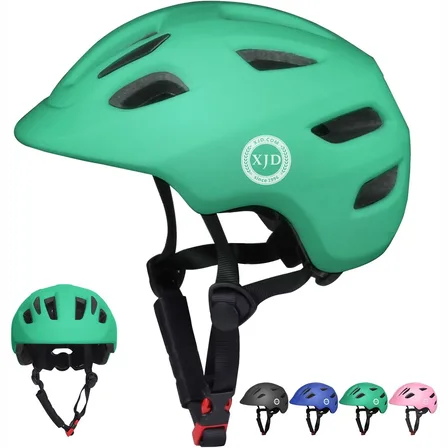
Green XJD Toddler Bike Helmet with Adjustable Fit, XS (46–51 cm)
The XJD toddler bike helmet in Green is built for the youngest riders — the size…$20.39
$23.99 -

Kids Bike Helmet by XJD for Boys & Girls – Black, Blue, Green, Pink, Purple
The XJD Kids Bike Helmet covers a wide 2-to-8-year age range thanks to two head-…$59.99
-

Kids Bike Helmet by XJD for Girls – Pink
The XJD Kids Bike Helmet in Pink is a lightweight multi-sport helmet for girls r…$59.99
$99