

What size bike is appropriate for 5 year old
For most 5-year-olds, start by comparing a 16-inch bike, but measure the child first. Depending on height and fit, a 14-inch or 18-inch bike may be appropriate instead.
Choose by measured height, not age alone
At age 5, three XBikes starting ranges overlap. A 14-inch bike covers ages 3–6 and heights 37–45 inches (94–114 cm). A 16-inch bike covers ages 4–7 and heights 40–48 inches (102–122 cm). An 18-inch bike covers ages 5–9 and heights 43–52 inches (109–132 cm).
| Wheel size | XBikes starting range | What it means for a 5-year-old |
|---|---|---|
| 14 Inch | Ages 3–6; 37–45 in / 94–114 cm | Compare if the child is shorter or needs a smaller, easier-to-control fit. |
| 16 Inch | Ages 4–7; 40–48 in / 102–122 cm | The central starting point for many children of this age. |
| 18 Inch | Ages 5–9; 43–52 in / 109–132 cm | Compare only when height and an actual fit check support the larger size. |
These ranges narrow the search; they do not determine the final fit. Never move up merely because the child will grow. An oversized bicycle can make starting, stopping, steering and dismounting harder.
Measure height and inseam
Measure the child without shoes on a hard, level floor. For height, have them stand straight against a wall and mark the top of the head. Measure from the floor to the mark.
For inseam, place a firm, thin book between the legs with its edge raised gently to simulate a bicycle saddle. Keep the book level, then measure from the floor to its top edge. Record both measurements in inches or centimetres.
Use height to identify the likely wheel sizes above. Use inseam during the physical fit check: the child needs practical clearance and must be able to mount and dismount without struggling. Because frame shapes differ, wheel size alone cannot establish stand-over clearance.
Have the child try the exact bicycle
Once height points to 14, 16 or 18 inches, have the child try the exact model. Check the following before deciding:
- Stand-over: With feet on the ground and the bicycle upright, the child should have comfortable clearance rather than pressing against the frame.
- Reach: The child should reach the handlebar without stretching, locking the elbows or leaning excessively.
- Brake control: If the bicycle has hand-operated brake controls, the child must be able to reach and operate them confidently. Confirm the controls on the exact bicycle rather than assuming from wheel size.
- Starting and stopping: Ask the child to demonstrate a controlled start, straight-line ride, turn and stop in a safe practice area.
- Confidence: A technically plausible size is still unsuitable if the child looks tense, cannot control the bicycle or needs an adult to hold it continuously.
If two sizes match the height chart, choose according to the better stand-over, reach, braking and riding control—not the larger number.
How the supplied bikes help with comparison
The two catalog options are relevant because both provide 14-inch and 16-inch size labels, the main sizes many parents will compare for a 5-year-old. They let you examine exact-size options while still requiring an individual fit check.
 Pink Girls' 12/14/16" Bike by XJD – Basket & Doll Seat
Offers 12 Inch, 14 Inch and 16 Inch labels. Its 14-inch and 16-inch versions are relevant comparison options for a measured 5-year-old who passes an individual fit check.
 Pink 12/14/16/20" XJD Girls Bike with Training Wheels & Basket
Offers 12 Inch, 14 Inch, 16 Inch and 20 Inch labels. The 14-inch and 16-inch versions are relevant comparisons; its available sizes do not include an 18 Inch option.
Pink Girls' 12/14/16" Bike by XJD – Basket & Doll Seat is categorized as a training wheel bike and has 12 Inch, 14 Inch and 16 Inch SKU labels. For this question, its 14-inch and 16-inch versions are the relevant comparisons; the 12-inch starting range is ages 3–4 and heights 34–40 inches (86–102 cm), so it should be considered only when the child’s measurement and actual fit support it.
Pink 12/14/16/20" XJD Girls Bike with Training Wheels & Basket is also categorized as a training wheel bike and has 12 Inch, 14 Inch, 16 Inch and 20 Inch SKU labels. Its 14-inch and 16-inch versions are relevant comparisons. The 20-inch range begins at ages 7–12 and heights 48–60 inches (122–152 cm), so age 5 alone does not support choosing it.
Neither supplied product has an 18 Inch SKU label. If the child measures into the 18-inch range and fits that size well, these products are nearest-size comparison points, not substitutes for an 18-inch bicycle. A 16-inch or 20-inch model should never be treated as equal to an 18-inch one.
Complete the safety check
Use a properly fitting bicycle helmet every ride. It should sit level and its straps should be adjusted according to the helmet manufacturer’s instructions. Recheck the fit rather than relying on an age label.
Confirm assembly, adjustments, maintenance, compatibility, load limits and any tightening requirements in the exact product manual. If anything is unclear or the bicycle does not operate correctly, use a qualified bicycle mechanic rather than inventing an adjustment or torque value.
The decision to make now
Measure height and inseam today, compare the result with 14-, 16- and 18-inch ranges, then arrange an exact-bike fit check. Begin with 16 inches for comparison, but choose 14 or 18 inches when the child’s measurements, reach, brake control and confident riding clearly support that size.
Bikes for your next adventure
-

Pink Girls' 12/14/16" Bike by XJD – Basket & Doll Seat
The XJD Pink Girls' Bike with Basket & Doll Seat is made for riders 71–122 cm ta…$75.99
$99.99 -
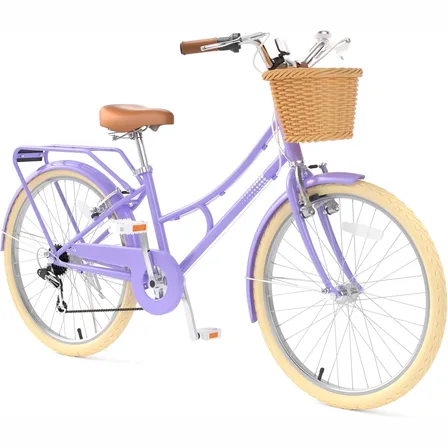
24-Inch Purple XJD Beach Cruiser Bike with U-Brake
The XJD 24-Inch Purple Beach Cruiser is built for girls and young women roughly …$159.99
-
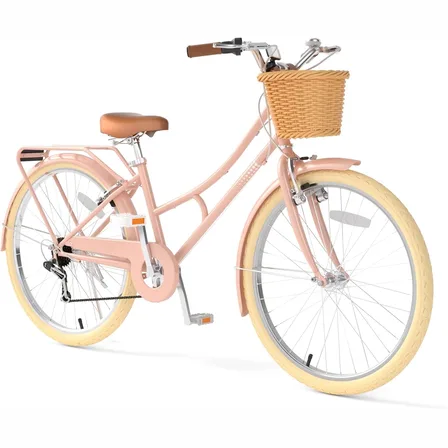
Pink XJD Beach Cruiser Bike, 24"/26", U-Brake
The XJD Pink Beach Cruiser Bike is a single-speed cruiser built for older kids a…$159.99