

What size bike kids 12 or 16
Choose a 12-inch bike for a child 34–40 in (86–102 cm) tall; choose a 16-inch bike for one 40–48 in (102–122 cm) tall, then confirm the fit in person.
12-inch or 16-inch: the immediate decision
A 12-inch wheel is the XBikes starting point for ages 3–4, while a 16-inch wheel is the starting point for ages 4–7. Height is more useful than age: children of the same age can differ substantially in leg length, reach and confidence.
If the rider measures under 40 in (102 cm), begin with the 12-inch option. At 40–48 in (102–122 cm), begin with the 16-inch option. A child at the 40-inch boundary should try both because inseam, arm reach, brake control and present riding ability can make the smaller or larger bike more manageable.
| Wheel size | XBikes age starting point | Rider-height starting point |
|---|---|---|
| 12 Inch | Ages 3–4 | 34–40 in / 86–102 cm |
| 16 Inch | Ages 4–7 | 40–48 in / 102–122 cm |
Measure before comparing bikes
Measure the child without shoes, standing upright against a wall. Record total height from the floor to the top of the head. Then measure inseam from the floor to the crotch with the feet slightly apart. Height identifies the sensible wheel-size range; inseam helps determine whether the child can stand over a particular frame comfortably.
Take both measurements to the product listing or fitting appointment. Wheel size alone does not define frame dimensions, saddle range or reach, so two bikes with the same wheel label may not fit identically.
Check the actual riding position
Have the child try the exact bicycle. The American Academy of Pediatrics advises against buying an oversized bike merely for future growth. With the child standing over it, check that the frame does not prevent a comfortable, stable stance.
Next, place the child in the riding position and check whether they can:
- Reach the handlebar without stretching or locking their arms.
- Turn the handlebar while remaining balanced and in control.
- Reach and operate the brakes confidently, if the exact bike has hand controls.
- Start, stop and place a foot down without panic or a pronounced lean.
If the 16-inch bike makes any of these actions difficult, it is too large now even if the child falls within its broad age guidance. If the 12-inch bike creates a cramped position or restricts steering and pedalling, compare the 16-inch fit instead. Confidence matters, but it does not correct a physically unsuitable fit.
Where the supplied XBikes options fit
These catalog options are directly useful because each is offered in both 12 Inch and 16 Inch sizes, allowing the title’s two sizes to be compared within the same listed model. Some also provide a 14 Inch intermediate choice; the second listing additionally includes 20 Inch. The size labels identify available variants, not proof that a particular child fits them.
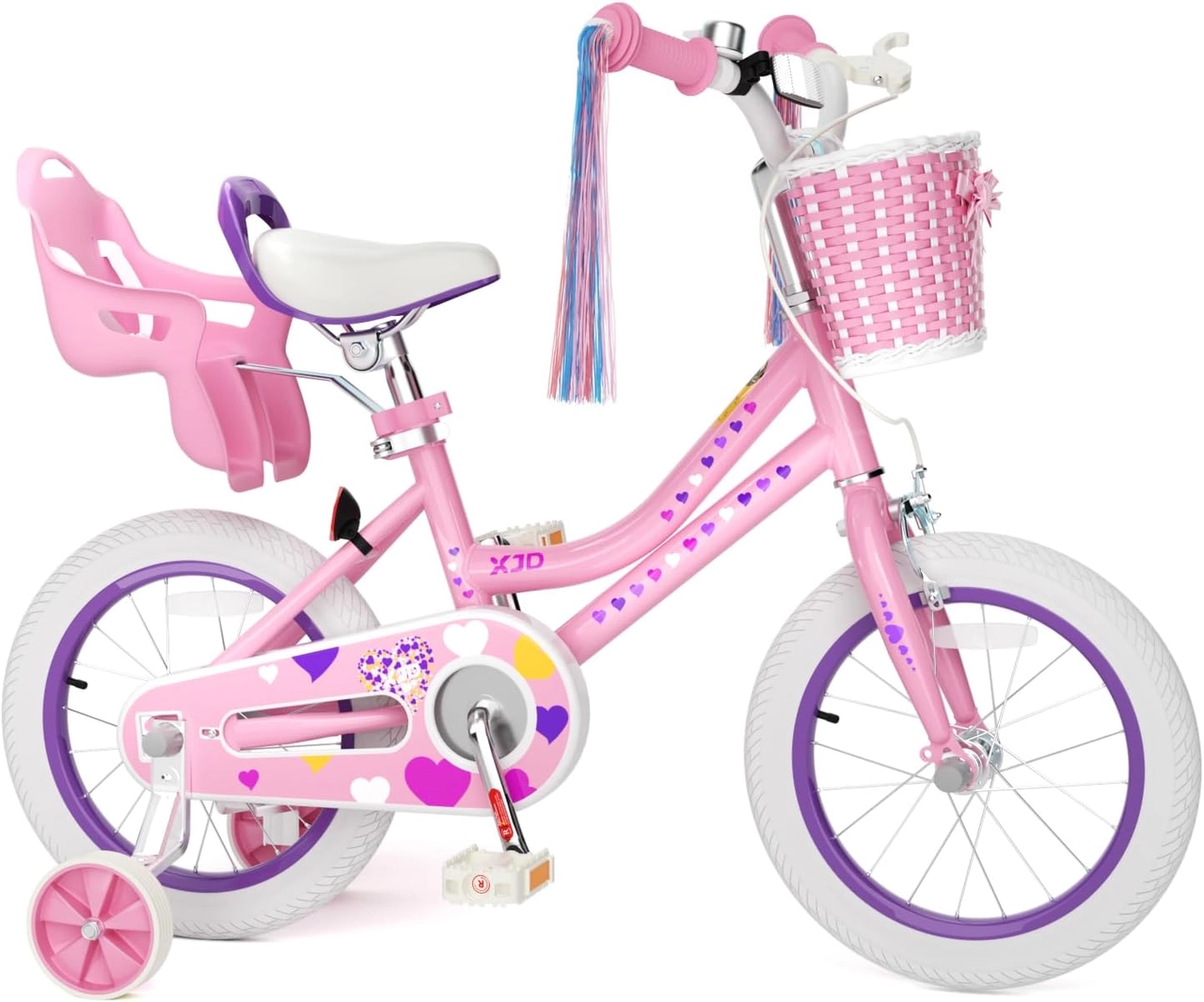 Pink Girls' 12/14/16" Bike by XJD – Basket & Doll Seat
Offers 12 Inch and 16 Inch variants for a direct size comparison, plus a 14 Inch intermediate option. The catalog categorizes it as a Training Wheel Bike.
 Pink 12/14/16/20" XJD Girls Bike with Training Wheels & Basket
Lists 12 Inch, 14 Inch, 16 Inch and 20 Inch variants. Its 12- and 16-inch choices directly match the comparison, subject to an individual fit check.
 Black XJD Kids Bike for Boys – 12, 14 & 16 Inch Sizes
A Training Wheel Bike offered in 12 Inch, 14 Inch and 16 Inch variants, making it relevant for comparing both requested sizes and an intermediate label.
Pink Girls' 12/14/16" Bike by XJD – Basket & Doll Seat is categorized as a Training Wheel Bike and lists 12 Inch, 14 Inch and 16 Inch variants. It is relevant when the measurements suggest either endpoint or when a 14-inch comparison may help.
Pink 12/14/16/20" XJD Girls Bike with Training Wheels & Basket is also categorized as a Training Wheel Bike. Its listed variants are 12 Inch, 14 Inch, 16 Inch and 20 Inch, so select the exact variant deliberately rather than assuming the product title represents one size.
Black XJD Kids Bike for Boys – 12, 14 & 16 Inch Sizes is categorized as a Training Wheel Bike and is available in 12 Inch, 14 Inch and 16 Inch labels. As with the other products, the child still needs to try the chosen size.
What to do near the overlap
For a child close to 40 in (102 cm), do not decide from age or expected growth. Compare 12-inch and 16-inch versions using the same shoes and riding conditions, and include a 14-inch option if the two endpoints both feel compromised. The XBikes starting point for 14 Inch is ages 3–6 and 37–45 in (94–114 cm), but it also requires the same individual checks.
Choose the bicycle on which the child has comfortable stand-over clearance, a natural reach and reliable control. Do not move up solely because a larger wheel may last longer.
Final checks before riding
Follow the exact product manual for assembly, adjustment, maintenance, compatibility, load limits and torque values. If the manual is unavailable or any setup is uncertain, use a qualified bicycle mechanic rather than guessing.
Add a properly fitting bicycle helmet. U.S. Consumer Product Safety Commission guidance says it should sit level and be secured with its straps according to the helmet manufacturer’s instructions.
The final decision is simple: measure height and inseam, start with 12 Inch at 34–40 in or 16 Inch at 40–48 in, and buy only after the child demonstrates comfortable stand-over, reach, braking and control on that exact bike.
Bikes for your next adventure
-

Black XJD Kids Bike for Boys – 12, 14 & 16 Inch Sizes
For a son between roughly 3 and 8 years old, the XJD Kids Bike in Black covers t…$169
$199 -

XJD Boys & Girls BMX Bike with Training Wheels, 12/14/16" – Blue
The XJD Boys & Girls BMX Bike in Blue is a first pedal bike for kids roughly age…$99.99
$119.99 -

XJD Girls BMX Bike 12/14/16 Inch with Training Wheels – Pink Blue
The XJD Girls BMX Bike in Pink/Blue is built as a first pedal bike for kids roug…$99.99
$119.99