

What size bike should a 10 year old get
Most 10-year-olds should start by trying a 20-inch or 24-inch bike. Measure the child’s height and inseam, then confirm stand-over clearance, reach, brake control and confidence before choosing.
Choose between 20 and 24 inches by measured height
Age identifies a useful starting range, but it does not determine the fit. Under the XBikes wheel-size starting points, a 20-inch bike covers ages 7–12 and heights of 48–60 inches (122–152 cm). A 24-inch bike covers ages 10–14 and heights of 54–64 inches (137–163 cm).
| Measured rider height | Size to try first | What to compare |
|---|---|---|
| 48–53 inches (122–136 cm) | 20 Inch | Stand-over, reach and brake access |
| 54–60 inches (137–152 cm) | 20 Inch and 24 Inch | Control and confidence on both |
| 61–64 inches (153–163 cm) | 24 Inch; 26 Inch is also a starting point over 60 inches (153 cm) | Reach, handling and brake control |
The overlap from 54 to 60 inches is where an individual comparison matters most. A confident child may handle the larger option well, while another child of the same height may have better control on the smaller one. Do not move up merely because the child is ten.
Measure before visiting or ordering
- Height: Have the child stand straight without shoes against a wall. Measure from the floor to the top of the head.
- Inseam: With feet slightly apart, measure from the floor to the crotch. This helps assess whether the child can stand over the bicycle comfortably.
- Current confidence: Note whether the rider starts, stops, turns and balances independently. Confidence affects which overlapping size is manageable.
Height selects the sizes worth trying; inseam and the actual bicycle determine stand-over fit. Geometry can differ between bicycles with the same wheel label, so wheel diameter alone cannot confirm that a frame fits.
Perform the fit check on the actual bike
Have the child try the bicycle rather than estimating from age. When standing over it, the child should have usable clearance instead of being pressed against the frame. While seated, the rider should reach the handlebars without stretching, twisting or locking the arms.
Ask the child to place hands in the normal riding position and operate each brake positively. Brake levers that cannot be reached or controlled comfortably are a reason to reject that fit. The child should also be able to start, steer, turn and stop without the bicycle feeling unwieldy.
Do not buy an oversized bicycle solely to provide growing room. A bike that will fit later can reduce control now. If the child falls between options, compare both on these checks and select the one the child controls confidently today.
How the supplied XBikes options help
The two catalog options provide practical comparison points around the decision. The cruiser supplies the likely 20-inch and 24-inch candidates, plus a 26-inch option for a taller rider. The training-wheel model shows why a product name alone must not override its currently supplied size labels.
 XJD Light Purple Girls Bike with Basket, Training Wheels, 12/14/16/20 Inch
The supplied 12-, 14- and 16-inch SKUs are generally below the starting range for a typically sized ten-year-old; compare only when the child’s measurements support it.
 XJD Kids Beach Cruiser Bicycle, Rear Rack & V-Brakes, Mint Green
Its supplied 20-, 24- and 26-inch SKUs provide relevant comparison points, but measured height, stand-over clearance, reach and control must determine the final fit.
XJD Kids Beach Cruiser Bicycle, Rear Rack & V-Brakes, Mint Green
This Beach Cruiser Bikes model has supplied SKU labels of 20 Inch, 24 Inch and 26 Inch. That makes it relevant across the main height-based comparison for many ten-year-olds. Its rear rack and V-brakes are catalog features, not evidence of fit; the child still needs to demonstrate comfortable reach and reliable brake operation on the chosen size.
XJD Light Purple Girls Bike with Basket, Training Wheels, 12/14/16/20 Inch
This Training Wheel Bikes model has supplied SKU labels of 12 Inch, 14 Inch and 16 Inch, despite the sizes embedded in its catalog title. Use the supplied SKU labels when assessing availability. Under the XBikes starting points, 16 Inch corresponds to ages 4–7 and heights of 40–48 inches (102–122 cm), so it is generally not relevant for a typically sized ten-year-old. It is only worth comparing if the child’s measured dimensions genuinely fall within that range; it is not a substitute for a needed 20-inch or 24-inch bike.
Finish the decision safely
After selecting a size, use the exact product manual for assembly, adjustments, maintenance, compatibility, load limits and torque information. If anything is unclear or the controls cannot be adjusted for comfortable use, consult a qualified bicycle mechanic rather than inventing a procedure.
Add a properly fitting bicycle helmet. It should sit level and its straps should be used according to the helmet manufacturer’s instructions. Recheck the child’s control after any adjustment.
For a 10-year-old, measure first: try 20 Inch at 48–60 inches, try 24 Inch at 54–64 inches, compare both in the overlap, and choose only the bike the child can stand over, reach, brake and control confidently now.
Bikes for your next adventure
-

Pink Girls' 12/14/16" Bike by XJD – Basket & Doll Seat
The XJD Pink Girls' Bike with Basket & Doll Seat is made for riders 71–122 cm ta…$75.99
$99.99 -

XJD Girls Bike for Kids Ages 3-8, 12/14/16 Inch with Training Wheels – Purple
The XJD Girls Bike in Purple is a training-wheel bicycle for kids ages 3 to 8, f…$149
$169 -
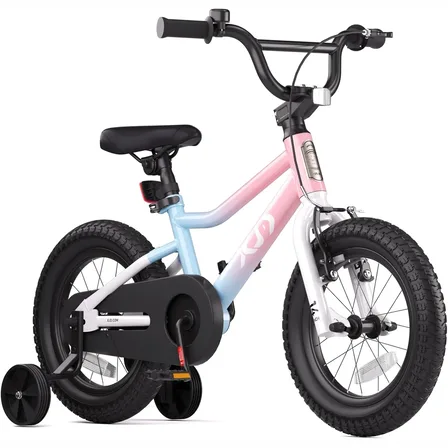
XJD Girls BMX Bike 12/14/16 Inch with Training Wheels – Pink Blue
The XJD Girls BMX Bike in Pink/Blue is built as a first pedal bike for kids roug…$99.99
$119.99