

What size bike would a 10 year old need
A 10-year-old will usually start by comparing a 20 Inch and 24 Inch bike, but measured height and an individual fit check—not age alone—should decide the size.
The quick size decision
Use the child’s current standing height as the first filter. In the XBikes starting points, a 20 Inch bike covers rider heights of 48–60 in (122–152 cm) and ages 7–12. A 24 Inch bike covers 54–64 in (137–163 cm) and ages 10–14.
That overlap matters. A 10-year-old who is below 54 in (137 cm) should generally begin with a 20 Inch comparison. From 54–60 in (137–152 cm), try both sizes because either range may apply. Above 60 in (153 cm), compare the 24 Inch size first; 26 Inch is a youth-and-adult starting point for riders over 60 in (153 cm), but it still must pass every control check.
| Measured rider height | Size to compare first | What to do |
|---|---|---|
| 48–53 in / 122–136 cm | 20 Inch | Check stand-over, reach and controls. |
| 54–60 in / 137–152 cm | 20 Inch and 24 Inch | Try both; choose by control and confidence. |
| Over 60 in / 153 cm | 24 Inch, then 26 Inch if appropriate | Reject any bike that feels too large or difficult to control. |
Measure before comparing bikes
Measure height with the child standing straight against a wall without shoes. Record the result rather than estimating from age or clothing size.
Also measure inseam: have the child stand naturally without shoes, then measure from the floor to the crotch. Inseam helps you judge whether the frame can be straddled comfortably, but the supplied size standard does not assign an inseam number to each wheel size. Compare that measurement with the exact bicycle’s geometry and fit information instead of inventing a universal clearance.
Wheel size is only a starting point; it is not the same as frame geometry. Two bicycles with the same wheel label can place the saddle, handlebars and controls differently.
Run this fit check in person
Have the child try the bicycle whenever possible. The American Academy of Pediatrics advises against buying an oversized bike simply for future growth. Use these checks before accepting either size:
- Stand-over: The child should be able to straddle the bicycle without the frame preventing a stable stance.
- Starting and stopping: They should mount, begin riding and stop without struggling against the bicycle’s size.
- Reach: Seated in a normal riding position, they should reach the handlebars without stretching or losing comfortable steering control.
- Brake control: Their hands must reach and operate the brake controls confidently while maintaining their grip.
- Confidence: Watch for hesitation, wobbling caused by the fit, or difficulty turning at low speed. A technically plausible size is still wrong if the child cannot control it now.
How the supplied XBikes options apply
The two catalog options are useful because each is offered with 20 Inch, 24 Inch and 26 Inch SKU labels—the sizes most relevant around the height ranges a 10-year-old may occupy. This lets you compare adjacent starting points while keeping the final decision tied to the individual rider.
 XJD Kids Beach Cruiser Bicycle, Rear Rack & V-Brakes, Mint Green
Available in 20 Inch, 24 Inch and 26 Inch labels, this beach cruiser provides relevant adjacent sizes to compare after measuring the rider; its title also identifies a rear rack and V-brakes.
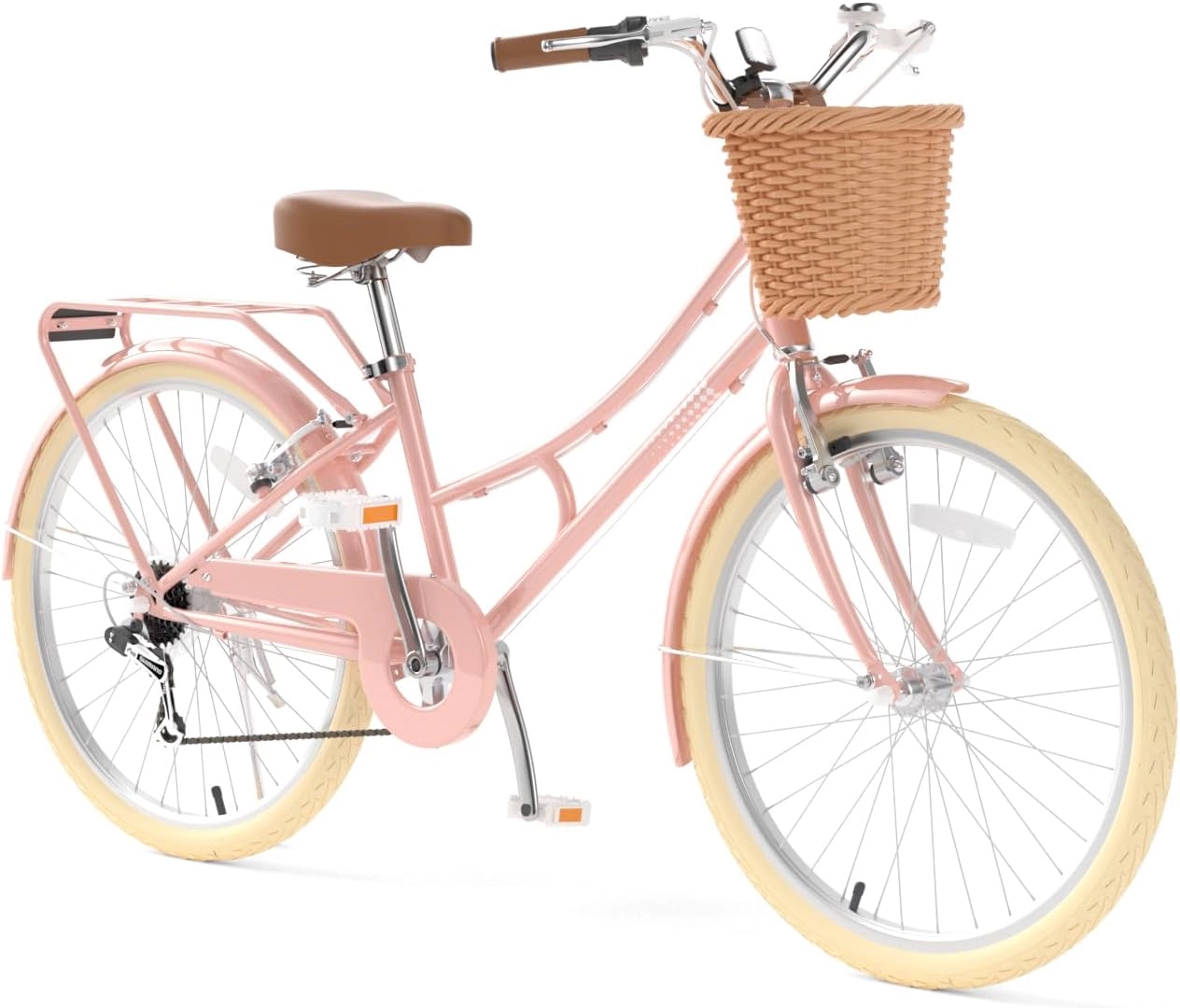 XJD Pink Beach Cruiser for Girls – Rear Rack & V-Brake
This beach cruiser offers 20 Inch, 24 Inch and 26 Inch labels for an individual fit comparison. Its supplied title identifies a rear rack and V-brake, but wheel size alone does not confirm fit.
XJD Kids Beach Cruiser Bicycle, Rear Rack & V-Brakes, Mint Green is a Beach Cruiser Bikes model offered in 20 Inch, 24 Inch and 26 Inch versions. XJD Pink Beach Cruiser for Girls – Rear Rack & V-Brake is also a Beach Cruiser Bikes model with the same three wheel-size labels. Both supplied titles identify a rear rack and V-brakes.
These facts establish available comparison sizes, not fit. Do not infer frame dimensions, component adjustability, rack capacity or suitability for a particular child from the wheel label or title. Verify the exact selected SKU and have the rider perform the fit check.
When these products are not relevant
If the child measures below 48 in (122 cm), neither catalog product supplies the smaller 18 Inch or lower wheel-size labels found in the XBikes starting points. The listed products should not be treated as substitutes for a smaller size.
They are also unsuitable as a fit choice if the child cannot stand over the frame, comfortably reach the handlebars, operate the brakes, start, stop and steer with current confidence. Do not move up to 24 Inch or 26 Inch merely to extend the time before the next bicycle purchase.
What to do next
Measure height and inseam, select the relevant 20 Inch or 24 Inch starting point, and arrange a supervised try-on of the exact bicycle. Compare 26 Inch only when the rider is over 60 in (153 cm) and demonstrates full control. Follow the exact product manual for assembly, maintenance, rack limits and adjustments; if anything is unclear, use a qualified bicycle mechanic.
Before riding, add a properly fitting bicycle helmet. It should sit level and its straps should be adjusted according to the helmet manufacturer’s instructions. For this 10-year-old, choose the smallest compared size that passes every fit and control check comfortably today.
Bikes for your next adventure
-
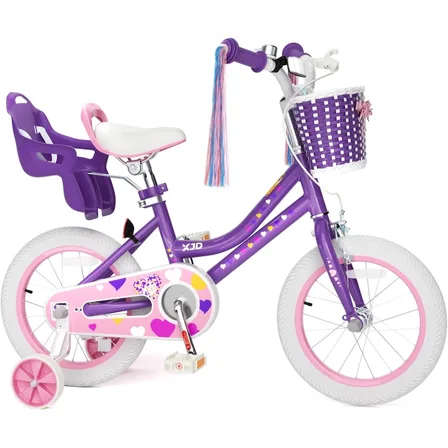
Purple XJD Girls' Bike with Doll Seat & Basket
For girls 71–122 cm tall (about ages 3–7), this XJD girls' bike in Purple pairs …$75.99
$99.99 -
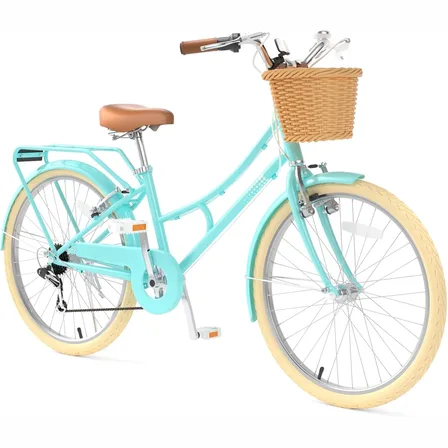
XJD 24-Inch Green Beach Cruiser Bike with U-Brake
This XJD 24-inch beach cruiser in green is made for riders about 4'8" to 5'4" ta…$159.99
$199.99 -

Kids Bike Helmet by XJD for Boys & Girls – Black, Blue, Green, Pink, Purple
The XJD Kids Bike Helmet covers a wide 2-to-8-year age range thanks to two head-…$59.99