

What size bike would a 11 year old need
Most 11-year-olds need a 20-inch or 24-inch bike, depending on height and fit. Measure the child first: 20-inch suits 48–60 in (122–152 cm), while 24-inch suits 54–64 in (137–163 cm).
Choose between 20-inch and 24-inch
Age provides only a starting point. In the XBikes sizing standard, both ranges include age 11, so the rider’s measured height and actual control of the bicycle should decide the size.
| Wheel size | Starting age range | Rider height |
|---|---|---|
| 20 Inch | Ages 7–12 | 48–60 in / 122–152 cm |
| 24 Inch | Ages 10–14 | 54–64 in / 137–163 cm |
| 26 Inch | Youth and adults | Over 60 in / 153 cm |
If the child is under 54 inches (137 cm), begin by trying a 20-inch bike. From 54 to 60 inches (137–152 cm), compare both 20-inch and 24-inch bikes in person because the height ranges overlap. From 60 to 64 inches (153–163 cm), start with a 24-inch model, while recognizing that a rider over 60 inches also enters the 26-inch starting range. Height narrows the choices; it does not prove that a particular frame fits.
Measure the rider before shopping
Have the child stand straight without shoes, with their back against a wall, and measure from the floor to the top of the head. Then measure inseam: place a firm, thin book between the legs so its top meets the crotch, keep it level, and measure from the floor to the book’s top.
Compare height with the XBikes ranges above. Keep the inseam measurement for the in-person stand-over check rather than converting it into a wheel size: wheel diameter alone does not reveal frame shape, saddle range or stand-over clearance.
Also notice the rider’s current confidence. A child who is still learning to start, stop or turn may control a smaller suitable bike more comfortably than a larger option within an overlapping height range.
Make the final decision with a real fit check
Have the child try the exact bicycle. Do not buy an oversized bike merely to allow room for growth. With the child straddling the bike, confirm that they can stand over it without the frame preventing a stable stance. Follow the exact product manual for the permitted saddle and handlebar adjustments.
Next, check the riding position. The child should be able to hold the handlebar without stretching, steer through a controlled turn and remain balanced. Ask them to operate each brake control: their hands must reach it comfortably and apply it reliably without losing their grip. A wheel size that matches the chart is still unsuitable if reach, stand-over or braking control is poor.
How the supplied catalog option helps
The XJD 24-Inch Green Beach Cruiser Bike with U-Brake is relevant when an 11-year-old measures within the 24-inch starting range of 54–64 inches (137–163 cm). Its available catalog labels are Green / 24 Inch, Pink / 24 Inch and Pink / 26 Inch, which make it useful for comparing the two larger wheel-size starting points. These labels do not replace trying the exact bicycle, and the 26-inch option is not equivalent to the 24-inch option.
The following catalog selection helps you inspect those available size labels while deciding whether 24 inches is a plausible starting point for this particular 11-year-old.
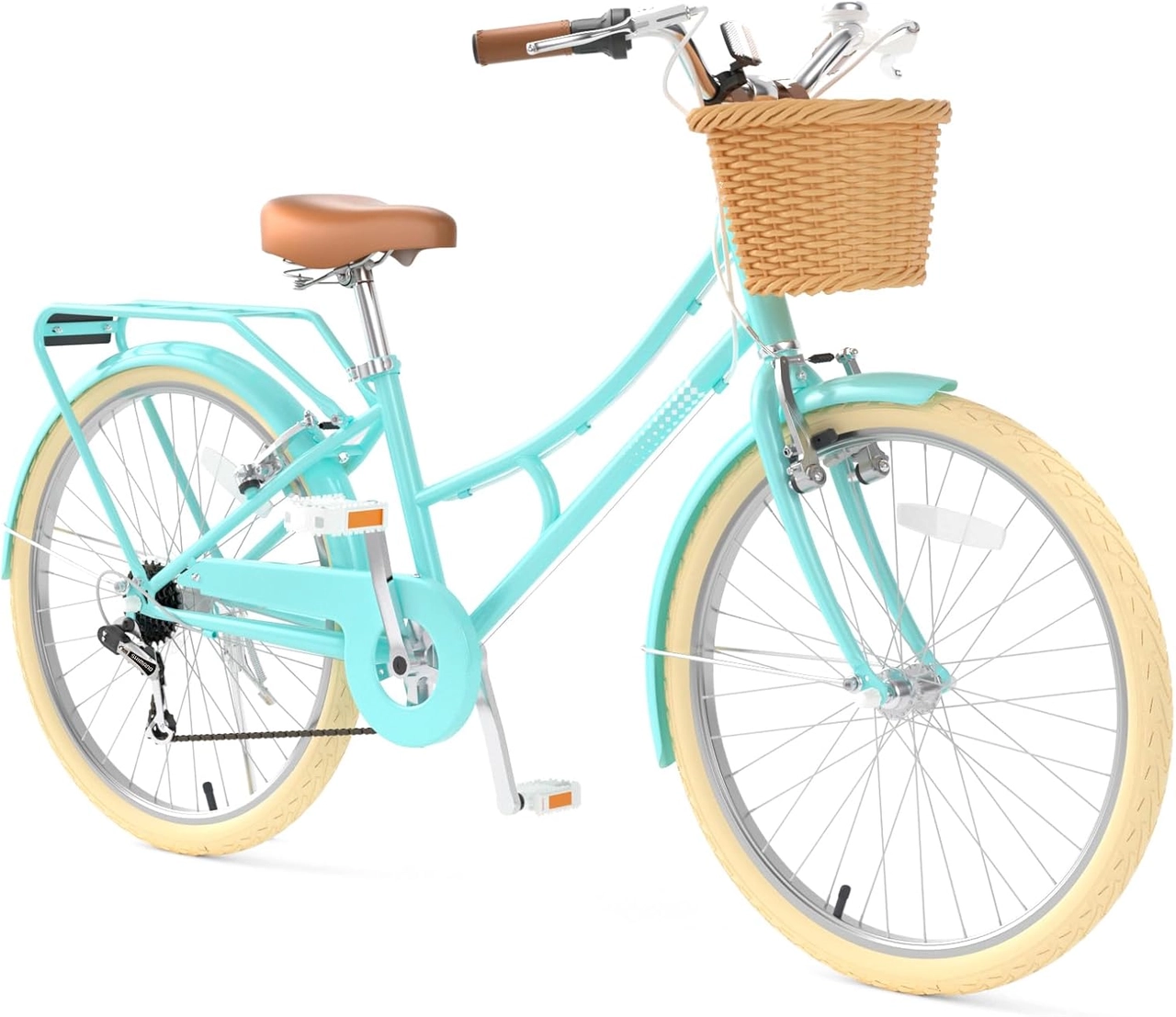
If the rider is below the 24-inch height range or cannot comfortably stand over, reach or control this model, it is not an appropriate substitute for a properly fitting 20-inch bike. Likewise, consider the Pink / 26 Inch label only for a rider over 60 inches (153 cm), followed by the same individual fit check. The supplied catalog does not include a 20-inch product, so parents needing that size should treat this item only as a larger-size comparison point.
Check control and protective equipment
Before riding, confirm that the bicycle has been assembled and adjusted according to its exact manual. For any maintenance, assembly, compatibility, load-limit or torque question not stated in the supplied information, consult that manual or a qualified bicycle mechanic rather than guessing.
Choose a bicycle helmet that fits the child properly. It should sit level, with its straps arranged and adjusted according to the helmet manufacturer’s instructions. Recheck the helmet fit whenever its adjustment changes.
What to do next
- Measure the child’s height and inseam without shoes.
- Start with 20 inches below 54 inches, compare 20 and 24 inches within their overlap, or start with 24 inches from 60 to 64 inches.
- Have the child straddle and ride the exact bike, checking stand-over, reach, steering, balance and brake operation.
- Reject any size the child cannot control confidently, even if the age or height chart appears to match.
For an 11-year-old, choose the smallest option among the chart-supported sizes that passes every hands-on check now; do not size up solely for future growth.
Bikes for your next adventure
-
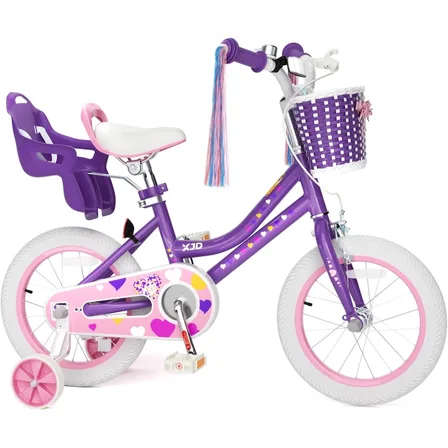
Purple XJD Girls' Bike with Doll Seat & Basket
For girls 71–122 cm tall (about ages 3–7), this XJD girls' bike in Purple pairs …$75.99
$99.99 -
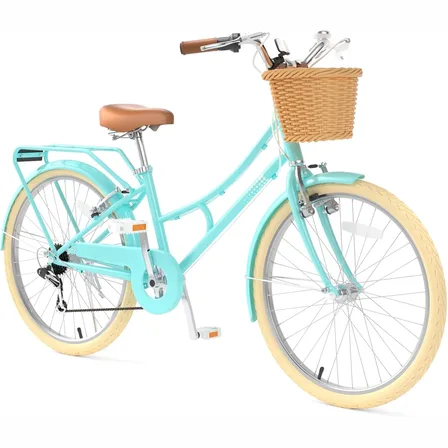
XJD 24-Inch Green Beach Cruiser Bike with U-Brake
This XJD 24-inch beach cruiser in green is made for riders about 4'8" to 5'4" ta…$159.99
$199.99 -

Kids Bike Helmet by XJD for Boys & Girls – Black, Blue, Green, Pink, Purple
The XJD Kids Bike Helmet covers a wide 2-to-8-year age range thanks to two head-…$59.99