

What size bike would a 36 inch child need
A child who is 36 inches tall will usually start with a 12-inch-wheel bike. Confirm the choice by checking inseam, stand-over clearance, reach, brake control and confidence on the actual bicycle.
Why 12 inches is the starting size
XBikes places a 12-inch bike in the 34–40 inch (86–102 cm) rider-height range, so a measured height of 36 inches falls within that starting range. The corresponding age guide is 3–4, but height and an individual fit check matter more than age.
A 14-inch bike starts at 37 inches (94 cm), one inch above this child’s stated height. Do not move up merely to leave growing room. An oversized bicycle can make starting, stopping and steering harder, even if the child will eventually grow into it.
Measure the child before choosing
First confirm that 36 inches means the child’s full standing height, not inseam or a bicycle measurement. Have the child stand barefoot against a wall, looking straight ahead, and measure from the floor to the top of the head.
Then measure inseam. With the child standing naturally in shoes they will ride in, measure from the floor to the crotch. XBikes does not provide a universal inseam-to-wheel-size formula, because frame shapes and saddle adjustment differ. Use this measurement when comparing the child with the stand-over height and adjustment information in the exact product manual.
- Height: 36 inches points to a 12-inch wheel under the XBikes starting guide.
- Inseam: use it to assess stand-over clearance and whether the child can put feet down confidently.
- Reach: the child should reach the handlebar without stretching or locking the elbows.
- Controls: the child must be able to operate the brakes and steering comfortably.
Try the bicycle rather than sizing up on paper
Have the child try the assembled bicycle with adult supervision. Check that the child can stand over it comfortably, mount and dismount without struggling, keep control of the handlebar, and reach and operate the brakes. Watch a few starts, controlled stops and gentle turns in a traffic-free area.
Confidence is part of fit. A hesitant beginner may need easier foot contact and a less demanding reach than a confident rider of the same height. If the child looks stretched, cannot stop reliably or cannot control the bicycle at walking speed, that bike is not an appropriate fit despite a wheel-size chart.
Do not improvise assembly or adjustments. Follow the exact product manual for setup, maintenance, compatibility, load limits and torque values, or ask a qualified bicycle mechanic to prepare and inspect the bicycle.
How the supplied XBikes options relate
Both supplied catalog choices are training-wheel bikes offered in 12-, 14- and 16-inch SKU labels. Their 12-inch variants are relevant comparison options for a 36-inch-tall child because that wheel size matches the XBikes 34–40 inch starting range. The larger variants are not equivalent substitutes and still require their own fit checks.
 XJD Boys 12/14/16" Training Wheel Bike – Blue
Available in 12, 14 and 16 Inch labels; its 12 Inch variant is the relevant starting comparison for a 36-inch-tall rider, subject to an individual fit check.
 XJD Kids' Training Wheel Bike for Boys & Girls, 12/14/16 Inch – White
This training-wheel bike has 12, 14 and 16 Inch options. Compare the 12 Inch version first for a 36-inch-tall child, then verify stand-over, reach, brake control and confidence.
XJD Boys 12/14/16" Training Wheel Bike – Blue is listed in the Training Wheel Bikes category and is available with 12 Inch, 14 Inch and 16 Inch labels. For this height, compare the 12 Inch variant first; do not infer fit from the title alone.
XJD Kids' Training Wheel Bike for Boys & Girls, 12/14/16 Inch – White is also a Training Wheel Bikes listing with 12 Inch, 14 Inch and 16 Inch labels. Its 12 Inch option is the relevant starting comparison for 36 inches of rider height.
The catalog facts do not establish frame geometry, saddle range, brake type, weight, load limit or compatibility. Consult the exact manual or a qualified bicycle mechanic for those details before deciding between the two products.
When to reconsider the 12-inch choice
Measure again if the child is close to 37 inches, wearing unusually thick footwear, or was measured inaccurately. XBikes places 14-inch wheels in the 37–45 inch (94–114 cm) range, but crossing that starting threshold does not automatically make a 14-inch bicycle fit.
Reconsider either size if the child cannot achieve comfortable stand-over clearance, reach the controls, use the brakes or remain in control. If both sizes are available to try, choose according to the child’s demonstrated control rather than projected growth.
Complete the fit and helmet check
Once the bicycle fits, add a properly fitting bicycle helmet. It should sit level and its straps should be adjusted according to the helmet manufacturer’s instructions. A helmet does not correct a bicycle that is too large or difficult to control.
For a child measured at exactly 36 inches tall, begin with a 12-inch-wheel bicycle, try its actual frame, and buy only if the child can stand over it, reach comfortably, operate the brakes and ride with control.
Bikes for your next adventure
-
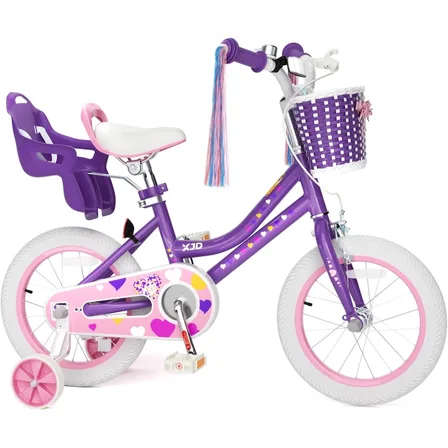
Purple XJD Girls' Bike with Doll Seat & Basket
For girls 71–122 cm tall (about ages 3–7), this XJD girls' bike in Purple pairs …$75.99
$99.99 -
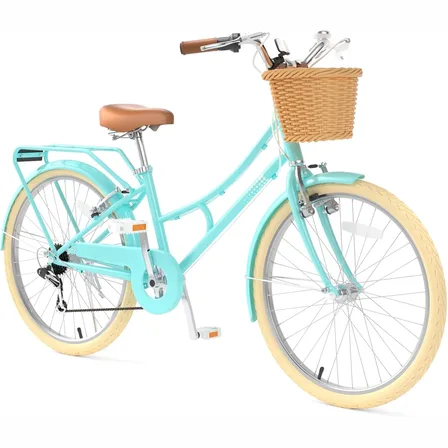
XJD 24-Inch Green Beach Cruiser Bike with U-Brake
This XJD 24-inch beach cruiser in green is made for riders about 4'8" to 5'4" ta…$159.99
$199.99 -

Kids Bike Helmet by XJD for Boys & Girls – Black, Blue, Green, Pink, Purple
The XJD Kids Bike Helmet covers a wide 2-to-8-year age range thanks to two head-…$59.99