

What size bike should a 46 inch child need
A child who is 46 inches tall will usually start with a 16-inch or 18-inch bike. Compare both sizes in person: height points to the range, but inseam, stand-over room, reach, brake control and confidence decide the fit.
Where 46 inches falls in the XBikes size ranges
The XBikes starting points place a 46-inch rider within two overlapping wheel-size ranges:
| Wheel size | Rider-height range | What it means at 46 inches |
|---|---|---|
| 14 Inch | 37–45 in / 94–114 cm | The child is above this starting range. |
| 16 Inch | 40–48 in / 102–122 cm | The child is within this range. |
| 18 Inch | 43–52 in / 109–132 cm | The child is also within this range. |
| 20 Inch | 48–60 in / 122–152 cm | The child is below this starting range. |
That overlap is why height alone cannot settle the choice. A 16-inch bike is the clearest initial comparison for a 46-inch child, while an 18-inch bike is also reasonable to try. Do not move directly to a 20-inch bike merely to leave growing room: 46 inches is below its 48-inch starting point, and an oversized bicycle can make starting, stopping and steering harder to control.
Measure the child before shopping
Measure height without shoes, with the child standing upright against a wall. Then measure inseam from the floor to the crotch while the child stands naturally. Record both measurements rather than relying on clothing size or age.
Wheel-size charts are starting points, while frame shapes and riding positions can vary. The inseam helps you assess whether the child can stand over the bicycle comfortably; it does not automatically select a wheel size by itself. The XBikes age bands—4–7 for 16 Inch and 5–9 for 18 Inch—are secondary guidance only. Use the measured body dimensions and an actual fit check first.
Compare a 16-inch and 18-inch bike in person
Have the child try each candidate bicycle. The correct choice is the one the child can control now, not the largest one they may eventually grow into. Check these points:
- Stand-over: The child should be able to straddle the bicycle without the frame preventing a comfortable, stable stance.
- Starting and stopping: They should be able to get moving and come to a controlled stop without the bicycle feeling unwieldy.
- Reach: The child should reach the handlebar without stretching, locking the arms or losing a balanced riding position.
- Brake control: If the bicycle has hand-operated brake controls, the child must be able to reach and operate them effectively.
- Steering: Ask the child to turn the handlebar and ride a simple controlled line. Watch for strain or hesitation caused by the bike’s size.
- Confidence: A technically plausible size is not a good fit if the child cannot control it calmly.
If both sizes appear workable, compare control rather than growth potential. Choose 16 Inch when the 18-inch option compromises stand-over, reach, braking or confidence. Consider 18 Inch only when the child demonstrates comfortable stand-over and full control during the fit check.
How the supplied BMX options help
The XJD Boys & Girls BMX Bike with Training Wheels, 12/14/16" – Blue is offered in 12 Inch, 14 Inch and 16 Inch labels. For a 46-inch child, its 16 Inch option falls within the 40–48-inch XBikes starting range and can serve as the relevant fit candidate. The 14 Inch option is below the stated height range for this child, while the 12 Inch range ends at 40 inches. This product does not supply an 18 Inch option, so it cannot provide the other overlapping size for a direct comparison.
These catalog options help answer the title by showing one in-range candidate and two smaller reference sizes; they do not remove the need to compare the 16-inch fit with an 18-inch bicycle elsewhere.

Training wheels are named in the supplied product title, but that fact does not establish fit. Select the wheel-size label first from the child’s measurements and control, then follow the exact product manual for assembly, adjustment, compatibility, maintenance and limits. Use a qualified bicycle mechanic whenever the manual does not resolve a setup question.
Complete the final safety check
After choosing the bike, repeat the fit check with the bicycle properly assembled and adjusted according to its manual. Confirm that the child can mount, stand over, reach, steer, brake and stop under control before riding independently.
A bicycle helmet must fit properly, sit level and have its straps used according to the helmet manufacturer’s instructions. Recheck bicycle and helmet fit as the child grows rather than waiting for age alone to signal a change.
The decision for a 46-inch child
Start by trying a 16-inch bike, then compare it with an 18-inch bike because 46 inches lies in both height ranges. Buy neither until the child’s inseam, stand-over position, reach, brake operation and present confidence confirm the choice; do not size up to 20 Inch for future growth.
Bikes for your next adventure
-

Kids Bike Helmet by XJD for Girls – Pink
The XJD Kids Bike Helmet in Pink is a lightweight multi-sport helmet for girls r…$59.99
$99 -
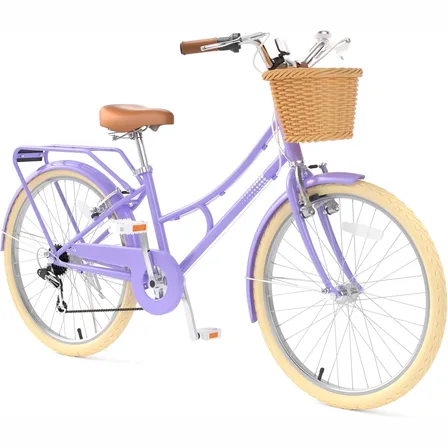
24-Inch Purple XJD Beach Cruiser Bike with U-Brake
The XJD 24-Inch Purple Beach Cruiser is built for girls and young women roughly …$159.99
-

Light Purple XJD Toddler Bike Helmet, Adjustable, Size XS (46–51 cm)
This Light Purple XJD toddler bike helmet is made for the smallest riders — the …$20.39