

What size bike would an 11 year old need
Most 11-year-olds should compare a 20-inch and 24-inch bike first: use the child’s measured height, then confirm stand-over clearance, reach, brake control and confidence on the actual bicycle. Do not choose by age alone or buy an oversized bike for future growth.
Start with height, not the birthday
At age 11, a rider falls within two overlapping XBikes starting ranges. A 20-inch bicycle is the starting point for ages 7–12 and heights of 48–60 inches (122–152 cm). A 24-inch bicycle is the starting point for ages 10–14 and heights of 54–64 inches (137–163 cm).
| Wheel size | XBikes age starting point | XBikes rider-height starting point |
|---|---|---|
| 20 Inch | 7–12 | 48–60 in / 122–152 cm |
| 24 Inch | 10–14 | 54–64 in / 137–163 cm |
| 26 Inch | Youth and adults | Over 60 in / 153 cm |
The overlap is intentional: wheel size is only a starting point, and bicycles with the same wheel diameter can still feel different. An 11-year-old under 54 inches should usually begin the comparison with 20-inch bikes. From 54 to 60 inches, try both 20-inch and 24-inch bikes. Above 60 inches, include 24-inch and 26-inch options in the fit check. These are comparison ranges, not guarantees.
Measure the rider before shopping
Measure height without shoes, with the child standing upright against a wall. Also measure inseam from the floor to the crotch while the child stands naturally. Record both measurements rather than estimating from clothing size or comparing the child with classmates.
Height identifies which wheel-size range to investigate. Inseam helps assess whether the child can stand over the bicycle comfortably. Because no universal inseam-to-frame calculation is supplied here, compare the measurement with the exact bicycle’s geometry and have the rider try that bicycle. Follow its product manual or ask a qualified bicycle mechanic when frame dimensions or setup instructions are unclear.
Perform the fit check on the actual bike
Have the child wear ordinary riding shoes and try the bicycle in a controlled area. A suitable candidate should pass all of these checks:
- Stand-over: The child can straddle the bicycle with usable clearance rather than being pressed against the frame.
- Starting and stopping: The rider can get on, set off and stop without struggling to manage the bicycle.
- Reach: The handlebar is reachable without excessive stretching, locked elbows or an awkwardly folded posture.
- Brake control: The child can reach and operate the brake controls confidently while keeping control of the handlebar.
- Steering: The rider can turn, look around and maintain balance without the bicycle feeling cumbersome.
- Confidence: The size matches current ability. A nervous or developing rider may handle a smaller suitable option better than a larger one within an overlapping range.
If the child cannot perform these actions smoothly, do not treat a matching age or height range as proof of fit. The American Academy of Pediatrics’ guidance supports trying the bicycle, checking stand-over and control, and avoiding an oversized bicycle bought merely for growth.
How the supplied catalog option helps
The Girls' Training Wheel Bike by XJD, 12–20 Inch Wheels – Blue is listed in the Training Wheel Bikes category with 12-inch, 14-inch, 16-inch and 20-inch SKU labels. For an 11-year-old, only its 20-inch option overlaps the relevant XBikes age and height starting points. It can therefore be a useful 20-inch comparison when the rider is 48–60 inches tall and a training-wheel format suits the rider’s present confidence.
This product does not offer a supplied 24-inch or 26-inch SKU. If the child’s measurements and hands-on fit point to either of those sizes, this product is only a nearest-size comparison point, not an equal or a substitute. Its smaller 12-inch, 14-inch and 16-inch options correspond to younger and shorter starting ranges and should not be chosen merely because they share the same product listing.

Make the final size decision
Begin with the measured-height bracket, then let the trial decide. For a child in the 54–60-inch overlap, compare both 20-inch and 24-inch bicycles directly. Choose the one the child can straddle, reach, brake, steer, start and stop with better control now—not the larger one simply because it may last longer.
Before riding, use a properly fitting bicycle helmet. It should sit level and its straps should be adjusted according to the helmet manufacturer’s instructions. For bicycle assembly, maintenance, compatibility, load limits or torque settings, follow the exact product manual or use a qualified bicycle mechanic.
For this 11-year-old, measure height and inseam today, shortlist the matching 20-inch, 24-inch or—when over 60 inches—26-inch range, and complete an in-person control check before choosing.
Bikes for your next adventure
-
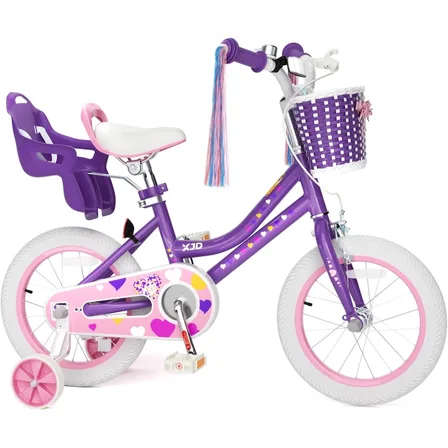
Purple XJD Girls' Bike with Doll Seat & Basket
For girls 71–122 cm tall (about ages 3–7), this XJD girls' bike in Purple pairs …$75.99
$99.99 -
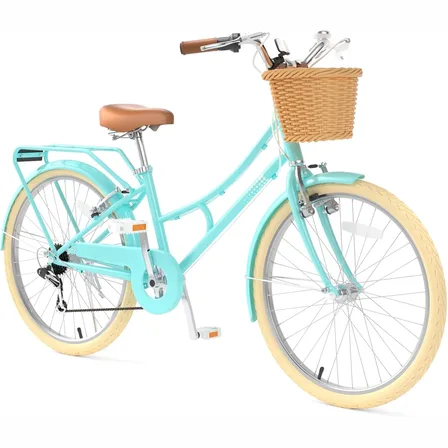
XJD 24-Inch Green Beach Cruiser Bike with U-Brake
This XJD 24-inch beach cruiser in green is made for riders about 4'8" to 5'4" ta…$159.99
$199.99 -

Kids Bike Helmet by XJD for Boys & Girls – Black, Blue, Green, Pink, Purple
The XJD Kids Bike Helmet covers a wide 2-to-8-year age range thanks to two head-…$59.99