

What size child does a 20 inch bike fit
A 20-inch bike is an XBikes starting point for a child aged 7–12 who is 48–60 inches (122–152 cm) tall. Measure the rider and confirm stand-over clearance, reach, braking control and confidence before choosing it.
Start with measured height, not age
Wheel size describes the bicycle’s wheels, not the child or the frame. Two 20-inch bikes can therefore feel different. The XBikes age range is a useful first filter, but a child’s current height and hands-on fit matter more than a birthday.
Have the child stand straight without shoes against a wall and measure from the floor to the top of the head. Compare that result with the 48–60-inch (122–152 cm) starting range. A rider below or above it should also be compared with the adjacent wheel-size guidance rather than being pushed automatically onto a 20-inch bike.
| Wheel size | Age starting point | Rider-height starting point |
|---|---|---|
| 18 Inch | 5–9 | 43–52 in / 109–132 cm |
| 20 Inch | 7–12 | 48–60 in / 122–152 cm |
| 24 Inch | 10–14 | 54–64 in / 137–163 cm |
The overlapping ranges are intentional starting points, not proof of fit. For example, a child who is 50 inches tall falls within both the 18-inch and 20-inch ranges. A real fit check should decide between them.
Measure inseam as well as total height
For inseam, have the child stand without shoes, feet naturally spaced, with their back near a wall. Place a straight-edged book firmly between the legs to represent the saddle area, then measure vertically from the floor to the top edge of the book. Record the measurement rather than estimating it from clothing size.
Compare that measurement with the stand-over height and saddle adjustment information for the exact bicycle. Those dimensions are not supplied here, so consult the exact product manual or seller specifications. The child should be able to stand over the bicycle without the frame preventing a stable stance. Do not invent a clearance from wheel size alone.
Do a hands-on 20-inch fit check
American Academy of Pediatrics guidance supports having the child try the bicycle and avoiding an oversized bike bought merely for future growth. During the tryout, check the complete riding position rather than relying on wheel diameter.
- Stand-over: Ask the child to straddle the bicycle and confirm that the frame does not obstruct a secure, balanced stance.
- Reach: With the child seated and looking ahead, make sure the handlebar can be held without an uncomfortable stretch or a cramped posture.
- Brake control: Confirm the child can reach and operate the bicycle’s brakes while maintaining a firm grip and steering control.
- Low-speed control: In a suitable supervised area, check that the child can start, steer, stop and put a foot down without panic or excessive effort.
- Confidence: Notice hesitation as well as physical fit. A technically reachable bicycle may still be too demanding for the child’s present skills.
If the child cannot complete these checks comfortably, a 20-inch bike is not the right fit now, even when age or height falls inside the starting range. Do not solve poor control by choosing an oversized bicycle for growth.
How the supplied XBikes options are relevant
Each supplied catalog option includes a 20 Inch SKU label, so these products are relevant examples to compare after measurement. Their listings establish the available wheel-size choices only; they do not establish that a particular frame will fit your child without a tryout.
 Pink 12/14/16/20" XJD Girls Bike with Training Wheels & Basket
Available in a 20 Inch SKU as well as 12, 14 and 16 Inch labels, making it relevant for comparing the requested wheel size with smaller catalog options after measuring the rider.
 26-Inch XJD Beach Cruiser Bike for Girls – Purple, V-Brake
Although its exact title begins with 26-Inch, the catalog also supplies Mint Green and Pink 20 Inch SKU labels. Parents must select the exact SKU; its 24- and 26-inch variants are different sizes, not equivalents.
 Light Pink XJD Girls' Bicycle with Basket & Training Wheels
Its supplied size labels include 20 Inch alongside 12, 14 and 16 Inch. The 20 Inch option is relevant only after the child passes individual stand-over, reach, braking and control checks.
Pink 12/14/16/20" XJD Girls Bike with Training Wheels & Basket offers catalog labels for 12, 14, 16 and 20 Inch sizes. That range can help a parent compare the requested 20 Inch option with smaller labeled versions, but each size still needs its own fit check.
Light Pink XJD Girls' Bicycle with Basket & Training Wheels is likewise listed in 12, 14, 16 and 20 Inch options. Its 20 Inch selection is relevant to the title; the presence of training wheels in the product title does not replace checks for reach, braking control or confidence.
26-Inch XJD Beach Cruiser Bike for Girls – Purple, V-Brake has 20 Inch catalog options in Mint Green and Pink, alongside 24 Inch and 26 Inch labels. Select by the exact SKU label rather than assuming the 26-inch wording in the product title applies to every option. The 24- and 26-inch variants are not substitutes for a 20-inch fit.
No frame dimensions, load limits, assembly procedures or adjustment specifications are supplied for these products. Follow the manual for the exact product and SKU, or ask a qualified bicycle mechanic when setup or compatibility is uncertain.
Make the final decision
Choose a 20-inch bicycle only when the child’s measured height supports the 48–60-inch starting range and the actual bike passes stand-over, reach, brake-control and confidence checks. If the child overlaps the 18- or 24-inch guidance, compare both relevant sizes in person and choose the one they can control now—not the one they may grow into.
Complete the setup with a properly fitting bicycle helmet. It should sit level and its straps should be used according to the helmet manufacturer’s instructions. The next step is simple: record height and inseam, identify the exact 20 Inch SKU, then have the child try that bicycle before deciding.
Bikes for your next adventure
-

XJD Boys 12/14/16" Training Wheel Bike – Blue
The XJD Boys Bike in Blue is a training wheel bike for riders 71–122 cm tall—rou…$169
$199 -
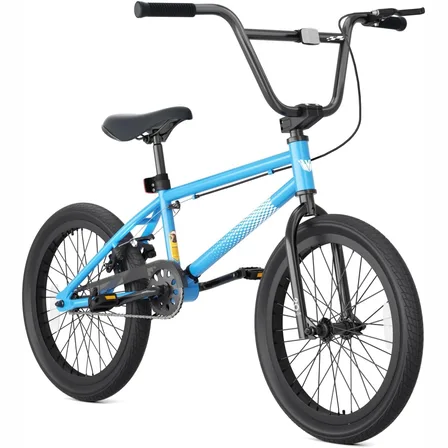
Blue XJD Freestyle BMX Bike, 20-Inch – No Pegs
The XJD 20-Inch Blue Freestyle BMX is an entry-level BMX bike for boys and girls…$189.99
-

Light Purple XJD Toddler Bike Helmet, Adjustable, Size XS (46–51 cm)
This Light Purple XJD toddler bike helmet is made for the smallest riders — the …$20.39