

What size does a 26 inch bike fit
A 26-inch bike generally fits youth and adults over 60 inches (153 cm) tall, but wheel size alone cannot confirm fit. Measure the rider and check stand-over clearance, reach, braking and control on the actual bicycle.
Start with the rider’s measured height
Have the rider stand straight without shoes against a wall, looking level. Mark the top of the head and measure from the floor to the mark. Compare that result with the XBikes starting point: a 26-inch bike is intended for youth and adults taller than 60 inches (153 cm).
Age is less useful than current body measurements. A rider near the threshold may fit some 26-inch bicycle frames and not others because frame shape and component positions can differ. Do not move up to a 26-inch bike merely to leave room for growth.
Measure inseam and check stand-over
To measure inseam, place a book firmly between the rider’s legs with its spine level, similar to where a saddle would rest. Measure from the floor to the top of the book. Keep this measurement available when checking the exact bicycle’s stand-over requirements or product manual.
On the bicycle, the rider should straddle the top tube with both feet planted securely. There must be usable clearance rather than pressure from the frame. Because no universal stand-over number is supplied here, confirm the requirement for the exact model instead of estimating it from wheel diameter.
Compare nearby wheel-size starting points
| Wheel size | XBikes rider-height starting point | Age starting point |
|---|---|---|
| 20 Inch | 48–60 in / 122–152 cm | Ages 7–12 |
| 24 Inch | 54–64 in / 137–163 cm | Ages 10–14 |
| 26 Inch | Over 60 in / 153 cm | Youth and adults |
The ranges overlap because height and age cannot settle the decision by themselves. For example, a rider slightly over 60 inches should not automatically choose 26 inches if reaching the controls or handling the bicycle feels strained. Likewise, a taller rider still needs enough room and a comfortable riding position on the specific frame.
Test reach, brakes and control
Have the rider try the bicycle before deciding. The American Academy of Pediatrics’ HealthyChildren guidance supports choosing a bike the child can control now, rather than an oversized bicycle intended for future growth.
- Confirm that the rider can mount, start and stop without needing to stretch or tip the bicycle excessively.
- Check that the handlebars can be reached while the arms remain comfortably controlled, not locked or fully extended.
- Make sure the rider can operate the brake controls confidently from the normal hand position.
- Ask the rider to turn, ride a straight line and stop in a controlled manner in a suitable traffic-free area.
- Notice hesitation or loss of balance. Current confidence is part of fit, even when the height guideline points toward 26 inches.
If any check fails, compare a different frame or the 24-inch option rather than assuming an adjustment will solve it. Use the exact product manual or a qualified bicycle mechanic for assembly, adjustment, compatibility and torque information that is not provided.
How the supplied 26-inch options are relevant
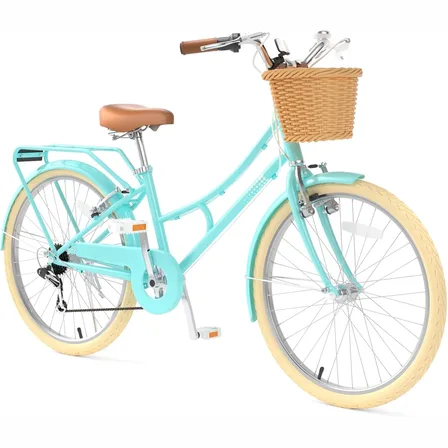
Both catalog bicycles below offer 20 Inch, 24 Inch and 26 Inch SKU labels, so they allow a direct wheel-size comparison within their listed options. The XJD Kids Beach Cruiser Bicycle, Rear Rack & V-Brakes, Mint Green and XJD Pink Beach Cruiser for Girls – Rear Rack & V-Brake are beach cruiser bicycles; their 26 Inch versions are relevant only after the rider passes the individual fit checks above. Their titles and color descriptions do not establish who will fit them.
 XJD Kids Beach Cruiser Bicycle, Rear Rack & V-Brakes, Mint Green
Available in 20 Inch, 24 Inch and 26 Inch labels, this beach cruiser provides relevant size-comparison options. Its rear rack and V-brakes do not replace an individual stand-over, reach and control check.
 XJD Pink Beach Cruiser for Girls – Rear Rack & V-Brake
This beach cruiser is listed in 20 Inch, 24 Inch and 26 Inch options, making its 26 Inch SKU relevant for riders over the stated height starting point who also pass hands-on fit checks.
The supplied facts identify rear racks and V-brakes for these models. They do not provide frame dimensions, load limits, assembly procedures or exact reach measurements. Consult the manual for the chosen SKU or ask a qualified bicycle mechanic to verify those details. Do not treat the shared wheel-size label as proof that the two frames fit identically.
Finish the fit with helmet and final checks
A properly fitted bicycle also requires a properly fitted helmet. U.S. Consumer Product Safety Commission guidance says the helmet should fit correctly, sit level on the head and have its straps used according to the helmet manufacturer’s instructions.
Choose a 26-inch bike only when the rider is over 60 inches (153 cm), can stand over the particular frame, reaches the handlebars and brakes comfortably, and demonstrates controlled starting, turning and stopping. If those conditions are not met, try another frame or compare the 24-inch size now instead of buying a 26-inch bike for future growth.
Bikes for your next adventure
-

26-Inch XJD Beach Cruiser Bike for Girls – Purple, V-Brake
This XJD 26-inch purple beach cruiser is sized for big kids and teens — suggeste…$218.49
$229.99 -
XJD 24-Inch Green Beach Cruiser Bike with U-Brake
This XJD 24-inch beach cruiser in green is made for riders about 4'8" to 5'4" ta…$159.99
$199.99 -

XJD Boys 12/14/16" Training Wheel Bike – Blue
The XJD Boys Bike in Blue is a training wheel bike for riders 71–122 cm tall—rou…$169
$199