

What size is a 20 inch bike
A 20-inch bike has 20-inch wheels and is an XBikes starting point for riders 48–60 in (122–152 cm) tall, typically ages 7–12. Height and an individual fit check matter more than age.
What “20 inch” tells you
The 20-inch label refers to the bicycle’s wheel-size category. It does not tell you the frame dimensions, seat height or how comfortably a particular child can control that bicycle. Two 20-inch models can therefore feel different even though their wheel-size labels match.
Use 48–60 in (122–152 cm) as the initial height range, then confirm stand-over clearance, reach, brake operation and confidence on the exact model. Do not move a child to a 20-inch bike solely because of age or because you want extra growing room.
Measure the rider before comparing bikes
- Measure height: Have the child stand without shoes, upright against a wall. Measure from the floor to the top of the head.
- Measure inseam: With feet slightly apart, place a firm, thin book between the legs to represent the saddle. Measure from the floor to the top edge of the book.
- Note current control: Consider whether the child starts, stops, steers and uses the brakes confidently on the present bike.
Compare measured height with the XBikes starting point first. Keep the inseam measurement ready for checking stand-over and saddle adjustment on the actual bicycle; do not assume that wheel size alone guarantees clearance.
Compare 20 inches with nearby wheel sizes
| Wheel size | XBikes rider-height starting point | Typical age starting point |
|---|---|---|
| 18 Inch | 43–52 in / 109–132 cm | 5–9 |
| 20 Inch | 48–60 in / 122–152 cm | 7–12 |
| 24 Inch | 54–64 in / 137–163 cm | 10–14 |
The overlapping ranges are intentional starting points, not proof that either neighboring size will fit. A rider near 48 or 60 inches may need to compare two sizes on the ground. Choose the bicycle the child can stand over and operate comfortably, rather than automatically selecting the larger option.
Check the exact 20-inch bike in person
Have the child wear their usual riding shoes. With the bicycle upright, confirm that they can straddle it with practical clearance and without leaning it sharply. Once seated, they should be able to reach the handlebar without stretching or locking their arms.
Ask the rider to hold the grips, turn the handlebar and operate every brake control fitted to the bike. Controls should be reachable and usable without losing a secure grip. Also watch a start, controlled stop and low-speed turn in a traffic-free area. Hesitation, tiptoe balancing, an excessive stretch or difficulty braking means the nominal size is not enough evidence of a fit.
The American Academy of Pediatrics advises having a child try the bicycle, checking stand-over and control, and avoiding an oversized bike bought for growth. If adjustment or assembly is uncertain, follow the exact product manual or ask a qualified bicycle mechanic; adjustment limits and procedures vary by model.
How the supplied XBikes options help
Both supplied catalog options include a 20 Inch SKU label, so they are directly relevant starting points rather than merely nearby-size substitutes. They also make size comparison practical: XJD Pink Beach Cruiser for Girls – Rear Rack & V-Brake is offered in 20 Inch, 24 Inch and 26 Inch labels, while Girls' Training Wheel Bike by XJD with Basket – Purple is offered in 14 Inch, 16 Inch and 20 Inch labels. Those labels establish available size choices only; they do not establish an individual fit.
 XJD Pink Beach Cruiser for Girls – Rear Rack & V-Brake
Available in a 20 Inch SKU label, making it directly relevant to the requested size. Its 24 Inch and 26 Inch labels can support comparison, but each size requires a separate individual fit check.
 Girls' Training Wheel Bike by XJD with Basket – Purple
Available with 14 Inch, 16 Inch and 20 Inch SKU labels. The 20 Inch option is directly relevant, while the smaller labels help compare choices without implying that different wheel sizes fit equally.
For either product, select the 20 Inch SKU only after confirming the child’s measurements and control on that exact configuration. The larger labels on the beach cruiser are not equivalent to 20 inches, and the smaller labels on the training-wheel bike are not substitutes for it. Consult the exact manual or a qualified bicycle mechanic for assembly, compatibility, load limits, maintenance and torque information.
Make the 20-inch decision
- If the rider measures 48–60 in (122–152 cm), put a 20-inch bike on the try-first list.
- If the rider falls outside that range, begin with the XBikes size range matching the measured height rather than forcing a 20-inch choice.
- If height fits but stand-over, reach, braking or confidence does not, reject that particular bike or configuration and compare another size or model.
Before the first ride, add a properly fitting bicycle helmet. U.S. Consumer Product Safety Commission guidance says it should sit level and its straps should be used according to the helmet manufacturer’s instructions. The final answer is therefore measurement plus control: choose 20 inches only when the rider is in range and can comfortably stand over, reach, steer and brake the exact bike.
Bikes for your next adventure
-
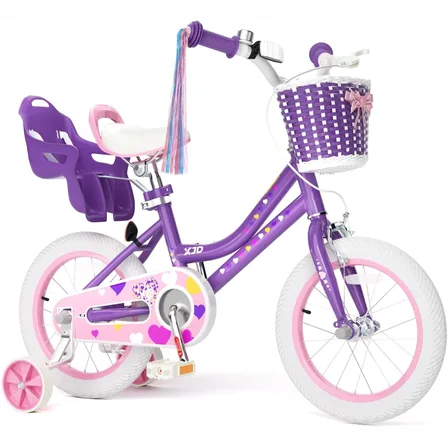
XJD Light Purple Girls Bike with Basket, Training Wheels, 12/14/16/20 Inch
The XJD Girls Bike with Basket in Light Purple is a single-speed training-wheel …$99.99
$119.99 -
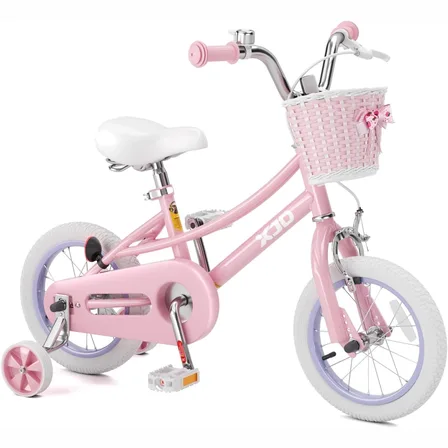
Pink 12/14/16/20" XJD Girls Bike with Training Wheels & Basket
The Pink XJD Girls Bike with Training Wheels & Basket is a first-bike pick f…$65.99
$75.99 -

XJD Kids Bike for Girls – Pink, 12/14/16/20 Inch with Training Wheels
The XJD Kids Bike for Girls in Pink is a training-wheel bike built to carry your…$139
$159