

What size is a 20 inch bike for
A 20-inch bike generally fits children ages 7–12 who are 48–60 inches (122–152 cm) tall, but measurements and a hands-on fit check decide.
What “20 inch” means
The 20-inch measurement refers to the bike’s wheel size, not the rider’s height or the frame dimensions. Bikes with 20-inch wheels can also differ in frame shape and riding position, so the wheel label alone cannot confirm that a particular model fits your child.
Use the XBikes range as a starting point: 20-inch bikes are intended for riders about 48–60 inches (122–152 cm) tall, commonly ages 7–12. Height is more useful than age because children of the same age can have very different proportions and riding abilities.
Measure the child before comparing bikes
- Measure standing height: Have the child stand without shoes, upright against a wall. Measure from the floor to the top of the head.
- Measure inseam: With feet slightly apart, measure from the floor to the crotch. This helps you assess clearance when the child stands over the bike.
- Note current confidence: Consider whether the rider starts, stops, turns and balances independently or still needs assistance.
If the measured height is below 48 inches (122 cm), do not assume a 20-inch bike will work simply because the child will grow. A smaller wheel size may be more appropriate. If the rider is above 60 inches (152 cm), compare the next size ranges and conduct the same individual fit checks.
Check the fit on the actual bike
Have the child try the assembled bicycle with close adult supervision. The American Academy of Pediatrics advises against buying an oversized bicycle for a child to grow into. A rider who cannot comfortably control the bike now is not correctly served by extra future growing room.
- Stand-over: The child should be able to straddle the bicycle securely rather than being forced onto tiptoes or against the frame.
- Reach: Seated in a normal riding position, the child should reach the handlebar without stretching, locking the arms or leaning excessively.
- Brake control: The child must be able to reach and operate the bike’s braking controls confidently. Check the exact model rather than assuming all 20-inch bikes use the same setup.
- Overall control: Ask the child to demonstrate a controlled start, turn and stop in a traffic-free area.
If any of these checks fail, do not select that bike solely because its wheel size matches the chart. Consult the exact product manual for adjustment and assembly instructions, or ask a qualified bicycle mechanic for help.
How nearby wheel sizes compare
| Wheel size | Starting age range | Starting height range |
|---|---|---|
| 16 Inch | 4–7 | 40–48 in / 102–122 cm |
| 18 Inch | 5–9 | 43–52 in / 109–132 cm |
| 20 Inch | 7–12 | 48–60 in / 122–152 cm |
| 24 Inch | 10–14 | 54–64 in / 137–163 cm |
The overlapping ranges are intentional starting points, not proof that two sizes fit equally. When a rider falls in an overlap, compare the actual bikes and favor present stand-over clearance, comfortable reach, effective brake control and confident handling over age or anticipated growth.
Which XBikes products are relevant?
These catalog options help because all three offer a 20-inch reference: two list 20-inch choices alongside smaller sizes, while one is identified as a 20-inch BMX bike. They let you compare the requested wheel size without treating different categories or configurations as interchangeable.
 Girls' Training Wheel Bike by XJD with Basket – Purple
Offers 14 Inch, 16 Inch and 20 Inch SKU labels. The 20 Inch option directly matches the requested wheel size, while the smaller options provide comparison points; individual fit still decides.
 Blue XJD Freestyle BMX Bike, 20-Inch – No Pegs
Its exact catalog title identifies this Kids' BMX Bike as 20-inch. The Default SKU label does not replace checking the rider’s height, inseam, reach, brake control and confidence.
 Pink 12/14/16/20" XJD Girls Bike with Training Wheels & Basket
Offers 12 Inch, 14 Inch, 16 Inch and 20 Inch SKU labels. Select the 20 Inch option for this comparison, then verify the specific bicycle fits the child now.
Girls' Training Wheel Bike by XJD with Basket – Purple lists 14 Inch, 16 Inch and 20 Inch SKU labels. Its 20 Inch choice is relevant when the rider passes the individual fit check; the smaller labels provide size-comparison points.
Blue XJD Freestyle BMX Bike, 20-Inch – No Pegs is categorized as a Kids' BMX Bike and has a Default SKU label. Its exact title identifies it as 20-inch, but its fit still needs to be checked on the actual bicycle.
Pink 12/14/16/20" XJD Girls Bike with Training Wheels & Basket lists 12 Inch, 14 Inch, 16 Inch and 20 Inch options. Confirm the 20 Inch selection before ordering and judge it against the child’s measurements and control.
The two training-wheel products may be relevant when that category matches the family’s needs; the BMX product belongs to a different category. The supplied facts do not establish brake type, weight, materials, load limits or compatibility. Follow the exact manual or consult a qualified bicycle mechanic for those details.
Make the final 20-inch decision
Choose a 20-inch bike only when the child is near the 48–60 inch starting range and can comfortably straddle, reach, steer and brake on the specific model today. Add a properly fitting bicycle helmet that sits level, with straps adjusted according to its manufacturer’s instructions. If control is uncertain, compare a smaller size rather than buying extra growing room.
Bikes for your next adventure
-
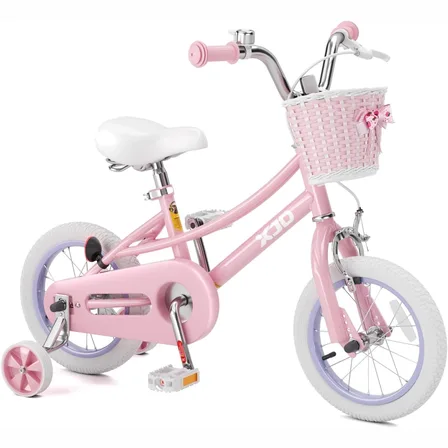
Pink 12/14/16/20" XJD Girls Bike with Training Wheels & Basket
The Pink XJD Girls Bike with Training Wheels & Basket is a first-bike pick f…$65.99
$75.99 -
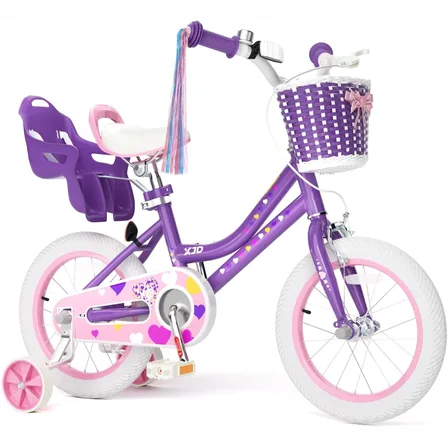
XJD Light Purple Girls Bike with Basket, Training Wheels, 12/14/16/20 Inch
The XJD Girls Bike with Basket in Light Purple is a single-speed training-wheel …$99.99
$119.99 -

XJD Kids Bike for Girls – Pink, 12/14/16/20 Inch with Training Wheels
The XJD Kids Bike for Girls in Pink is a training-wheel bike built to carry your…$139
$159