

What size is a 21 inch bike
A 21-inch bike usually means a bicycle with 21-inch wheels, but that is not a standard size in the XBikes kids-bike chart. Confirm whether “21 inch” describes the wheels or the frame before choosing a bike.
First, identify what the 21-inch measurement describes
Kids’ bicycles are generally described by wheel size. Look for a size marking on the tire sidewall, the bicycle label, or the product manual. A seller’s “21-inch bike” wording may instead refer to a frame measurement, and frame size cannot be treated as wheel size.
If the marking is unclear, ask the seller or a qualified bicycle mechanic to identify it. Do not assume a nominal 21-inch measurement makes the bicycle equivalent to a 20-inch or 24-inch model. Those are separate sizes and require their own fit checks.
How a 21-inch wheel size compares
The XBikes starting-point chart does not include a 21-inch category. It places 21 inches between two established wheel-size references:
| Wheel size | Starting age range | Starting rider height |
|---|---|---|
| 20 Inch | Ages 7–12 | 48–60 in / 122–152 cm |
| 24 Inch | Ages 10–14 | 54–64 in / 137–163 cm |
This position does not create a reliable 21-inch age or height range. Do not average the two rows or choose by age alone. Bicycle geometry, saddle adjustment, handlebar position and the child’s proportions can make bicycles with similar wheel measurements fit differently.
Measure the rider before comparing bikes
Record the child’s current standing height and inseam while they wear the shoes normally used for riding. Height helps select a starting wheel-size category; inseam helps assess whether the child can stand over and manage the bicycle.
Then have the child try the actual bicycle. The American Academy of Pediatrics advises against buying an oversized bike merely to allow room for growth. During the fit check, confirm that the child can:
- Stand over the bicycle with both feet planted and appropriate clearance from the frame.
- Mount, start and stop without the bicycle feeling too tall or unwieldy.
- Reach the handlebars without stretching or locking the arms.
- Turn the handlebars while remaining balanced and in control.
- Reach and operate the brakes comfortably, if the bicycle has hand-operated brake controls.
A child who falls within an age or height starting point may still need another size when inseam, reach, brake control or present riding confidence indicates a poor fit.
Use a short ride as the deciding check
On a level, traffic-free area with close adult supervision, ask the child to start, ride straight, steer, slow and stop. Watch for repeated toe-reaching, difficulty controlling direction, an overly stretched posture, or hesitation caused by the bicycle’s size.
If safe testing is not possible, use a qualified bicycle shop or mechanic for an individual fit assessment. Follow the exact bicycle manual for assembly, adjustments, load limits, compatibility and torque requirements; those details cannot be inferred from wheel size.
How the supplied XBikes product relates
The supplied catalog does not contain a 21-inch option. XJD Kids Bike for Girls – Pink, 12/14/16/20 Inch with Training Wheels is offered in 12 Inch, 14 Inch, 16 Inch and 20 Inch labels. Its 20 Inch option is a nearby catalog comparison point, while its smaller options can help families recognize how wheel-size labels progress. None is an exact 21-inch substitute.
These catalog options are useful for comparing the requested wording with verified, selectable wheel-size labels and for checking whether the rider actually fits the neighboring 20 Inch category.

For the 20 Inch option, the XBikes starting point is ages 7–12 and a rider height of 48–60 in / 122–152 cm. Treat that age range only as an initial reference. The child must still pass the stand-over, reach, braking and control checks. The product title’s wording is a catalog name and does not establish fit for an individual child.
What to do next
- Confirm whether “21 inch” means wheel size or frame size.
- Measure the rider’s standing height and inseam.
- If comparing the supplied product, use only its labeled 20 Inch option as the nearest available reference—not as the same size.
- Have the child try the bicycle and verify stand-over clearance, reach, brake operation and confident control.
- Reject any bicycle that is oversized now, even if it promises longer future use.
The practical decision is simple: choose a 21-inch bike only after confirming what the measurement means and seeing that the child controls that exact bicycle comfortably. Otherwise, compare a correctly labeled standard size and select the one that fits today.
Bikes for your next adventure
-

Blue XJD Kids Bike Helmet for Boys & Girls
The Blue XJD Kids Bike Helmet is a lightweight, adjustable multi-sport helmet fo…$59.99
$99 -

Kids Bike Helmet by XJD for Girls – Pink
The XJD Kids Bike Helmet in Pink is a lightweight multi-sport helmet for girls r…$59.99
$99 -
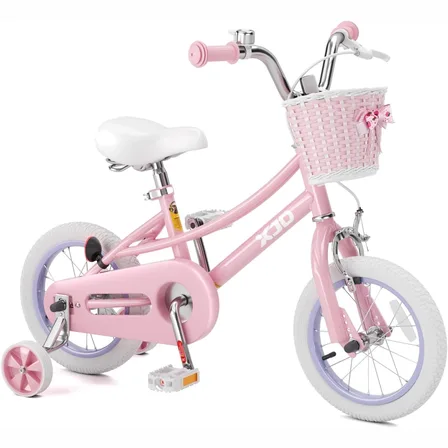
Pink 12/14/16/20" XJD Girls Bike with Training Wheels & Basket
The Pink XJD Girls Bike with Training Wheels & Basket is a first-bike pick f…$65.99
$75.99