

What size of bike does a 5 year old need
A 5-year-old usually needs a 14-, 16-, or 18-inch bike, depending on measured height. Start with height, then confirm inseam, reach, stand-over clearance, brake control, and confidence on the actual bicycle.
Choose the starting wheel size by height
Age overlaps several wheel sizes, so it cannot settle the choice by itself. Measure your child without shoes, standing straight against a wall, and compare that height with the XBikes starting points below.
| Wheel size | XBikes age starting point | Rider-height starting point |
|---|---|---|
| 12 Inch | Ages 3–4 | 34–40 in / 86–102 cm |
| 14 Inch | Ages 3–6 | 37–45 in / 94–114 cm |
| 16 Inch | Ages 4–7 | 40–48 in / 102–122 cm |
| 18 Inch | Ages 5–9 | 43–52 in / 109–132 cm |
For example, a 5-year-old measuring 41 inches falls within both the 14-inch and 16-inch starting ranges. One measuring 44 inches overlaps the 14-, 16-, and 18-inch ranges. That overlap is intentional: wheel size narrows the search, while an individual fit check determines the choice.
Measure height and inseam before shopping
- Measure standing height: Have the child stand barefoot with heels against a wall. Mark the top of the head and measure from the floor.
- Measure inseam: With feet slightly apart, place a firm, thin book upward between the legs to imitate a saddle. Measure from the floor to the book’s top edge.
- Record both measurements: Compare height with the table, then take the inseam measurement to the bicycle fit check. Do not invent clearance from a general formula; frame shapes differ.
The inseam helps you assess whether the child can stand over the frame comfortably and manage stops and starts. Follow the exact product manual for adjustment limits, assembly, maintenance, load limits, compatibility, and torque. If anything is unclear, use a qualified bicycle mechanic.
Check the child on the actual bike
Have the child try each plausible size rather than buying a larger bicycle merely to allow room for growth. With an adult holding the bike steady, check that the rider can:
- stand over the frame with usable clearance and without leaning the bike sharply;
- reach the handlebar without stretching, locking the elbows, or losing a natural seated position;
- turn the handlebar while remaining balanced and in control;
- reach and operate the brakes confidently, where hand-operated controls are fitted;
- start, stop, place a foot down, and steer at a slow pace without fear.
If the child is cramped on one size but stretched or hesitant on the next, neither observation should be ignored. Compare another frame in the relevant height range, because bicycles with the same wheel label can still fit differently.
How confidence changes the decision
Current ability matters alongside measurements. A hesitant beginner needs a bike they can control now, not a larger one they may grow into. A confident rider still needs proper stand-over clearance, reach, and brake access; skill does not correct a poor physical fit.
Training wheels, when present, do not make an oversized frame appropriate. They also do not replace checking whether the rider can mount, steer, stop, and reach the controls. Use and adjust any supplied equipment only according to the exact bicycle manual.
Where the supplied XBikes options fit
The three catalog options help compare the 12-, 14-, and 16-inch sizes that overlap or sit near the starting ranges relevant to many 5-year-olds. None is offered in the supplied facts as an 18-inch option, so if the child’s measurements and trial indicate 18 inches, these products are nearest-size comparison points, not substitutes.
 Purple XJD Girls' Bike with Doll Seat & Basket
A Training Wheel Bike offered with 12 Inch, 14 Inch, and 16 Inch SKU labels, making it relevant for comparing height-appropriate starting sizes before an individual fit check.
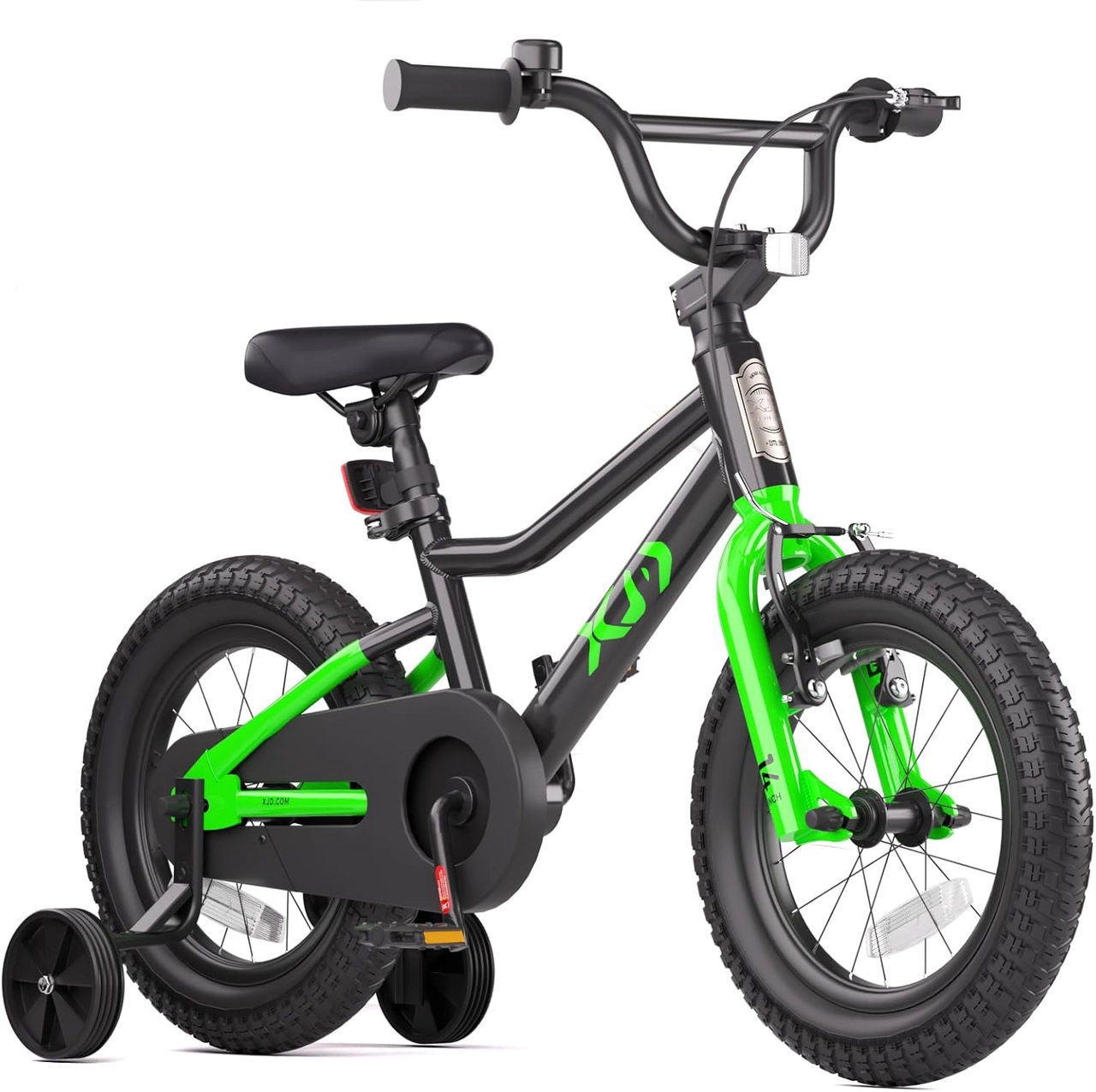 Black XJD Kids' BMX Bicycle with Training Wheels
A Kids' BMX Bike with Training Wheels offered in 12 Inch, 14 Inch, and 16 Inch labels. Its size range supports comparison, but measured fit and control must decide suitability.
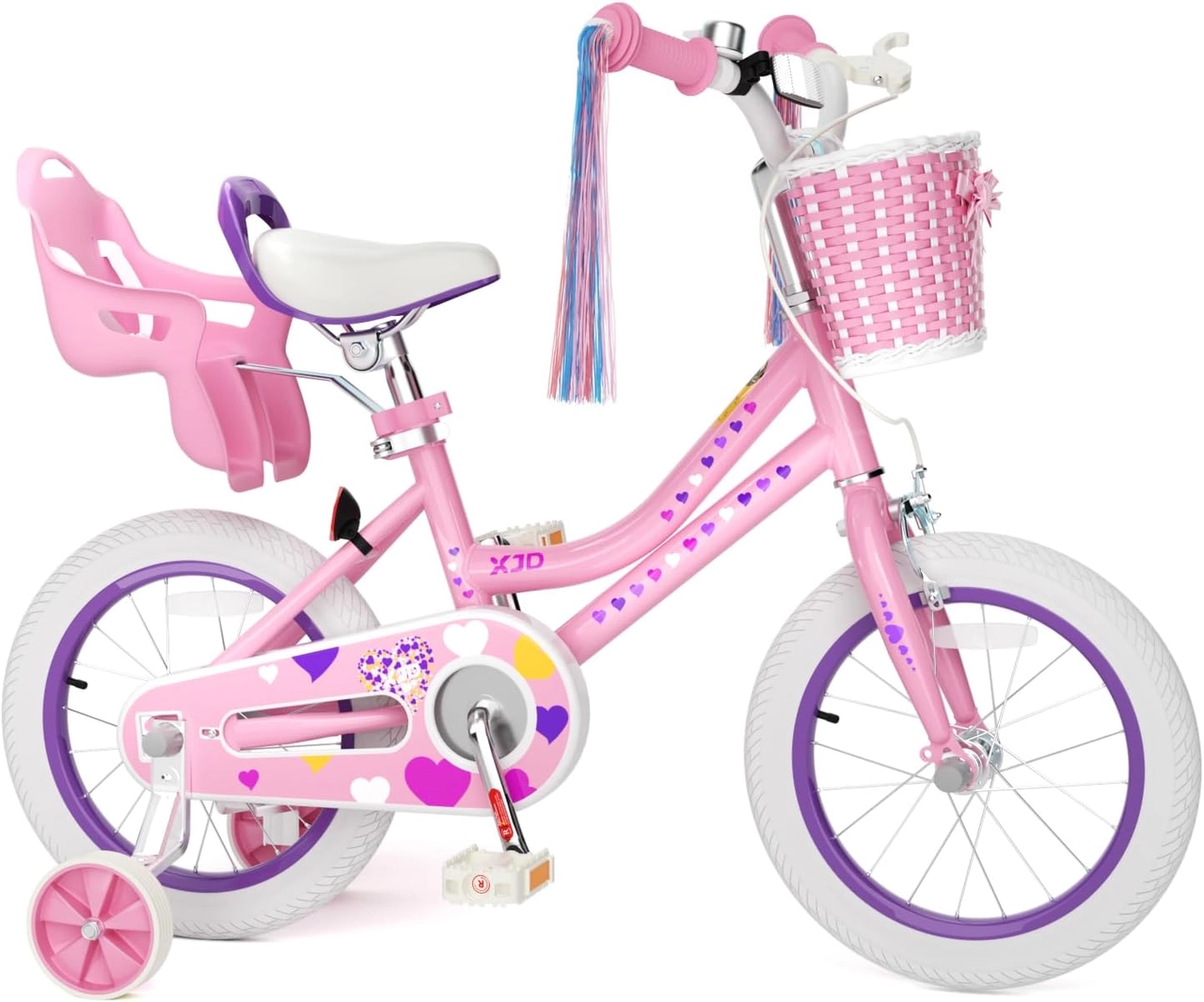 Pink Girls' 12/14/16" Bike by XJD – Basket & Doll Seat
A Training Wheel Bike with 12 Inch, 14 Inch, and 16 Inch SKU labels. It is relevant when those sizes match the height shortlist, subject to a hands-on fit check.
Purple XJD Girls' Bike with Doll Seat & Basket is a Training Wheel Bike with 12 Inch, 14 Inch, and 16 Inch SKU labels. Pink Girls' 12/14/16" Bike by XJD – Basket & Doll Seat is also categorized as a Training Wheel Bike with those same three size labels.
Black XJD Kids' BMX Bicycle with Training Wheels is categorized as a Kids' BMX Bike and likewise has 12 Inch, 14 Inch, and 16 Inch SKU labels. These facts allow a category and labeled-size comparison only; they do not establish individual fit, equipment specifications, availability, or suitability.
Make the final size decision
First shortlist the wheel sizes containing the child’s measured height. Next, compare inseam, stand-over clearance, reach, brake operation, and control on each actual bike. Reject any bicycle the child must stretch to handle or cannot stop and balance confidently.
Before riding, provide a properly fitting bicycle helmet. It should sit level and its straps should be used according to the helmet manufacturer’s instructions. For this 5-year-old, choose the smallest suitable option that fits without cramping and delivers confident control today; if the fit check points to 18 inches, continue searching for an actual 18-inch bicycle rather than treating a listed 16-inch model as equivalent.
Bikes for your next adventure
-

Light Purple XJD Toddler Bike Helmet, Adjustable, Size XS (46–51 cm)
This Light Purple XJD toddler bike helmet is made for the smallest riders — the …$20.39
-

XJD Boys 12/14/16" Training Wheel Bike – Blue
The XJD Boys Bike in Blue is a training wheel bike for riders 71–122 cm tall—rou…$169
$199 -
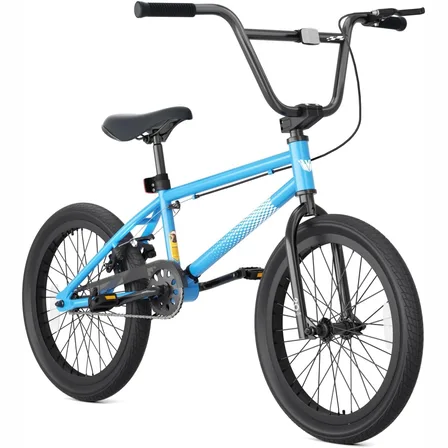
Blue XJD Freestyle BMX Bike, 20-Inch – No Pegs
The XJD 20-Inch Blue Freestyle BMX is an entry-level BMX bike for boys and girls…$189.99