

What size wheel bike for 5 year old
For most 5-year-olds, compare 14-inch, 16-inch and 18-inch bikes, then choose by measured height and an in-person fit—not age alone.
Which wheel size should you check first?
Measure the child’s height without shoes. Use that measurement to identify the first wheel sizes to try:
| Wheel size | XBikes starting age | Rider height |
|---|---|---|
| 12 Inch | Ages 3–4 | 34–40 in / 86–102 cm |
| 14 Inch | Ages 3–6 | 37–45 in / 94–114 cm |
| 16 Inch | Ages 4–7 | 40–48 in / 102–122 cm |
| 18 Inch | Ages 5–9 | 43–52 in / 109–132 cm |
| 20 Inch | Ages 7–12 | 48–60 in / 122–152 cm |
A 5-year-old between 40 and 45 inches may fall within both the 14-inch and 16-inch starting ranges. A child between 43 and 48 inches may overlap the 14-inch, 16-inch and 18-inch ranges. That overlap is a reason to try bikes, not a reason to select the largest one automatically.
A 20-inch bike is generally outside the age starting point for a 5-year-old, although height ranges can overlap at 48 inches and above. Treat the chart as a shortlist only; the child still needs to demonstrate a comfortable fit and reliable control.
Measure height and inseam before shopping
Record standing height first. Then measure inseam with the child standing upright, feet slightly apart, while holding a thin book firmly up between the legs. Measure from the floor to the top edge of the book. Compare that result with the bicycle manufacturer’s stand-over and saddle information in the exact product manual; no single inseam number applies to every frame.
Height narrows the wheel-size choices, while inseam helps determine whether the individual frame is manageable. Two bikes with the same wheel label can have different frame shapes, saddle adjustment ranges and riding positions.
Do this fit check on each bicycle
HealthyChildren guidance from the American Academy of Pediatrics recommends having the child try the bicycle and avoiding an oversized bike bought merely for future growth. During the trial, check all of the following:
- Stand-over: The child can straddle the frame without being forced onto tiptoes or pressed against the bicycle.
- Starting and stopping: The child can mount, set off and stop without the bike feeling unwieldy.
- Reach: The handlebars can be held without stretching, locking the elbows or losing a stable riding posture.
- Brake control: The child can reach and operate the fitted controls confidently. Consult the product manual for the bike’s exact system.
- Steering: The child can turn the bars while remaining balanced and attentive.
- Confidence: The wheel size does not make the rider hesitant or dependent on an adult to hold the bicycle.
If the child cannot control the larger candidate, move down and repeat the check. If the smaller candidate feels cramped or prevents a workable riding position, try the next size up. Never treat room to grow as more important than present control.
How the supplied XBikes options relate
The Flower Pink XJD Girls Bike with Doll Seat & Basket and Purple XJD Girls' Bike with Doll Seat & Basket are both cataloged as Training Wheel Bikes and each has 12 Inch, 14 Inch and 16 Inch SKU labels. They therefore provide relevant comparison options when the child’s measurements and trial point to one of those three sizes.
These particular catalog options help answer the title because a parent can compare the same available size labels across two products after narrowing the choice by height. Their names and Training Wheel Bikes classification do not establish fit; the individual fit check still decides whether either product is appropriate.
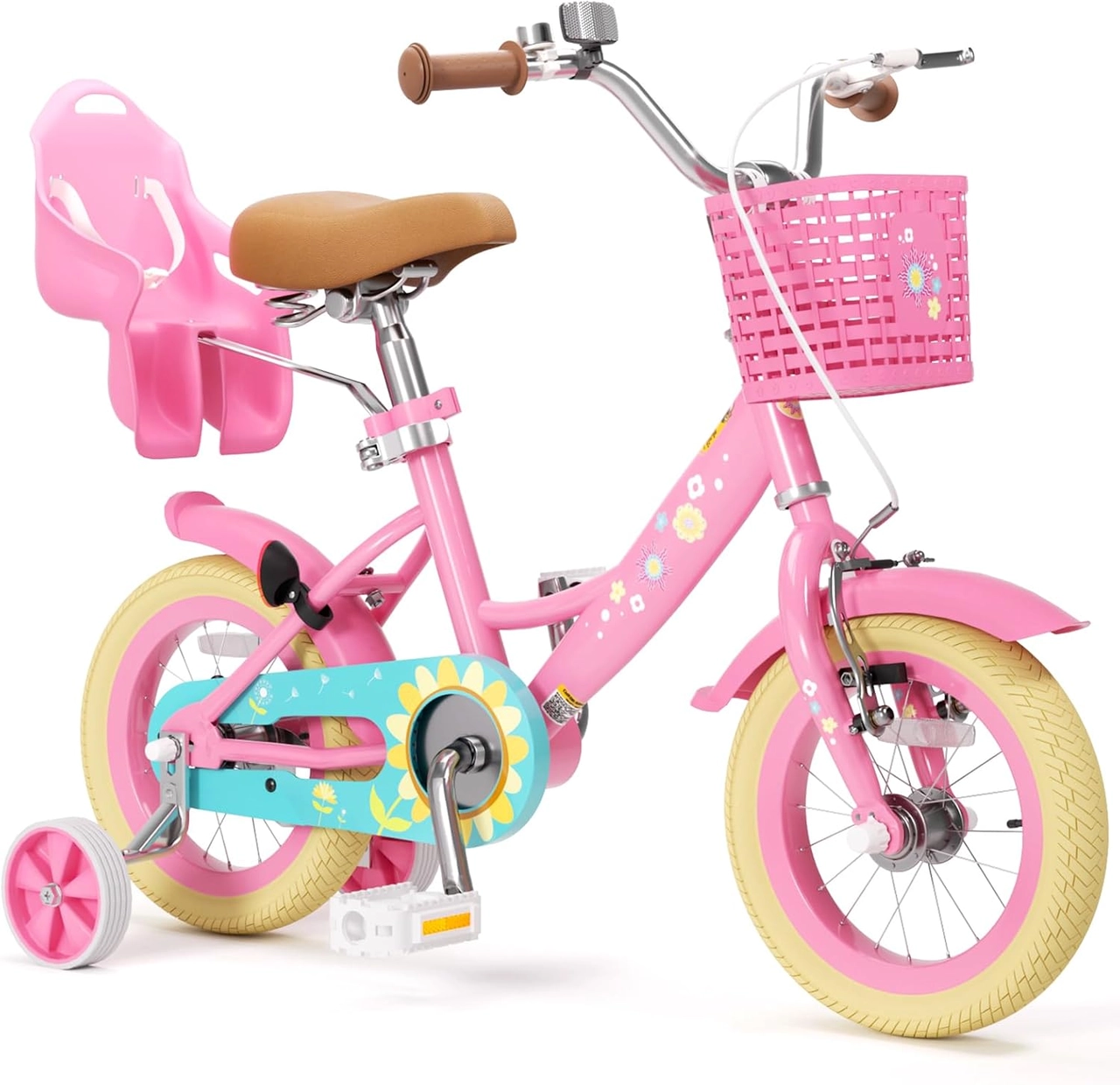 Flower Pink XJD Girls Bike with Doll Seat & Basket
Available in 12 Inch, 14 Inch and 16 Inch labels, this Training Wheel Bike is relevant only when the child’s measurements and individual fit check support one of those sizes.
 Purple XJD Girls' Bike with Doll Seat & Basket
This Training Wheel Bike offers 12 Inch, 14 Inch and 16 Inch labels for comparison. It is not a substitute when the child’s measurements and control indicate an 18-inch or larger bike.
Neither supplied product has an 18 Inch or 20 Inch SKU label. If the child fits an 18-inch or 20-inch bike, these products are smaller-size comparison points, not equal alternatives or substitutes. Likewise, the gender wording in the product titles is a catalog label and provides no sizing evidence.
What to do before the first ride
Once a size passes the fit check, follow the exact product manual for assembly, adjustment, compatibility, maintenance and any load or torque requirements. If the instructions are missing, unclear or the bicycle cannot be adjusted correctly, use a qualified bicycle mechanic rather than guessing.
Add a properly fitted bicycle helmet. The U.S. Consumer Product Safety Commission advises that the helmet sit level and that its straps be used according to the helmet manufacturer’s instructions. Recheck the fit whenever adjustments change or the child grows.
The decision for your 5-year-old
Start with the wheel sizes matching the child’s measured height—usually 14, 16 or 18 inches at age five—then compare inseam, stand-over, reach, brake operation and confidence on the actual bike. Choose the smallest candidate that provides a workable riding position without feeling cramped, and reject any larger size the child cannot control today.
Bikes for your next adventure
-

Pink Girls' 12/14/16" Bike by XJD – Basket & Doll Seat
The XJD Pink Girls' Bike with Basket & Doll Seat is made for riders 71–122 cm ta…$75.99
$99.99 -

XJD Girls Bike for Kids Ages 3-8, 12/14/16 Inch with Training Wheels – Purple
The XJD Girls Bike in Purple is a training-wheel bicycle for kids ages 3 to 8, f…$149
$169 -
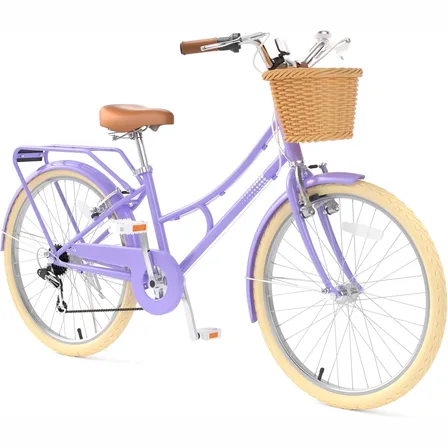
24-Inch Purple XJD Beach Cruiser Bike with U-Brake
The XJD 24-Inch Purple Beach Cruiser is built for girls and young women roughly …$159.99