

What size wheels does a 16 inch bicycle have
A 16 inch bicycle has 16 inch wheels: the number describes the bicycle’s nominal wheel-and-tire size, not its frame size or the child’s inseam.
What “16 inch” means
On a children’s bicycle, “16 inch” is a wheel-size label. It does not mean the entire wheel will measure exactly 16 inches across in every setup. Tire shape, tread and inflation can affect the outside measurement, while the rim itself may use a different technical measurement.
For identifying the size, read the marking molded into the tire sidewall and check the bicycle or tire manual. If replacing a tire, tube, wheel or training-wheel component, compare the complete markings rather than relying only on a tape measurement or the words “16 inch.” Follow the exact product manual or ask a qualified bicycle mechanic when compatibility is uncertain.
How to check the bicycle in front of you
- Find the sidewall label: Look on either tire for a size marking that includes 16 inches or an equivalent manufacturer designation.
- Check both wheels: Confirm that the front and rear markings agree with the bicycle’s documentation.
- Use a tape only as a supporting check: Measure across the wheel through the axle, from the outer edge of the inflated tire to the opposite outer edge. Do not expect this result to identify replacement parts precisely.
- Confirm the manual: Use the model’s instructions for replacement-part compatibility, assembly, maintenance and tightening requirements.
If the sidewall is worn or unreadable, take the bicycle or removable wheel to a qualified bicycle mechanic. Do not guess from the child’s age or from a visual comparison with another bike.
Is a 16 inch wheel likely to fit the rider?
XBikes uses 16 Inch as a starting point for ages 4–7 and rider heights of 40–48 inches (102–122 cm). Height is more useful than age, but neither replaces trying the bicycle.
Measure the child’s standing height without shoes. Also measure inseam from the floor to the crotch while the child stands upright with feet slightly apart. Then have the child try the bicycle. Check that the child can stand over it appropriately, reach the handlebar without stretching, steer with control, and operate the brakes comfortably.
Current confidence matters too. A child within the height range may still need a different setup or size if starting, stopping, turning or braking feels difficult. Do not choose an oversized bicycle merely to allow room for growth.
Useful neighboring-size comparison
| Wheel label | Starting age | Starting rider height |
|---|---|---|
| 14 Inch | 3–6 | 37–45 in / 94–114 cm |
| 16 Inch | 4–7 | 40–48 in / 102–122 cm |
| 18 Inch | 5–9 | 43–52 in / 109–132 cm |
| 20 Inch | 7–12 | 48–60 in / 122–152 cm |
The overlapping ranges are intentional starting points, not proof that two sizes are interchangeable. If a rider falls in an overlap, compare actual stand-over clearance, reach, brake control and confidence on each candidate bicycle.
How the supplied XBikes options relate
All three supplied catalog options include a 16 Inch SKU label, so they are directly relevant when comparing nominal 16 inch bicycles. Their other labeled sizes also help a parent compare adjacent choices, but each selected SKU remains a distinct wheel size.
 Girls' Training Wheel Bike by XJD with Basket – Purple
Available in 14 Inch, 16 Inch and 20 Inch SKU labels, this Training Wheel Bikes model is relevant for comparing the requested 16 Inch option with neighboring catalog sizes.
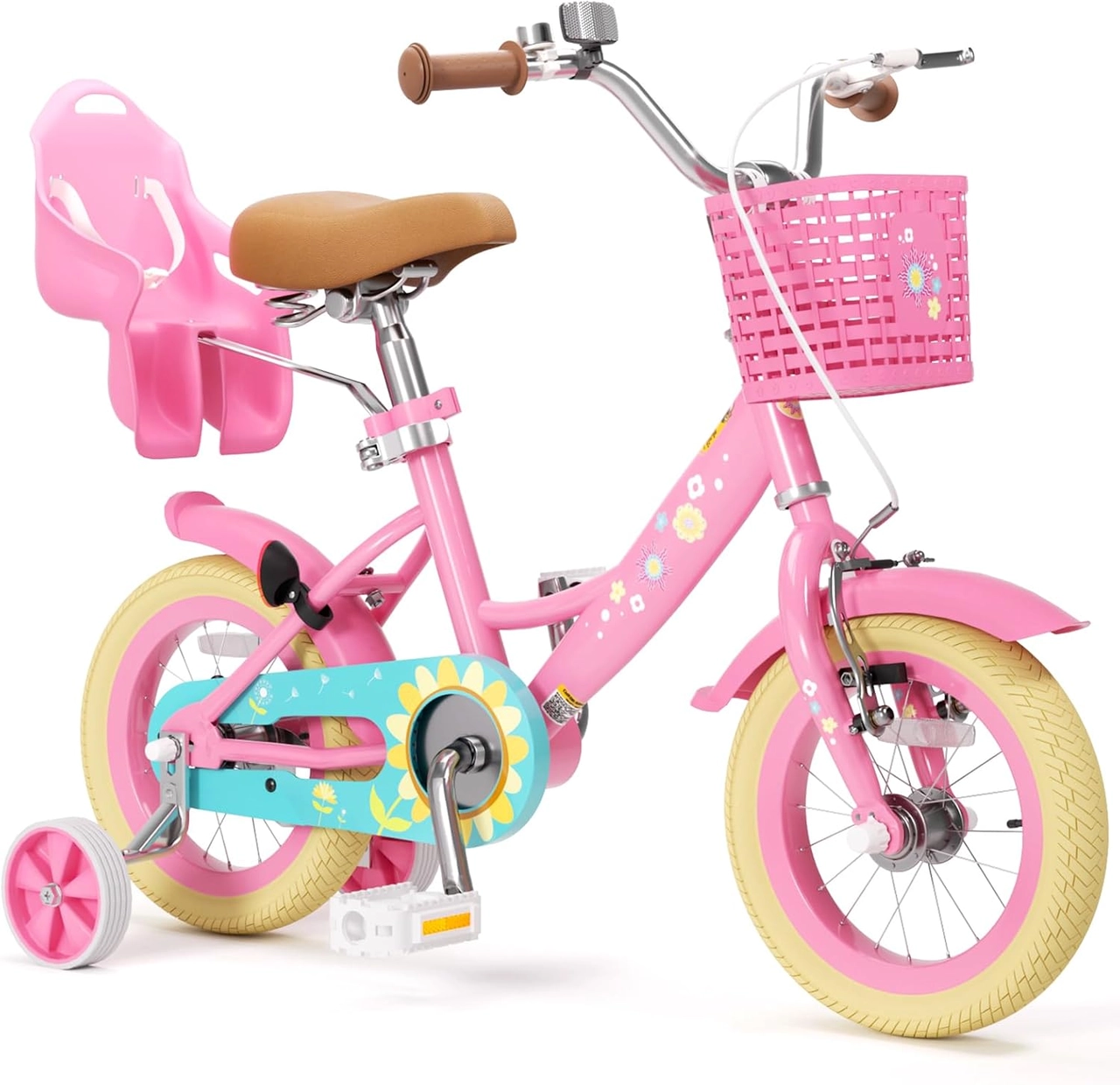 Flower Pink XJD Girls Bike with Doll Seat & Basket
This Training Wheel Bikes model offers 12 Inch, 14 Inch and 16 Inch SKU labels. Its 16 Inch selection directly matches the requested nominal wheel size, subject to an individual fit check.
 Purple XJD Girls' Bike with Doll Seat & Basket
Listed with 12 Inch, 14 Inch and 16 Inch SKU labels, this Training Wheel Bikes option includes the requested size. Confirm rider height, inseam, reach, brake control and confidence before choosing it.
Girls' Training Wheel Bike by XJD with Basket – Purple is listed in Training Wheel Bikes with 14 Inch, 16 Inch and 20 Inch SKU labels. It can support a comparison between the requested size and one smaller or larger catalog label.
Flower Pink XJD Girls Bike with Doll Seat & Basket is also a Training Wheel Bikes option and has 12 Inch, 14 Inch and 16 Inch SKU labels. Its 16 Inch selection matches the nominal wheel size in the page title; its smaller labels are not substitutes.
Purple XJD Girls' Bike with Doll Seat & Basket has the same supplied size-label range of 12 Inch, 14 Inch and 16 Inch in the Training Wheel Bikes category. Choose the 16 Inch SKU only after confirming the individual rider fit.
These catalog facts do not establish brake type, materials, weight, assembly details, load limits or component compatibility. Check the exact product manual or consult a qualified bicycle mechanic for those details.
What to do before the first ride
- Confirm that the chosen bicycle and both tire sidewalls indicate the intended size.
- Have the child perform a supervised fit check for stand-over, reach, steering and braking.
- Follow the product manual for assembly, adjustments and maintenance.
- Use a properly fitting bicycle helmet. It should sit level, with straps adjusted according to the helmet manufacturer’s instructions.
The practical decision is simple: treat “16 inch” as the wheel-size label, then choose it only if the rider’s measured height, inseam, reach, brake operation and confidence all work on the actual bicycle.
Bikes for your next adventure
-

XJD Boys 12/14/16" Training Wheel Bike – Blue
The XJD Boys Bike in Blue is a training wheel bike for riders 71–122 cm tall—rou…$169
$199 -

26-Inch XJD Beach Cruiser Bike for Girls – Purple, V-Brake
This XJD 26-inch purple beach cruiser is sized for big kids and teens — suggeste…$218.49
$229.99 -

Light Purple XJD Toddler Bike Helmet, Adjustable, Size XS (46–51 cm)
This Light Purple XJD toddler bike helmet is made for the smallest riders — the …$20.39