

When can a baby go in a bike trailer
A baby can go in a bike trailer only after they can sit upright unsupported, maintain steady head and neck control, and wear a properly fitted helmet—and only if the trailer manual permits their age, size and seating position. If any requirement is uncertain, wait and ask the child’s healthcare professional.
Use readiness, not a birthday alone
Age can be a useful screening point, but it cannot confirm that an individual baby is ready. Before riding, observe whether the child can remain upright without being propped up and keep their head stable during ordinary movement. A helmet must not overwhelm that control or push the head forward.
Next, compare the child’s age and measurements with every minimum and maximum stated in the exact trailer manual. Requirements vary, so do not transfer guidance from another model. If the manual requires a later starting age than your child’s developmental readiness suggests, follow the manual and wait.
Prematurity, low muscle tone, medical conditions or uncertainty about head control are reasons to consult the child’s healthcare professional before considering a ride.
What to measure and compare
Record the baby’s current weight and seated height, then check them against the trailer manufacturer’s limits and harness-position instructions. Confirm that the helmet does not interfere with the seat back and that the child can maintain a natural head position while secured.
- Posture: The baby remains upright without slumping or needing improvised padding.
- Head control: The head stays stable with the helmet on.
- Harness fit: The supplied restraint adjusts as the manual describes, without modification.
- Trailer limits: The child meets the stated age, size, seating and load requirements.
- Towing compatibility: The trailer and hitch are approved for the towing bicycle and axle arrangement.
If the manual does not provide a clear answer for your setup, contact the manufacturer or use a qualified bicycle mechanic. Do not guess about compatibility, load limits, assembly or torque.
Check the helmet before every ride
A bicycle helmet must fit properly, sit level on the head and use its straps according to the helmet manufacturer’s instructions. Check the fit with the child seated in the trailer, because the seat back may affect helmet position differently than it does when the child is standing.
Replace “close enough” with a simple decision: if the helmet shifts out of position, the straps cannot be adjusted correctly, or the child cannot comfortably hold their head upright while wearing it, postpone the ride.
Prepare the trailer and towing bicycle
Assemble and attach the trailer exactly as its manual directs. Check the hitch, retention device, tires, restraint and enclosure before departure. Any required maintenance or repair should follow the relevant manual; unfamiliar or damaged parts should be assessed by a qualified bicycle mechanic.
Begin only with a short, calm ride away from traffic, steep descents and rough surfaces. Stop if the child slumps, becomes distressed, loosens the helmet position or cannot maintain stable posture. Readiness at the start does not remove the need to watch the child throughout the ride.
Where the supplied kids’ bike fits
The Purple XJD Girls' Bike with Doll Seat & Basket is a training-wheel bicycle offered in 12 Inch, 14 Inch and 16 Inch sizes. It is not a bike trailer and is not evidence that a baby is ready to be transported. These catalog options are relevant only as later, independent-riding comparison points once a child is developmentally ready to pedal and can complete an individual bicycle fit check.

XBikes lists 12 Inch as a starting point for ages 3–4 and heights 34–40 in (86–102 cm), 14 Inch for ages 3–6 and heights 37–45 in (94–114 cm), and 16 Inch for ages 4–7 and heights 40–48 in (102–122 cm). These ranges do not apply to trailer readiness.
When comparing those sizes later, prioritize measured height, inseam, reach, brake control and current confidence over age. Have the child try the bicycle, check stand-over and brake reach, and do not choose an oversized bicycle merely to allow room for growth.
Your go-or-wait decision
- Confirm unsupported sitting and steady head and neck control.
- Verify that the exact trailer manual permits the child’s age, measurements and seating position.
- Fit the helmet level and secure according to its instructions, then recheck posture inside the trailer.
- Confirm the hitch, bicycle compatibility, assembly and load requirements from the manuals.
- Wait if any check fails or remains unclear; consult the child’s healthcare professional or a qualified bicycle mechanic as appropriate.
A baby is ready for a bike trailer only when all of those checks pass together. Missing even one is a reason to postpone the ride, not a reason to improvise.
Bikes for your next adventure
-

Kids Bike Helmet by XJD for Girls – Pink
The XJD Kids Bike Helmet in Pink is a lightweight multi-sport helmet for girls r…$59.99
$99 -

Blue XJD Kids Bike Helmet for Boys & Girls
The Blue XJD Kids Bike Helmet is a lightweight, adjustable multi-sport helmet fo…$59.99
$99 -
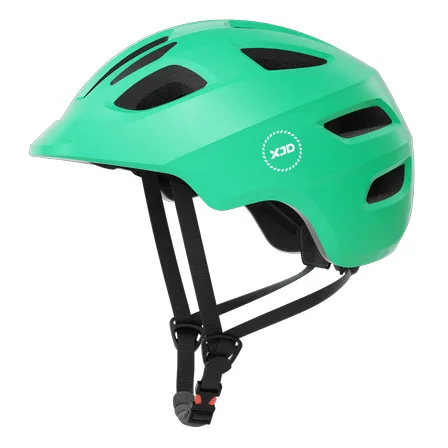
Green XJD Kids Bike Helmet for Boys & Girls
The Green XJD Kids Bike Helmet is a lightweight multi-sport helmet for toddlers …$59.99
$99