

When can a baby ride a bike
A baby should not ride one of these bicycles independently. Start only when the child fits a bicycle, can control it, and can reach and operate its brakes; XBikes’ smallest starting point is a 12-inch bike for a measured height of 34–40 in (86–102 cm), usually around ages 3–4.
What determines when a child can ride?
Age is only a starting point. Measure the child’s standing height and inseam, then have the child try the actual bicycle. Check whether the child can stand over it, reach the handlebars without stretching, steer with control, and operate the brakes comfortably. Current confidence matters too.
Do not buy an oversized bicycle for a child to grow into. Extra size can make starting, stopping, steering and dismounting harder. If the child cannot control the bicycle during a supervised fit check, wait or compare a smaller suitable cycle rather than relying on the age printed on a label.
Use height to choose a comparison size
The following XBikes ranges are starting points, not guarantees. Where ranges overlap, compare the actual bicycles and choose according to stand-over clearance, inseam, reach, brake control and confidence.
| Wheel size | Age starting point | Rider height |
|---|---|---|
| 12 Inch | 3–4 | 34–40 in / 86–102 cm |
| 14 Inch | 3–6 | 37–45 in / 94–114 cm |
| 16 Inch | 4–7 | 40–48 in / 102–122 cm |
| 18 Inch | 5–9 | 43–52 in / 109–132 cm |
| 20 Inch | 7–12 | 48–60 in / 122–152 cm |
| 24 Inch | 10–14 | 54–64 in / 137–163 cm |
| 26 Inch | Youth and adults | Over 60 in / 153 cm |
If your child is still a baby or measures below the 12-inch starting range, none of the supplied catalog bicycles is an appropriate size match. Do not treat a 12-inch bicycle as equivalent to an infant passenger seat, trailer or other carrier. Those are different products with their own instructions and compatibility requirements.
How the three catalog bicycles compare
These particular catalog options help answer the question because each is a training-wheel bicycle offered in 12-, 14- and 16-inch SKU labels. They become relevant only after the child reaches a corresponding height range and passes an individual control check.
 XJD Pink Girls' Bike – Kids 12/14/16 Inch Training Wheel Bicycle
A training-wheel bicycle offered in 12 Inch, 14 Inch and 16 Inch labels. It is relevant only when the child matches the corresponding XBikes height starting point and passes an individual fit and control check.
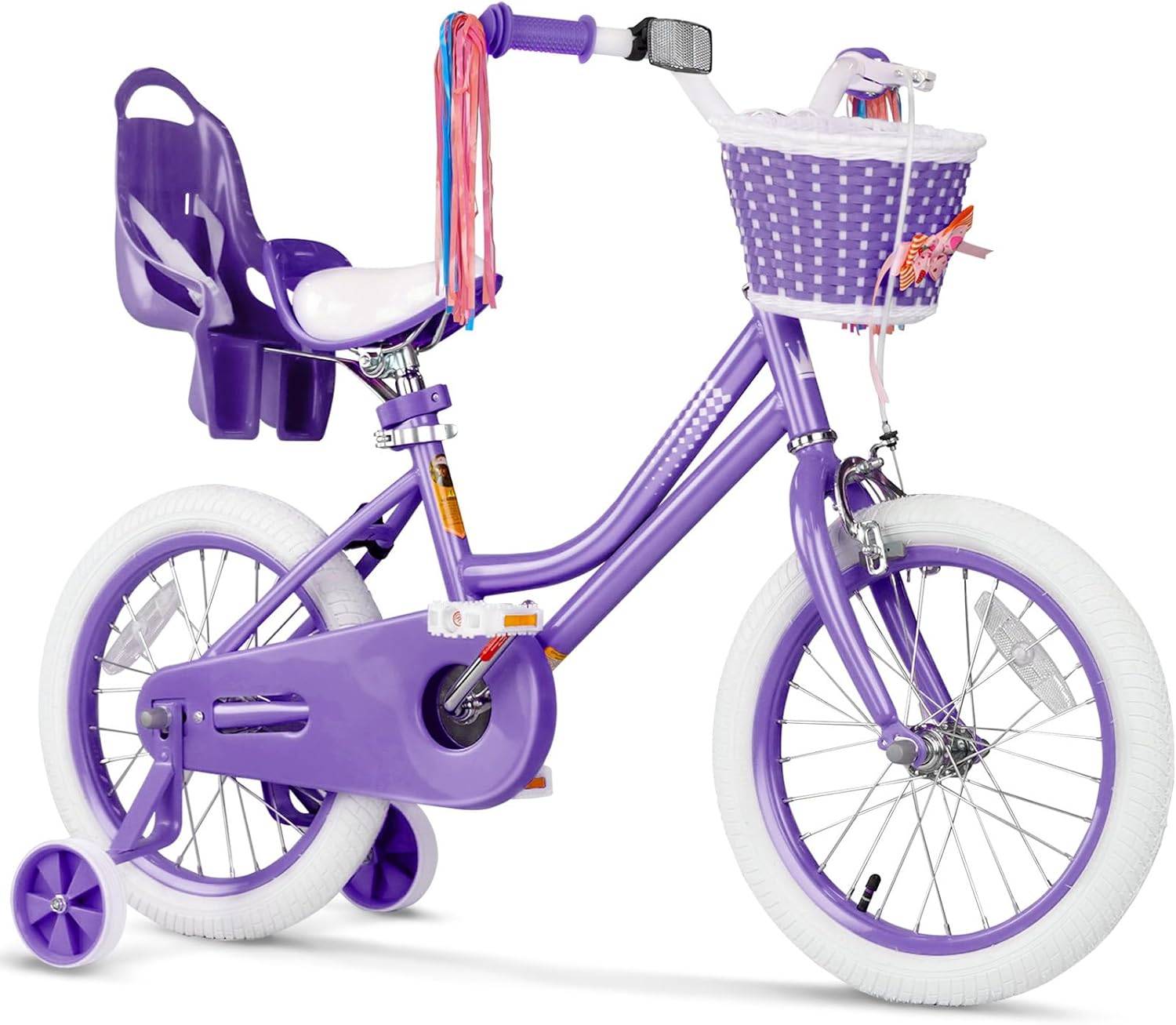 XJD Girls Bike for Kids Ages 3-8, 12/14/16 Inch with Training Wheels – Purple
This purple Training Wheel Bike has 12 Inch, 14 Inch and 16 Inch labels. The age wording in its title is a catalog label; measured height, inseam, reach, brake control and confidence determine relevance.
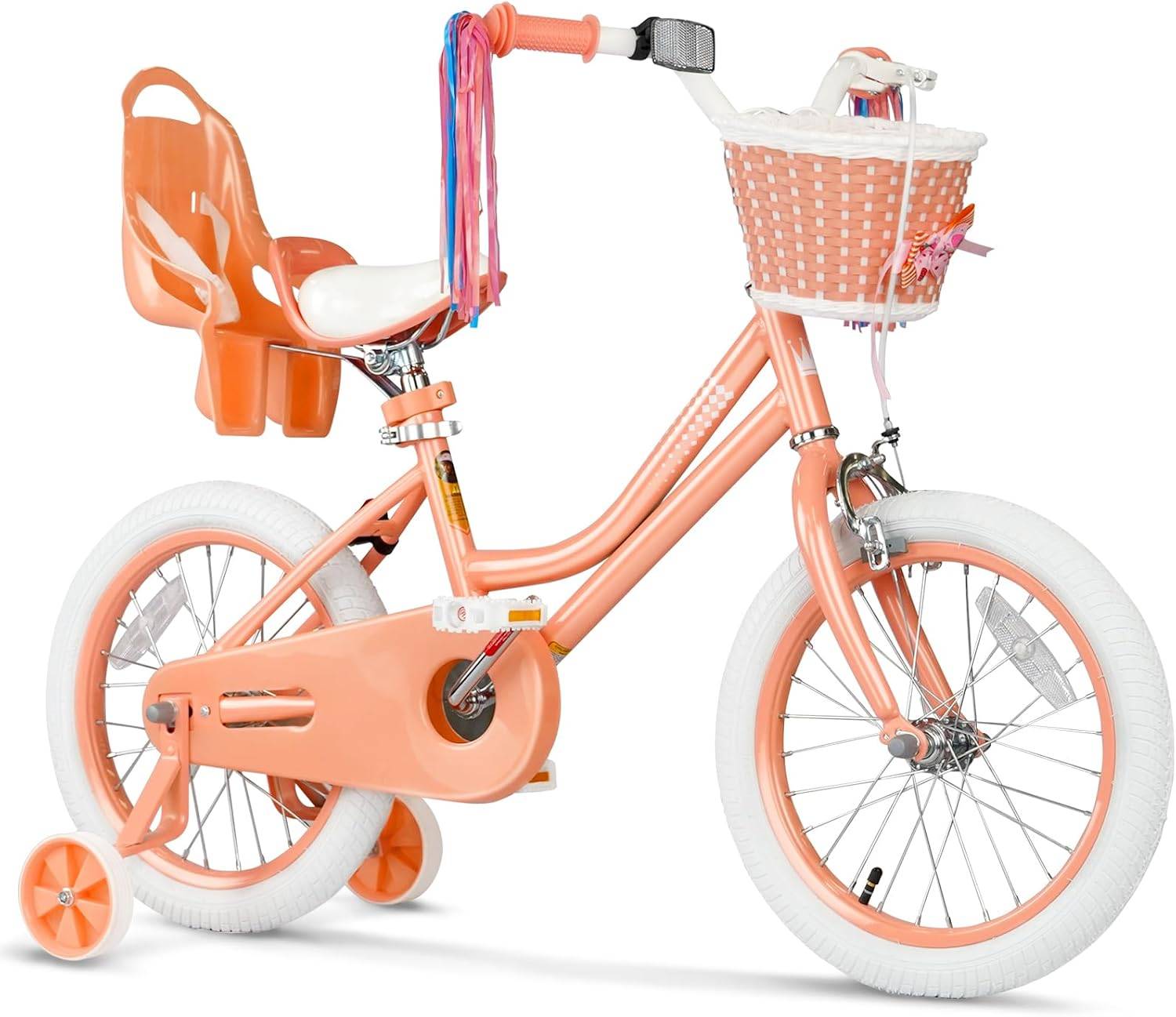 Girls 12/14/16 Inch Kids Bike by XJD with Training Wheels – Peach
This peach XJD Training Wheel Bike is available with 12 Inch, 14 Inch and 16 Inch labels. Compare the applicable XBikes height range, then verify stand-over position, reach and brake operation on the exact bicycle.
- XJD Pink Girls' Bike – Kids 12/14/16 Inch Training Wheel Bicycle is listed under Training Wheel Bikes and offers 12 Inch, 14 Inch and 16 Inch labels.
- XJD Girls Bike for Kids Ages 3-8, 12/14/16 Inch with Training Wheels – Purple is also a Training Wheel Bike with the same three wheel-size labels. “Ages 3-8” is part of its catalog title, not evidence that it fits every child in that span.
- Girls 12/14/16 Inch Kids Bike by XJD with Training Wheels – Peach provides the same 12 Inch, 14 Inch and 16 Inch size choices in the Training Wheel Bikes category.
Catalog facts do not establish each bicycle’s geometry, brake type, load limit or assembly details. Compare the chosen size in person when possible, follow the exact product manual, and use a qualified bicycle mechanic for unresolved assembly, adjustment or compatibility questions.
Perform a practical fit and control check
- Measure standing height and inseam without estimating from age.
- Use the table to identify a starting wheel size.
- Have the child try the exact bicycle rather than assuming all bicycles with that wheel label fit identically.
- Check stand-over position, comfortable handlebar reach and the ability to use the brakes.
- In a clear, supervised area, confirm that the child can start, steer, stop and get off without being overwhelmed.
Training wheels may support the bicycle laterally, but their presence does not correct excessive frame size, poor reach or an inability to operate the brakes. A child who freezes, cannot steer predictably or cannot stop on command needs more preparation, a different fit or more time.
Helmet and first-ride essentials
Use a bicycle helmet that fits properly. It should sit level, with its straps adjusted according to the helmet manufacturer’s instructions. Recheck the fit each time rather than assuming an earlier adjustment still works.
Choose a traffic-free practice area with close adult supervision. Before riding, inspect the bicycle as directed by its manual. If assembly, fastener settings, maintenance or compatibility is uncertain, consult the exact manual or a qualified bicycle mechanic rather than improvising a procedure or torque value.
The decision to make now
If the child is below 34 in (86 cm), cannot fit the smallest bicycle, or cannot steer and brake reliably, wait: the supplied products are not yet relevant. If the child is at least within a listed height range, measure inseam, compare the overlapping sizes, and conduct an individual fit-and-control check before choosing among the available 12-, 14- or 16-inch options.
Bikes for your next adventure
-

Kids Bike Helmet by XJD for Boys & Girls – Black, Blue, Green, Pink, Purple
The XJD Kids Bike Helmet covers a wide 2-to-8-year age range thanks to two head-…$59.99
-

Kids Bike Helmet by XJD for Girls – Pink
The XJD Kids Bike Helmet in Pink is a lightweight multi-sport helmet for girls r…$59.99
$99 -

XJD Kids Bike for Girls – Pink, 12/14/16/20 Inch with Training Wheels
The XJD Kids Bike for Girls in Pink is a training-wheel bike built to carry your…$139
$159