

When can a baby ride on a bike seat
A baby can ride in a bicycle child seat only after sitting unsupported with steady head and neck control, fitting the seat and helmet correctly, and meeting every limit in the seat manual.
Readiness matters more than a birthday
There is no single birthday that proves a baby is ready. Before riding, the child should remain upright without support and keep the head stable while wearing a properly fitted bicycle helmet. If head control is uncertain, the baby slumps, or the helmet overwhelms the child’s posture, wait.
Ask the child’s healthcare professional if you are unsure about developmental readiness, especially after premature birth or when muscle tone, balance or neck control is a concern. Also check applicable local rules, which may set additional requirements.
A child seat is for a passenger on an adult-operated bicycle. A baby should never be balanced on an adult saddle, handlebar or unapproved carrier, and a trailer or cargo-bike enclosure should not be treated as interchangeable with a child seat. Each system has its own instructions and limits.
What to measure and compare
Use the exact child-seat manual rather than an estimated age range. Record the child’s current height and weight, then compare both with the permitted range for that model. Confirm that the child’s body sits in the intended position, the restraint can be adjusted correctly, and feet cannot reach moving wheels or other bicycle parts.
- Child: Measure current height and weight; assess unsupported sitting and head stability.
- Helmet: Measure head circumference as directed by the helmet maker. The helmet should sit level and use its straps according to the manufacturer’s instructions.
- Seat fit: Check that the harness, foot supports and other adjustments fit the child exactly as the manual describes.
- Bicycle compatibility: Compare the bicycle, frame or rack with the seat maker’s approved mounting requirements.
- Limits: Follow all stated load, installation, maintenance and replacement limits. If the documentation is missing or unclear, use a qualified bicycle mechanic.
Do not invent a mounting method, substitute hardware or guess at torque. The bicycle and seat manuals control those details.
Check the complete setup before riding
Install the seat exactly as its manufacturer specifies, then confirm that it is secure and does not interfere with steering, pedalling, braking or moving parts. Check the bicycle’s condition and brake operation before carrying a child. A passenger changes the bicycle’s balance, so the adult rider should practise mounting, stopping and handling the loaded setup in a controlled area before entering traffic.
Secure every restraint for every trip, keep the child’s feet contained as designed, and never leave a child unattended in a mounted seat. Choose a quiet riding environment and avoid conditions that exceed the adult rider’s current control or confidence.
Are the supplied XBikes products relevant?
The two supplied products are children’s bicycles with training wheels, not bicycle passenger seats. They do not answer what a baby can safely ride in now. They become useful later as wheel-size comparison points when the child is developmentally ready to control a separate bicycle. Their catalog sizes help show the next category of equipment, but they are not substitutes for a child seat.
The XJD Kids Bike for Girls – Pink, 12/14/16/20 Inch with Training Wheels is offered in 12, 14, 16 and 20 Inch labels. The XJD Pink Girls' Bike – Kids 12/14/16 Inch Training Wheel Bicycle is offered in 12, 14 and 16 Inch labels. Any age wording in these names is a catalog label, not evidence of fit.
 XJD Kids Bike for Girls – Pink, 12/14/16/20 Inch with Training Wheels
A training-wheel bicycle offered in 12, 14, 16 and 20 Inch labels. It is relevant only as a later independent-bike comparison, not as a passenger seat for a baby.
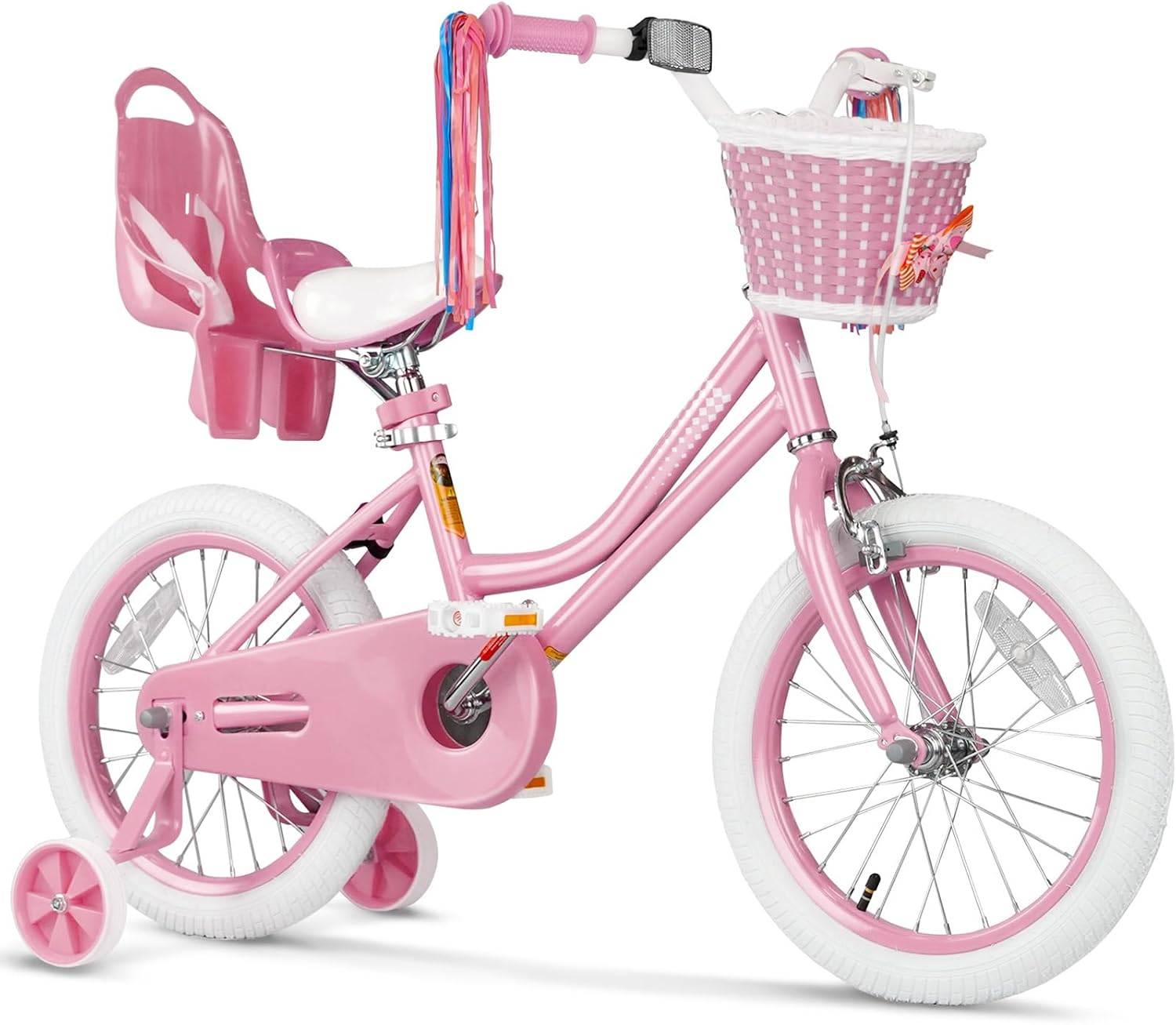 XJD Pink Girls' Bike – Kids 12/14/16 Inch Training Wheel Bicycle
A training-wheel bicycle offered in 12, 14 and 16 Inch labels. It may be considered after individual rider fit checks, but it does not replace a bicycle child seat.
When a separate bicycle becomes relevant
For a child riding independently, measured height is more useful than age alone. XBikes uses these starting points for the sizes available in the supplied products:
| Wheel label | Starting age | Rider height |
|---|---|---|
| 12 Inch | 3–4 | 34–40 in / 86–102 cm |
| 14 Inch | 3–6 | 37–45 in / 94–114 cm |
| 16 Inch | 4–7 | 40–48 in / 102–122 cm |
| 20 Inch | 7–12 | 48–60 in / 122–152 cm |
These ranges are starting points, not permission to size up for growth. Have the child try the bicycle. Check stand-over clearance, comfortable reach, brake control and current confidence. If the child cannot start, stop, steer and operate the controls reliably, choose a better-fitting size or wait.
Your next decision
If your baby cannot yet sit unsupported with stable head control, do not use a bicycle child seat. If those milestones are present, measure the child, verify helmet fit, compare the measurements and bicycle with the exact seat manual, and have uncertain compatibility checked by a qualified bicycle mechanic. Consider the supplied training-wheel bicycles only later, when the child can be individually fitted to and control a separate bike.
Bikes for your next adventure
-

Kids Bike Helmet by XJD for Boys & Girls – Black, Blue, Green, Pink, Purple
The XJD Kids Bike Helmet covers a wide 2-to-8-year age range thanks to two head-…$59.99
-

Kids Bike Helmet by XJD for Girls – Pink
The XJD Kids Bike Helmet in Pink is a lightweight multi-sport helmet for girls r…$59.99
$99 -

XJD Kids Bike for Girls – Pink, 12/14/16/20 Inch with Training Wheels
The XJD Kids Bike for Girls in Pink is a training-wheel bike built to carry your…$139
$159