

When can a baby use a bike seat
A baby can use a passenger bike seat only after sitting upright unsupported, holding the head steady in a properly fitted helmet, and meeting the seat manual and local rules. If “bike seat” means the saddle on a child’s own bicycle, use measured fit and control—not infancy or age alone.
Readiness for a passenger bike seat
Do not decide from a birthday alone. During an ordinary ride, a passenger must cope with starts, stops, turns, bumps and the added weight of a helmet. The child needs reliable head and neck control throughout, without slumping or needing support.
Before riding, confirm all of the following:
- The child can sit upright unsupported and keep the head steady while wearing the helmet.
- The child meets every minimum and maximum stated in the exact passenger-seat manual.
- The seat is compatible with the bicycle and installed exactly as its manufacturer directs.
- The bicycle remains controllable with the child aboard, and the rider can start, steer, brake and stop securely.
- Passenger carrying is permitted under applicable local rules.
If readiness is uncertain—especially because of premature birth, low muscle tone or delayed head control—wait and ask the child’s healthcare professional. Do not invent a cutoff from appearance or substitute another seat’s specifications.
What to measure and compare
For a passenger seat, record the child’s current weight and height, then compare them directly with the manual’s limits. Inspect the bicycle and seat model information so compatibility is checked against the correct instructions. Load limits, mounting hardware, assembly steps and torque values must come from that exact manual or a qualified bicycle mechanic.
Also check the helmet separately. U.S. Consumer Product Safety Commission guidance says it should fit properly, sit level and have its straps adjusted according to the helmet manufacturer’s instructions. A helmet does not compensate for inadequate head control.
If you mean the child’s first bicycle
A child ready to sit in a passenger carrier is not automatically ready to ride a bicycle. For an independent bike, measure standing height and inseam, then evaluate stand-over clearance, reach, brake control and present confidence. The American Academy of Pediatrics advises having the child try the bicycle and avoiding an oversized model bought merely for growth.
These XBikes figures are starting points only:
| Wheel size | Starting age | Rider height |
|---|---|---|
| 12 Inch | 3–4 | 34–40 in / 86–102 cm |
| 14 Inch | 3–6 | 37–45 in / 94–114 cm |
| 16 Inch | 4–7 | 40–48 in / 102–122 cm |
Overlapping ranges are intentional starting points, not proof that two sizes fit equally. Measured height narrows the options; an actual fit check decides. The child should be able to stand over the bike appropriately, reach the controls without stretching, operate the brakes, steer and stop with confidence.
How the supplied bicycles relate
The supplied products are training-wheel bicycles in 12, 14 and 16 Inch choices, so they help compare possible first-bike sizes after a child reaches the relevant measurements and skills. They are not passenger seats for babies and should not be used as substitutes for one.
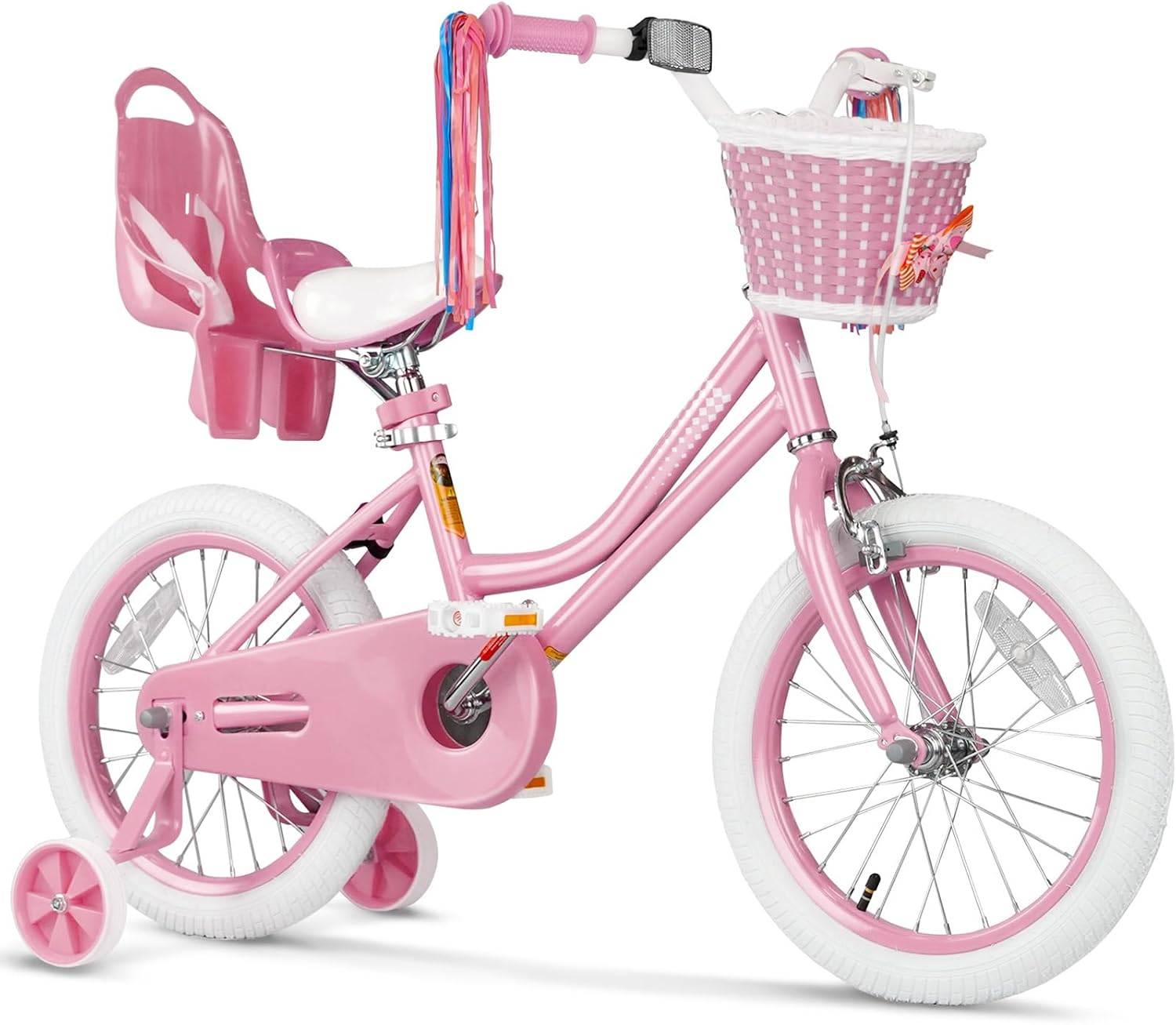 XJD Pink Girls' Bike – Kids 12/14/16 Inch Training Wheel Bicycle
A training-wheel bicycle offered in 12, 14 and 16 Inch sizes. It is relevant only when comparing a child’s own first bike after measuring height and checking individual fit; it is not a baby passenger seat.
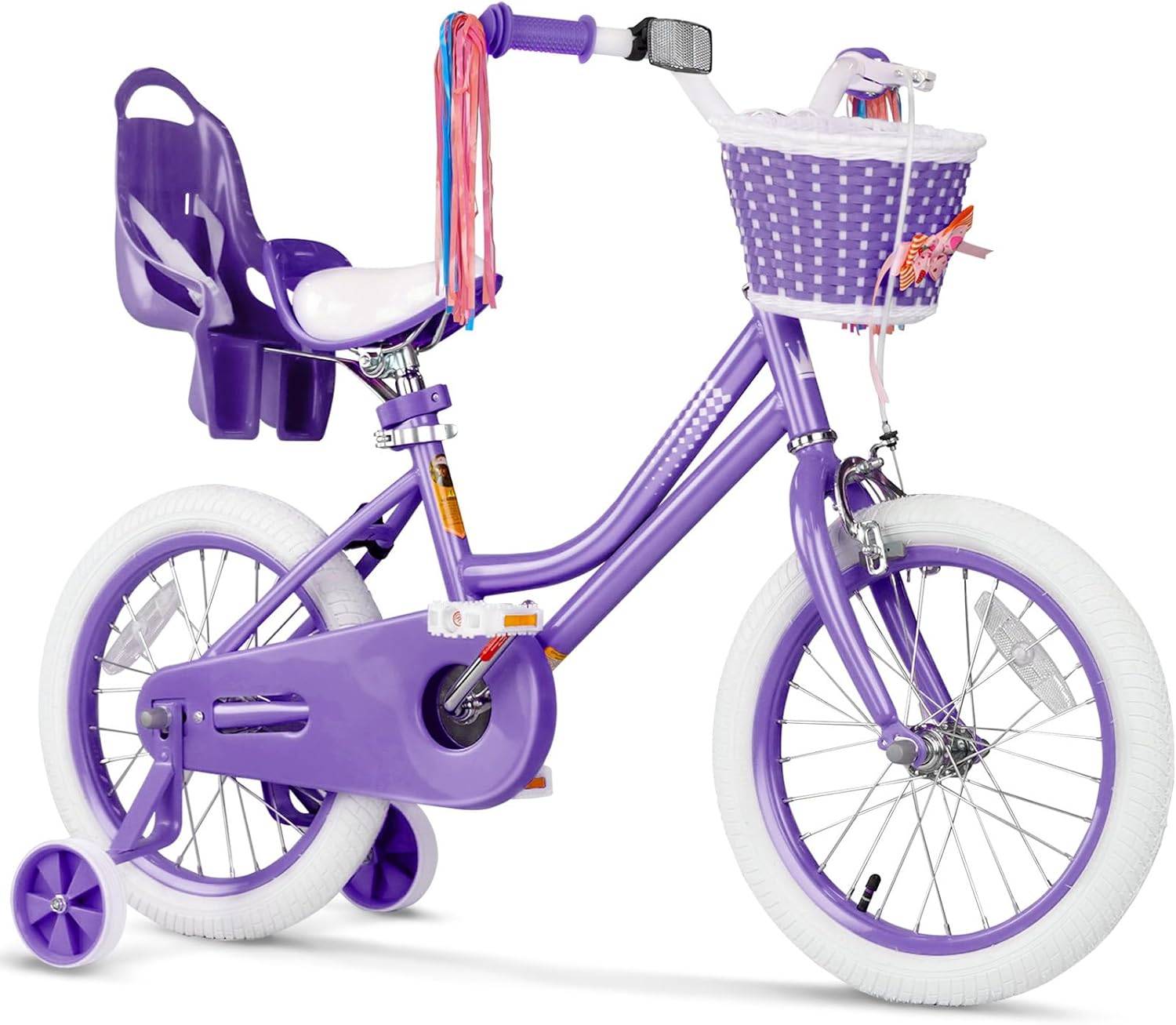 XJD Girls Bike for Kids Ages 3-8, 12/14/16 Inch with Training Wheels – Purple
This training-wheel bicycle has 12, 14 and 16 Inch options. Its “Ages 3-8” wording is a catalog label, not fit evidence; use the supplied XBikes height ranges and an individual fit check.
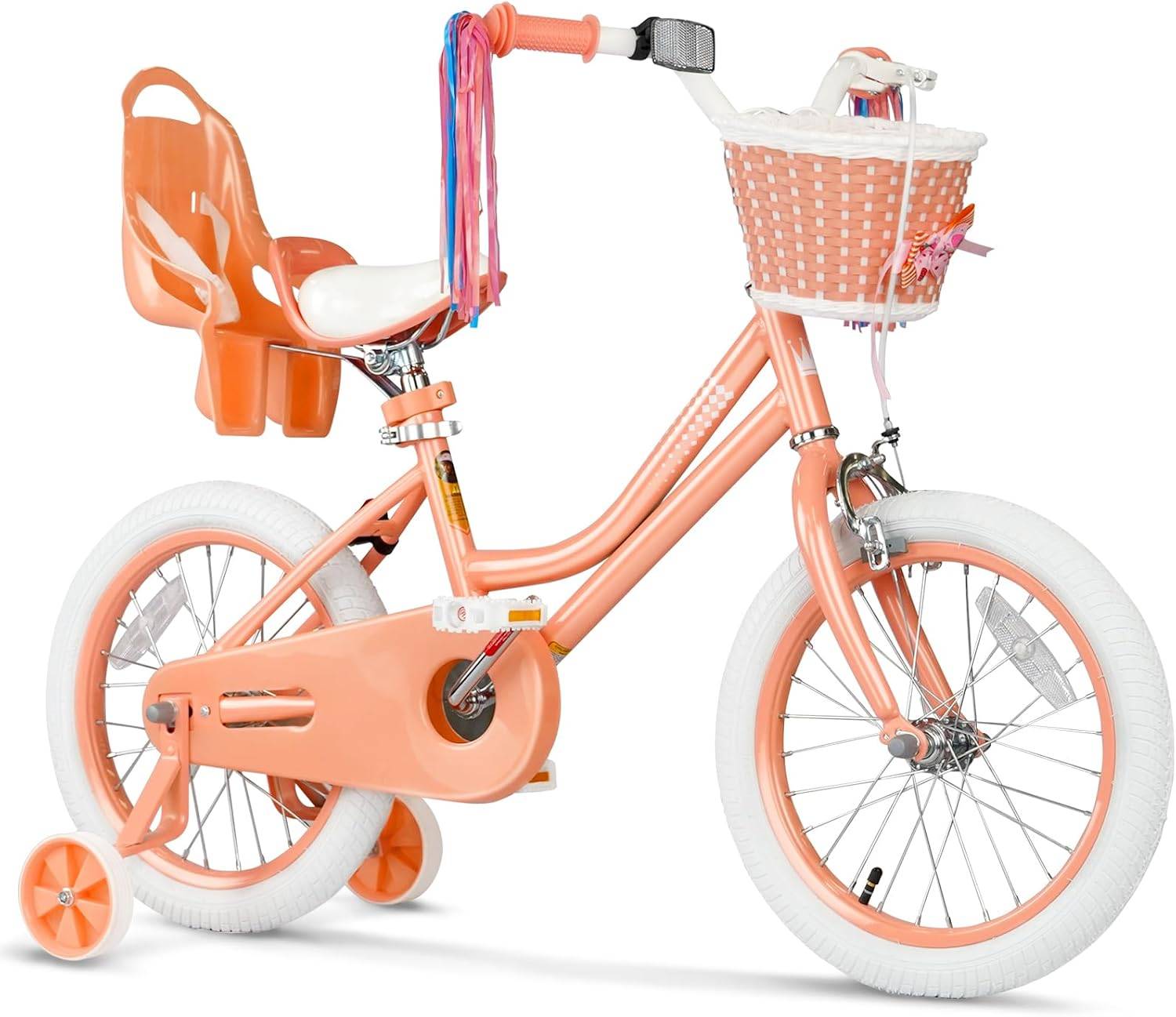 Girls 12/14/16 Inch Kids Bike by XJD with Training Wheels – Peach
Offered as a training-wheel bicycle in 12, 14 and 16 Inch choices, this is a later first-bike comparison option rather than a passenger seat for a baby. Select only after measurement and hands-on fit checks.
XJD Pink Girls' Bike – Kids 12/14/16 Inch Training Wheel Bicycle offers the three listed wheel-size choices. XJD Girls Bike for Kids Ages 3-8, 12/14/16 Inch with Training Wheels – Purple has the same listed size choices, but “Ages 3-8” is a catalog label rather than fit evidence. Girls 12/14/16 Inch Kids Bike by XJD with Training Wheels – Peach also provides 12, 14 and 16 Inch options.
Because the supplied facts establish only category, title and available size labels, compare these models by verified wheel size and individual fit. Consult each exact product manual or a qualified bicycle mechanic for assembly, maintenance, brake details, compatibility and load limits.
Make the decision in order
- Clarify whether you need a passenger carrier or a bicycle the child will ride.
- For a passenger carrier, verify unsupported sitting, steady helmeted head control, manual limits, bicycle compatibility and local rules.
- For a first bicycle, measure height and inseam, use the XBikes ranges only to shortlist sizes, and have the child try the bike.
- Reject any option that causes poor stand-over, excessive reach, weak brake control or reduced confidence; do not size up solely for growth.
The next step is therefore readiness verification, not guessing an age: check the passenger-seat manual for a baby, or measure and conduct a hands-on fit check before choosing a 12, 14 or 16 Inch child’s bicycle.
Bikes for your next adventure
-

Kids Bike Helmet by XJD for Boys & Girls – Black, Blue, Green, Pink, Purple
The XJD Kids Bike Helmet covers a wide 2-to-8-year age range thanks to two head-…$59.99
-

Kids Bike Helmet by XJD for Girls – Pink
The XJD Kids Bike Helmet in Pink is a lightweight multi-sport helmet for girls r…$59.99
$99 -

XJD Kids Bike for Girls – Pink, 12/14/16/20 Inch with Training Wheels
The XJD Kids Bike for Girls in Pink is a training-wheel bike built to carry your…$139
$159