

When can a child pedal a bike
A child can pedal a bike when they can reach the pedals comfortably, push them through a full turn, steer, stop on command and remain confident on a correctly fitted bicycle.
Check readiness before using age
Age is only a starting point. Some children understand the pedaling motion before they have enough balance or control to ride independently; others can balance well but still need practice starting the pedals. Look for the whole sequence: sitting securely, placing both feet on the pedals, pressing one pedal forward, continuing to turn the cranks, steering where intended and stopping when asked.
A child is ready to practise if they follow simple directions and stay composed when the bike moves. If they freeze, look down continuously, cannot steer while pedaling or cannot stop reliably, pause and work on one skill at a time. Training wheels can support the bike, but they do not replace fit, steering or stopping control.
Measure the child and check the bicycle
Measure standing height without shoes and compare it with the wheel-size starting points below. Then have the child try the actual bicycle. Height is more useful than age, but neither proves fit on its own because frame shapes, saddle positions and controls can differ.
| Wheel size | Age starting point | Rider-height starting point |
|---|---|---|
| 12 Inch | 3–4 | 34–40 in / 86–102 cm |
| 14 Inch | 3–6 | 37–45 in / 94–114 cm |
| 16 Inch | 4–7 | 40–48 in / 102–122 cm |
| 18 Inch | 5–9 | 43–52 in / 109–132 cm |
| 20 Inch | 7–12 | 48–60 in / 122–152 cm |
| 24 Inch | 10–14 | 54–64 in / 137–163 cm |
| 26 Inch | Youth and adults | Over 60 in / 153 cm |
During the try-on, check that the child can stand over the bicycle, reach the handlebars without stretching, turn the bars without losing posture and operate the brakes comfortably. Also consider inseam and current confidence. Do not choose an oversized bicycle merely to allow room for growth.
Test pedaling in a simple sequence
- Use a flat, open area away from traffic and obstacles. Fit a bicycle helmet so it sits level, fits properly and has its straps adjusted according to the helmet manufacturer’s instructions.
- Let the child sit on the correctly fitted bike and practise finding the pedals without rushing.
- Ask them to place one pedal in a useful starting position, press it forward and bring the other foot onto its pedal.
- Walk close beside them while they make several continuous pedal turns and steer toward a clear target.
- Ask for a controlled stop. Repeat until starting, looking ahead and stopping become predictable rather than accidental.
If pedaling stalls at the top or bottom of each turn, demonstrate the circular motion and offer brief attempts. If the child becomes upset or tired, stop; readiness can improve through short, calm practice rather than pressure.
How the supplied bikes relate
The supplied options help because both are Kids’ BMX Bikes offered in 12 Inch, 14 Inch and 16 Inch labels, covering several XBikes starting ranges for young riders. The XJD Girls BMX Bike 12/14/16 Inch with Training Wheels – Pink Blue and XJD Boys & Girls BMX Bike with Training Wheels, 12/14/16" – Blue can therefore be compared by the wheel-size label that matches the child’s measured height most closely, followed by an individual fit check.
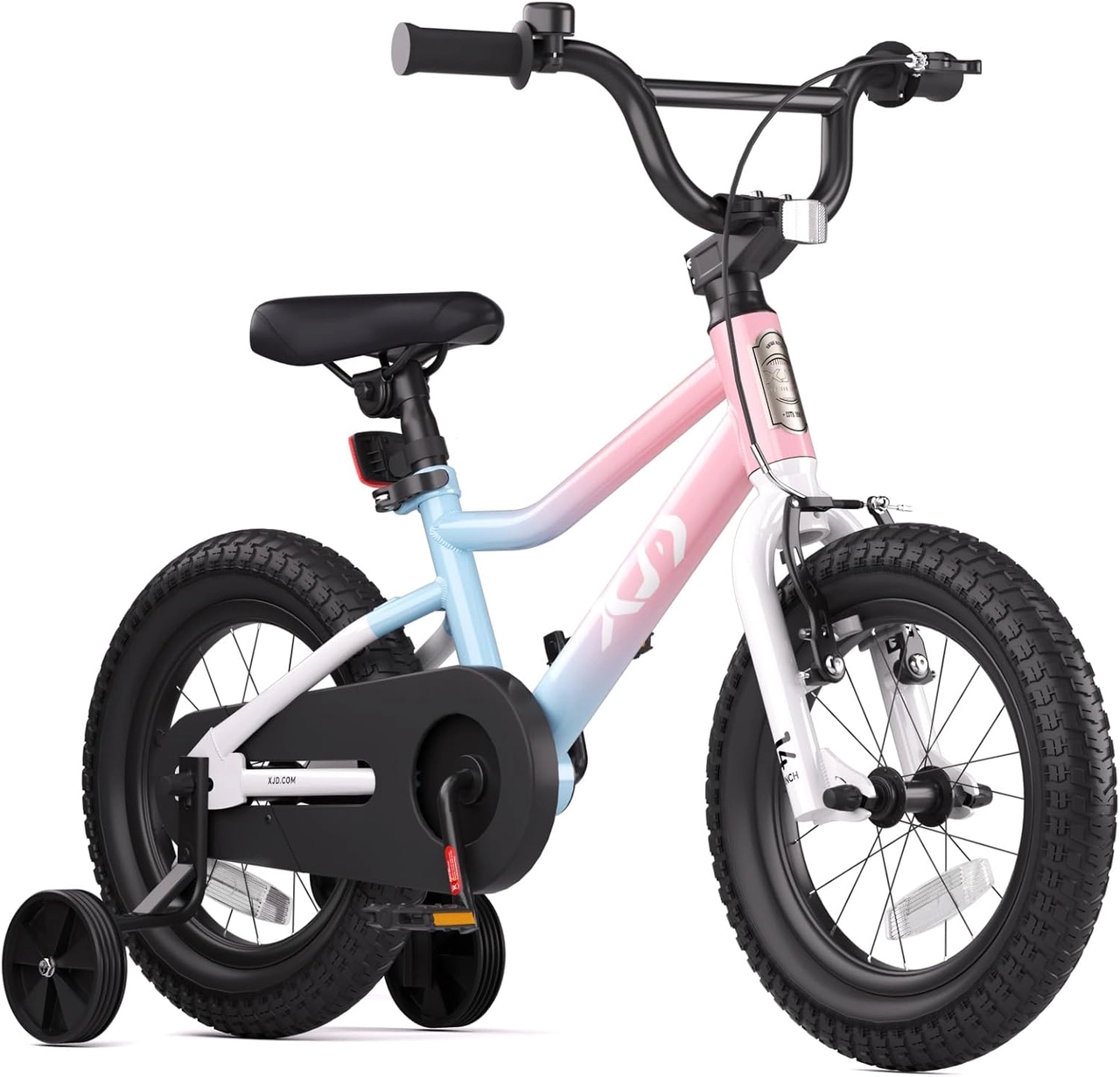 XJD Girls BMX Bike 12/14/16 Inch with Training Wheels – Pink Blue
A Kids’ BMX Bike offered in 12 Inch, 14 Inch and 16 Inch labels with training wheels. Compare the selected label with the child’s measured height, then confirm stand-over, reach, brake control and confidence on the actual bicycle.
 XJD Boys & Girls BMX Bike with Training Wheels, 12/14/16" – Blue
This Kids’ BMX Bike has 12 Inch, 14 Inch and 16 Inch labels and training wheels. It is relevant when one of those wheel-size starting points matches the rider’s height, subject to a complete individual fit and control check.
These products are relevant only when a 12, 14 or 16 Inch starting point fits the rider’s measurements and the actual bike allows comfortable stand-over, reach and brake operation. They are not substitutes when the child needs an 18, 20, 24 or 26 Inch starting point. Color wording and other wording in a product title do not establish fit.
Both supplied titles specify training wheels. That may help a child concentrate on the pedal motion, but it does not show that either bicycle fits a particular rider or that the child is ready to control it. For assembly, adjustments, maintenance, load limits and torque, follow the exact product manual or ask a qualified bicycle mechanic.
Decide what to do next
Proceed with pedal practice when the measured height points to an appropriate size, the child passes the actual fit checks, and they can steer and stop while staying calm. Adjust or compare another correctly sized bike when reach, stand-over or brake control is awkward. Wait and practise component skills when continuous pedaling, looking ahead or stopping is not yet dependable.
The practical answer is not a birthday: measure the child, compare the wheel-size starting point, test the exact bicycle, then begin only when pedaling, steering and stopping work together under control.
Bikes for your next adventure
-
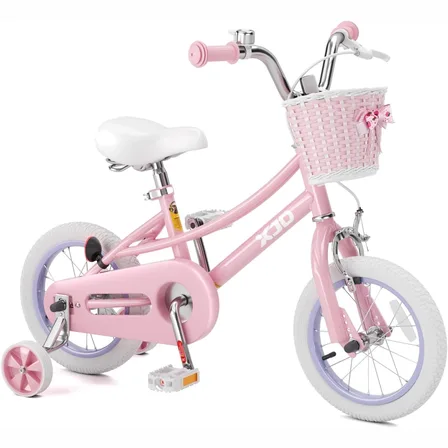
Pink 12/14/16/20" XJD Girls Bike with Training Wheels & Basket
The Pink XJD Girls Bike with Training Wheels & Basket is a first-bike pick f…$65.99
$75.99 -

Blue XJD Girls Bike with Training Wheels – 12/14/16 Inch
If you're shopping for a first pedal bike for a daughter roughly 3 to 8 years ol…$149
$169 -
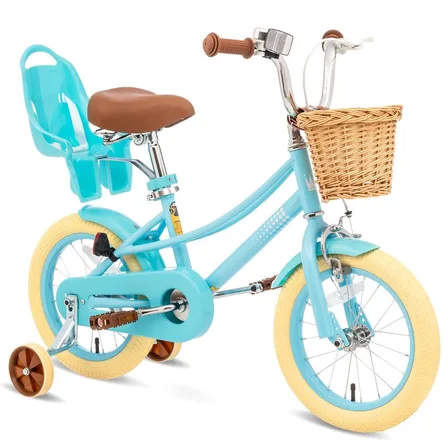
Girls' Training Wheel Bike by XJD, 12–20 Inch Wheels – Blue
This XJD girls' training wheel bike in Blue covers one of the widest fit ranges …$139
$159