

When can a child ride a bike
A child can ride a bike when they can balance, steer, stop on command and control a correctly fitted bicycle. Measure height and inseam, then check the child’s reach, brake control and confidence in person; age alone is not enough.
What readiness looks like
Before choosing a wheel size, watch what the child can do. They should understand simple directions, look ahead while moving and keep control without an adult holding the bicycle. They also need enough confidence to start, steer and stop without freezing or panicking.
A hesitant child may benefit from more practice in a flat, traffic-free area. Readiness is not a deadline: two children of the same age can need different sizes or learn at different times.
Measure before comparing bikes
Measure the child’s standing height without shoes. For inseam, have the child stand against a wall with feet slightly apart, then measure from the floor to the crotch. Use these measurements to identify a starting wheel size, but have the child try the actual bicycle before buying.
| Wheel size | Starting age | Rider height |
|---|---|---|
| 12 Inch | 3–4 | 34–40 in / 86–102 cm |
| 14 Inch | 3–6 | 37–45 in / 94–114 cm |
| 16 Inch | 4–7 | 40–48 in / 102–122 cm |
| 18 Inch | 5–9 | 43–52 in / 109–132 cm |
| 20 Inch | 7–12 | 48–60 in / 122–152 cm |
| 24 Inch | 10–14 | 54–64 in / 137–163 cm |
| 26 Inch | Youth and adults | Over 60 in / 153 cm |
These ranges overlap because proportions and ability differ. Prioritize measured height, inseam, reach, brake control and current confidence over the age column.
Check the fit on the actual bicycle
Have the child try the bicycle rather than relying on its wheel label. With the child straddling the frame, confirm there is usable clearance and that mounting and dismounting feel controlled. Seated, the child should reach the handlebar without being stretched or cramped and should turn it comfortably in both directions.
Ask the child to operate the brakes repeatedly. Their hands must reach and control the brake mechanism without losing their grip or shifting into an unstable position. Then observe a slow start, a straight ride, a turn and a deliberate stop in a suitable practice space.
Do not buy an oversized bicycle merely to allow room for growth. If the child cannot stand over it appropriately, steer confidently or use its brakes reliably now, it is not the right current fit.
When the supplied cruiser options are relevant
The two catalog bicycles are useful only when the rider’s measurements point toward a 24- or 26-inch starting size. The XJD 24-Inch Green Beach Cruiser Bike with U-Brake is offered in Green / 24 Inch, Pink / 24 Inch and Pink / 26 Inch labels. The Pink XJD Beach Cruiser Bike, 24"/26", U-Brake is offered in 24 Inch and 26 Inch labels. Both therefore let families compare the two larger wheel-size starting points, but neither replaces an individual fit and control check.
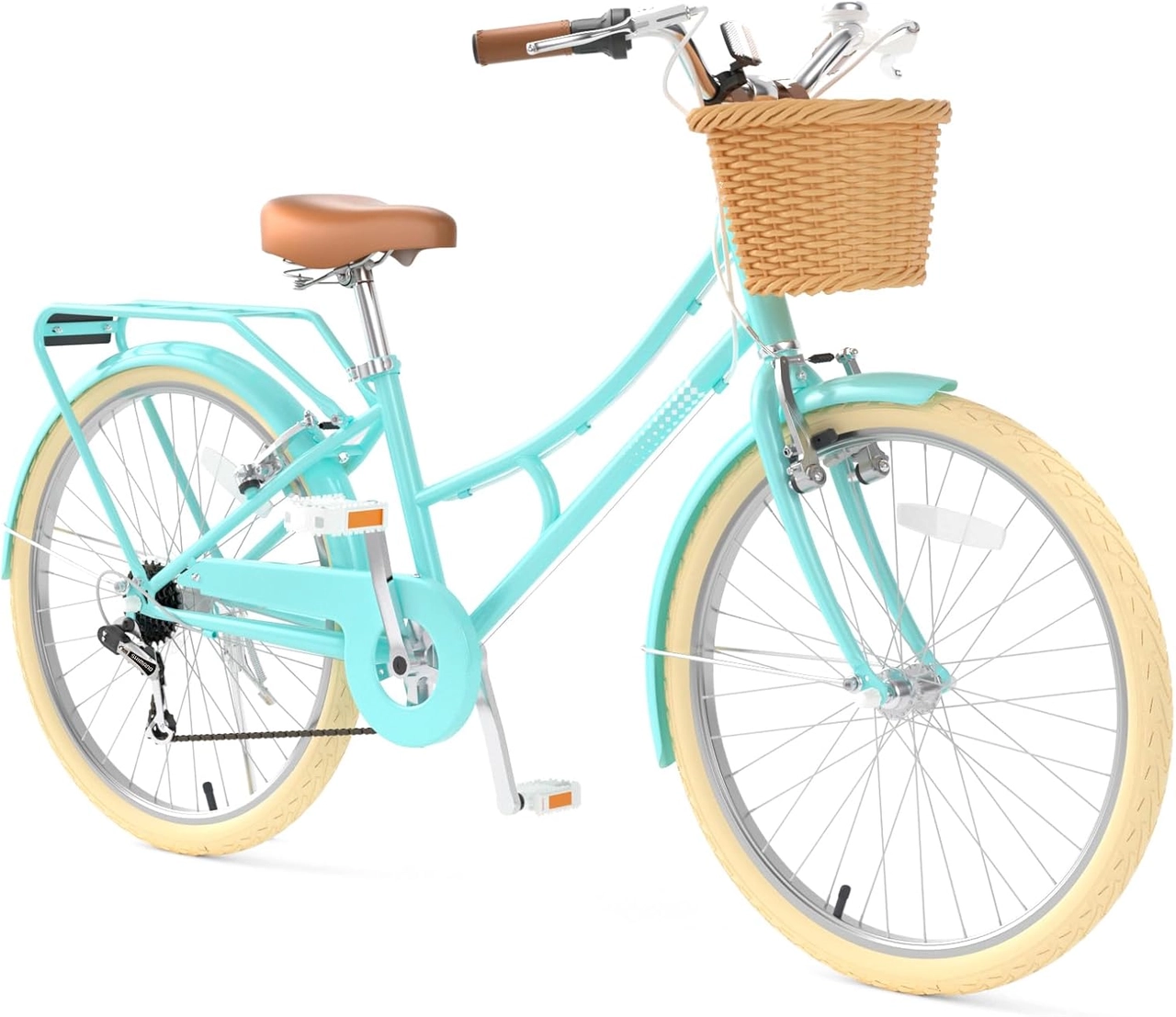 XJD 24-Inch Green Beach Cruiser Bike with U-Brake
A 24- or 26-inch comparison option with Green and Pink SKU labels. Consider it only when the rider’s measured height supports those wheel-size starting points and an individual fit check confirms control.
 Pink XJD Beach Cruiser Bike, 24"/26", U-Brake
Provides 24 Inch and 26 Inch SKU labels for comparing larger youth starting sizes. Its U-Brake still requires the child to demonstrate comfortable reach and reliable brake control on the actual bicycle.
For a rider below the 24-inch starting range, these products are comparison points for later growth, not suitable substitutes for a smaller wheel size. For a rider measuring 54–64 inches / 137–163 cm, begin by trying a 24-inch option. For youth over 60 inches / 153 cm, a 26-inch option may be considered. Where the ranges meet, test both rather than assuming the larger wheel is preferable.
Helmet and first-ride check
A properly fitting bicycle helmet is required for every ride. It should sit level and its straps should be adjusted according to the helmet manufacturer’s instructions. Replace guesswork with a quick pre-ride routine:
- Confirm the bicycle still fits the child’s current height, inseam and reach.
- Have the child demonstrate steering and a controlled stop before entering a shared path or road environment.
- Check that clothing and shoelaces cannot interfere with moving parts.
- Follow the exact bicycle manual for assembly and maintenance; use a qualified bicycle mechanic when the instructions or condition are uncertain.
Make the decision
A child is ready when ability and fit agree: they can balance, steer and stop, while the actual bicycle provides manageable stand-over clearance, reach and brake operation. Measure first, select the height-based wheel-size starting point, and conduct an in-person fit check. If any control test fails, choose a more appropriate size or postpone riding and practise before trying again.
Bikes for your next adventure
-

Black XJD Kids Bike for Boys – 12, 14 & 16 Inch Sizes
For a son between roughly 3 and 8 years old, the XJD Kids Bike in Black covers t…$169
$199 -
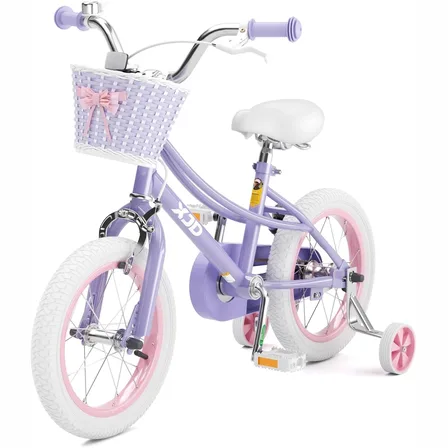
Girls' Training Wheel Bike by XJD with Basket – Purple
If you're shopping for a first bike for a girl roughly 3 to 12 years old (91–152…$75.99
-

Blue XJD Girls Bike with Training Wheels – 12/14/16 Inch
If you're shopping for a first pedal bike for a daughter roughly 3 to 8 years ol…$149
$169