

When can a child start riding a bike
A child can start riding a bike when they can reach the ground, steer, brake and follow simple directions with confidence. Age is only a starting point.
What matters more than a birthday
Many children reach these abilities around the age bands in the XBikes sizing table, but readiness varies. Before choosing a bicycle, watch whether the child can walk and balance steadily, look ahead while moving, respond to instructions and keep trying without becoming overwhelmed.
Physical readiness and emotional readiness must appear together. A bike may match the child’s age yet still be too large, too difficult to control or intimidating. Never choose an oversized bicycle simply to leave room for growth.
Measure the child before comparing bikes
Measure the child’s standing height without shoes. Then measure the inseam from the floor to the crotch while the child stands straight with feet slightly apart. Height helps identify a likely wheel size; inseam helps assess clearance and whether the child can put their feet down securely.
Use these XBikes ranges only as starting points:
| Wheel size | Starting age | Rider height |
|---|---|---|
| 12 Inch | 3–4 | 34–40 in / 86–102 cm |
| 14 Inch | 3–6 | 37–45 in / 94–114 cm |
| 16 Inch | 4–7 | 40–48 in / 102–122 cm |
| 18 Inch | 5–9 | 43–52 in / 109–132 cm |
| 20 Inch | 7–12 | 48–60 in / 122–152 cm |
| 24 Inch | 10–14 | 54–64 in / 137–163 cm |
| 26 Inch | Youth and adults | Over 60 in / 153 cm |
Where ranges overlap, do not decide from age alone. Compare the child’s measured height and inseam with both candidate sizes, then let an individual fit check settle the choice.
Use a hands-on fit check
Have the child try the exact bicycle rather than relying only on its wheel label. Check these points before deciding:
- Stand-over: The child should be able to straddle the bicycle with usable clearance instead of being pressed against the frame.
- Ground contact: They should be able to put their feet down securely when stopping.
- Reach: They should hold the handlebars without stretching, locking their elbows or leaning awkwardly.
- Control: They should start, steer and stop without the bicycle feeling unwieldy.
- Brakes: If the bicycle has hand controls, the child must comfortably reach and operate them with enough control to stop.
- Confidence: The child should remain attentive and willing, not frightened by the bicycle’s size or movement.
If any of these checks fail, try another size or design. A child who fits the height range is not ready for that particular bicycle until reach, braking and control also work.
How the supplied XBikes options compare
The catalog choices provide useful comparison points because they cover 12, 14, 16, 20, 24 and 26 Inch wheels. That span lets a parent compare likely early-childhood sizes with larger options while still making the final decision from an in-person fit check.
The Light Pink XJD Girls' Bicycle with Basket & Training Wheels is offered in 12, 14, 16 and 20 Inch labels. The Blue XJD Girls Bike with Training Wheels – 12/14/16 Inch is offered in 12, 14 and 16 Inch labels. These ranges include several possible starting points for children whose measured heights align with the table.
The Pink XJD Beach Cruiser Bike, 24"/26", U-Brake is offered in 24 and 26 Inch labels. Under the supplied standard, 24 Inch starts at ages 10–14 and heights of 54–64 inches, while 26 Inch is for youth and adults over 60 inches. It is therefore relevant to a taller or older new rider, not as a substitute for a smaller child’s correctly fitted bicycle.
These listings help narrow the wheel-size comparison, but their titles and available labels do not prove individual fit, readiness or brake reach.
 Pink XJD Beach Cruiser Bike, 24"/26", U-Brake
Available in 24 and 26 Inch labels, this cruiser is relevant for comparing options for taller or older new riders whose measurements align with those XBikes size ranges.
 Light Pink XJD Girls' Bicycle with Basket & Training Wheels
Its 12, 14, 16 and 20 Inch labels span several XBikes starting ranges, making it relevant when comparing a measured child’s likely wheel size before an individual fit check.
 Blue XJD Girls Bike with Training Wheels – 12/14/16 Inch
Offered in 12, 14 and 16 Inch labels, this training-wheel bicycle is relevant to early-size comparisons when the child’s measured height aligns with one of those ranges.
Prepare for the first ride
Choose a flat practice area away from traffic and obstacles. Keep early sessions short enough that attention and confidence remain intact. An adult should supervise and reinforce looking ahead, controlled stopping and awareness of other people.
A bicycle helmet must fit properly, sit level and have its straps adjusted according to the helmet manufacturer’s instructions. Follow the exact bicycle manual for assembly, adjustment and maintenance. If the manual is unavailable or the setup is uncertain, use a qualified bicycle mechanic rather than guessing at a procedure or torque.
Make the start-or-wait decision
Start now only if the child’s measured height points to a suitable wheel size and the exact bicycle passes the stand-over, ground-contact, reach, braking, control and confidence checks. If one of those conditions is missing, wait, practise the underlying skill or compare another size. The right starting time is the moment the child can control a correctly fitted bicycle—not the day they reach a particular birthday.
Bikes for your next adventure
-

XJD Kids Bike for Girls – Pink, 12/14/16/20 Inch with Training Wheels
The XJD Kids Bike for Girls in Pink is a training-wheel bike built to carry your…$139
$159 -
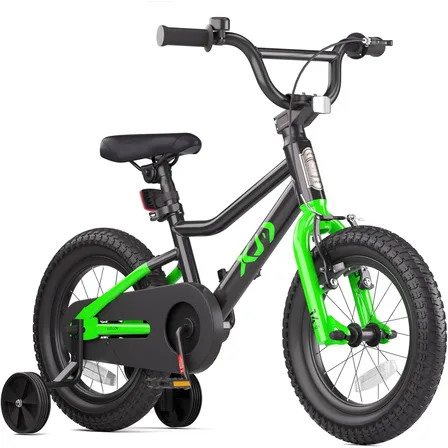
Black XJD Kids' BMX Bicycle with Training Wheels
The XJD Kids' BMX Bicycle with Training Wheels is built for children roughly 3 t…$99.99
$119.99 -
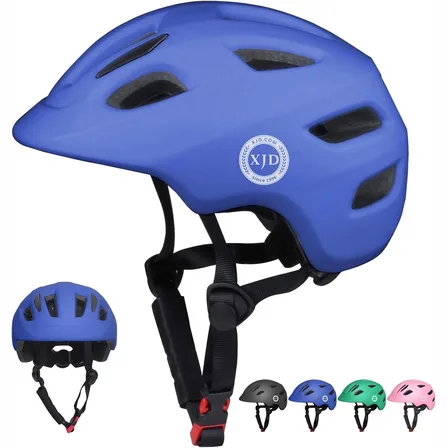
Blue XJD Kids' Bike Helmet, Adjustable Fit – Sizes XS & S
The Blue XJD Kids' Bike Helmet is a lightweight, adjustable helmet for toddlers …$20.39