

When can baby go on back of bike
Do not carry a baby on the back of a bike before 12 months. After that, proceed only if the child sits unsupported, supports a lightweight helmet, and fits an approved rear seat.
The earliest point to consider a rear bike seat
The American Academy of Pediatrics says infants younger than 12 months are too young for a rear bicycle seat and too young to wear a helmet. They should not travel on a bicycle, including in a backpack or front carrier.
Reaching 12 months is a minimum threshold, not automatic clearance. The child must also sit well without support and have enough neck strength to support a correctly fitted lightweight bicycle helmet. If either ability is uncertain, wait and ask the child’s pediatrician.
What to measure and check
Before buying or using a rear seat, compare the child and bicycle with the seat manufacturer’s exact requirements. Do not estimate or substitute limits from another model.
- Child’s age and development: confirm the child is at least 12 months old, sits steadily without support and can hold up their head while wearing the helmet.
- Child’s measurements: measure current weight and any other dimensions required by the seat manual, then compare them with every stated minimum and maximum.
- Helmet fit: test it on the child. It must sit level, fit snugly without sliding and have straps adjusted according to its manufacturer’s instructions.
- Bicycle compatibility: check the exact bicycle frame, mounting area and components against the rear-seat manual. Wheel size alone does not establish compatibility.
- Adult control: allow for changed balance and longer braking. The adult rider must be able to start, steer, stop and support the loaded bicycle confidently.
Inspect the passenger setup
A rear-mounted passenger seat should be securely attached over the rear wheel and include spoke protection, a high back, shoulder restraint and lap restraint capable of supporting a sleeping child. Secure the child exactly as the manual directs on every ride.
Follow the exact seat and bicycle manuals for assembly, load limits, compatibility, maintenance and torque. If any instruction is absent, conflicting or unclear, do not improvise; use a qualified bicycle mechanic. Also check applicable local passenger and helmet rules before riding.
Make the first ride a control check
- Install and inspect the seat without the child, following its manual.
- Fit the child’s helmet while off the bicycle and verify that it remains level and secure.
- Load and unload the child while another adult stabilizes the bicycle, if possible.
- Practise in a traffic-free area and confirm controlled starts, turns and stops.
- Choose quiet paths or streets, avoid poor weather and ride cautiously at reduced speed.
If the bicycle feels unstable, braking is uncertain, the child slumps or the helmet will not stay correctly positioned, stop and postpone the ride. Meeting an age threshold does not outweigh a failed real-world check.
How the supplied bicycles relate
The three catalog bicycles are useful only as future independent-riding comparisons. No supplied fact identifies any of them as compatible with a rear child seat, so they do not answer the passenger-seat requirement and must not be treated as baby carriers.
These particular catalog options show wheel sizes a child might compare later, after outgrowing passenger travel and developing the confidence to ride independently. Their listed sizes still require measurement and an individual fit check.
 Pink XJD Beach Cruiser Bike, 24"/26", U-Brake
A later-riding comparison with 24 Inch and 26 Inch options. Supplied facts do not establish compatibility with a rear child seat, so consult the bicycle and seat manuals.
 Light Pink XJD Girls' Bicycle with Basket & Training Wheels
Offers 12, 14, 16 and 20 Inch options for a child’s future independent-riding fit check. It is not established by the supplied facts as a rear-seat carrier.
 Blue XJD Girls Bike with Training Wheels – 12/14/16 Inch
Offers 12, 14 and 16 Inch options as later independent-riding comparison points. Its supplied catalog facts do not confirm rear child-seat compatibility.
Compare the catalog options for later riding
| Catalog bicycle | Available sizes and XBikes starting points |
|---|---|
| Light Pink XJD Girls' Bicycle with Basket & Training Wheels | 12 Inch: ages 3–4, 34–40 in / 86–102 cm; 14 Inch: ages 3–6, 37–45 in / 94–114 cm; 16 Inch: ages 4–7, 40–48 in / 102–122 cm; 20 Inch: ages 7–12, 48–60 in / 122–152 cm. |
| Blue XJD Girls Bike with Training Wheels – 12/14/16 Inch | 12, 14 and 16 Inch, using the same XBikes starting points above. |
| Pink XJD Beach Cruiser Bike, 24"/26", U-Brake | 24 Inch: ages 10–14, 54–64 in / 137–163 cm; 26 Inch: youth and adults over 60 in / 153 cm. |
These ages are starting points, not proof of fit. Measure the rider’s height and inseam, then check stand-over clearance, reach, brake control and current confidence on the actual bicycle. Have the child try it, and never choose an oversized bicycle merely for growth.
Your decision today
If your baby is under 12 months, cannot sit unsupported or cannot support a properly fitted helmet, do not put them on the back of a bike. If all three checks pass, verify the rear seat’s child limits and bicycle compatibility in its manual, have uncertain installation checked by a qualified mechanic, and complete a traffic-free control test before deciding to ride.
Bikes for your next adventure
-

Flower Pink XJD Girls Bike with Doll Seat & Basket
The XJD Flower Pink girls' bike is made for riders 71–122 cm tall (roughly ages …$69.99
-
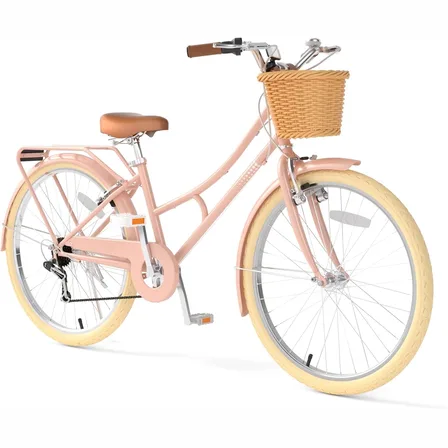
Pink XJD Beach Cruiser Bike, 24"/26", U-Brake
The XJD Pink Beach Cruiser Bike is a single-speed cruiser built for older kids a…$159.99
-
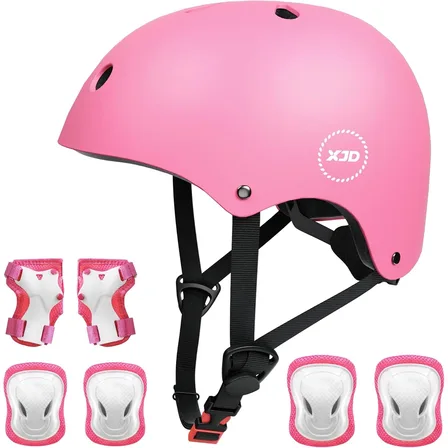
XJD Kids Helmet & Protective Gear Set for Girls, Pink
The XJD Kids Helmet & Protective Gear Set in Pink is a complete safety kit for g…$24.64