

When can baby go on bike
A baby should not ride a pedal bicycle independently. Wait until the child fits an appropriate bike, can control it confidently, and can wear a properly fitted helmet.
Separate passenger readiness from independent riding
“Go on a bike” can mean riding in a child carrier or trailer, or controlling a bicycle. These are different decisions. The XBikes size chart begins with 12-inch bicycles for ages 3–4 and heights of 34–40 inches (86–102 cm), so it does not establish when a baby may travel as a passenger.
For a carrier or trailer, follow the exact product manual and its stated compatibility and load limits. Confirm that the child can maintain the posture required by that equipment and wear a bicycle helmet correctly. If developmental or medical readiness is uncertain, ask the child’s pediatric clinician before riding. Do not improvise mounting hardware or use equipment outside its instructions; have a qualified bicycle mechanic check uncertain installation or compatibility.
Measure before considering a first bicycle
When the child is no longer a baby and appears ready to control a bicycle, measure standing height and inseam without shoes. Age is only an initial reference. Compare the measurements with the bicycle’s geometry in person whenever possible, because wheel size alone does not determine fit.
Have the child try the bicycle and check all of the following:
- Stand-over: the child can straddle the bicycle securely rather than being forced onto tiptoes by an oversized frame.
- Reach: the handlebar is reachable without excessive stretching or loss of steering control.
- Brake control: the child can reach and operate the fitted controls reliably.
- Starting and stopping: the child can mount, start, steer, slow and stop with current confidence.
- Posture: the riding position permits comfortable control rather than merely allowing the child to touch the pedals.
Do not buy an oversized bicycle for the child to “grow into.” A future size is not a workable substitute for a bike the rider can control today.
Use the XBikes sizes as starting points
| Wheel size | Starting age | Rider height |
|---|---|---|
| 12 Inch | 3–4 | 34–40 in / 86–102 cm |
| 14 Inch | 3–6 | 37–45 in / 94–114 cm |
| 16 Inch | 4–7 | 40–48 in / 102–122 cm |
| 18 Inch | 5–9 | 43–52 in / 109–132 cm |
| 20 Inch | 7–12 | 48–60 in / 122–152 cm |
| 24 Inch | 10–14 | 54–64 in / 137–163 cm |
| 26 Inch | Youth and adults | Over 60 in / 153 cm |
These ranges are screening points, not permission to ride. Where ranges overlap, measured height, inseam, stand-over clearance, reach, brake control and confidence should decide which bicycle to try. A child who falls within a height band but cannot manage the controls needs a different fit or more time.
How the supplied bicycle helps with comparison
The Light Pink XJD Girls' Bicycle with Basket & Training Wheels is listed as a training-wheel bicycle with 12 Inch, 14 Inch, 16 Inch and 20 Inch options. Those choices let a family compare several chart starting points after measuring the child. It is not a baby bicycle, and training wheels do not replace the stand-over, reach, brake-control and confidence checks.
These particular catalog options help answer the question by showing the available sizes that can be compared once a child has reached the independent-riding stage and can complete an individual fit check.

The absence of an 18 Inch option means the listed 16 Inch and 20 Inch versions are comparison points around that chart size, not substitutes for an 18 Inch bicycle. Likewise, no title wording or training-wheel category should be treated as proof that a specific child fits. Assembly, adjustments, maintenance and any unspecified compatibility or load questions should follow the exact product manual or be handled by a qualified bicycle mechanic.
Fit the helmet for every ride
Use a bicycle helmet that fits the child properly. It should sit level and be secured with its straps according to the helmet manufacturer’s instructions. Check the fit each time rather than assuming a previously adjusted helmet still fits, and replace or adjust it when the manufacturer’s directions require.
A helmet does not correct a bicycle that is too large or difficult to control. Helmet fit and bicycle fit are separate requirements, and both must be satisfied before the child rides.
Make the decision in this order
- Decide whether the child would be a passenger or an independent rider.
- For passenger equipment, verify the manual’s requirements, compatibility and limits; seek pediatric guidance if readiness is unclear.
- For independent riding, measure height and inseam, then choose a chart size to try rather than ordering by age alone.
- Confirm stand-over, reach, brake operation, starting, steering and stopping on the actual bicycle.
- Fit the helmet level with its straps used exactly as directed.
If the child is still a baby, postpone independent bicycle riding. Move forward only when passenger equipment explicitly permits the child’s use, or later, when the child can individually fit and control an appropriately sized bicycle.
Bikes for your next adventure
-

Flower Pink XJD Girls Bike with Doll Seat & Basket
The XJD Flower Pink girls' bike is made for riders 71–122 cm tall (roughly ages …$69.99
-
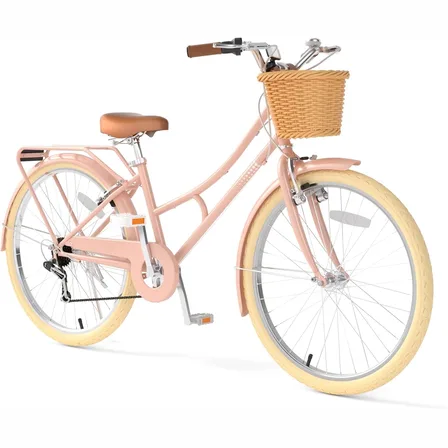
Pink XJD Beach Cruiser Bike, 24"/26", U-Brake
The XJD Pink Beach Cruiser Bike is a single-speed cruiser built for older kids a…$159.99
-
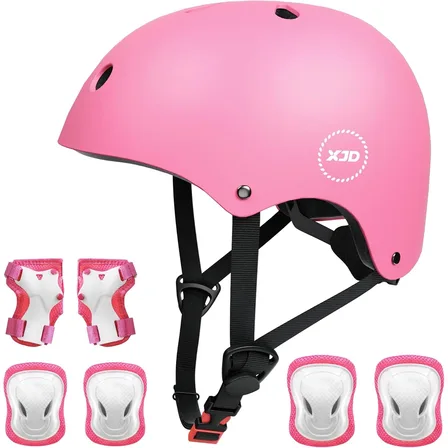
XJD Kids Helmet & Protective Gear Set for Girls, Pink
The XJD Kids Helmet & Protective Gear Set in Pink is a complete safety kit for g…$24.64