

When can baby ride bike
A baby should not ride one of these bicycles. XBikes’ earliest starting point is a 12 Inch bike at ages 3–4 and 34–40 in (86–102 cm), followed by an individual fit check.
What “ride” means here
This answer concerns a child controlling and riding their own bicycle. If “baby” means an infant or toddler travelling as a passenger in a carrier or trailer, the three catalog products below are not passenger equipment. Use only equipment intended for that purpose, and follow its exact manual for age, fit, load, installation and compatibility requirements.
For independent riding, age is only a starting point. A child must also fit the bicycle, reach its controls and have enough confidence to start, steer and stop without being overwhelmed. Do not move a baby onto a bicycle merely because an age label, gift occasion or desire for growing room makes it seem convenient.
Measure before choosing a wheel size
Measure the child’s standing height without shoes, then measure inseam from the floor to the crotch. Record both in inches or centimetres. Compare standing height with the XBikes starting points below, but use inseam during an actual stand-over check; wheel size alone cannot establish clearance.
| Wheel size | Age starting point | Rider-height starting point |
|---|---|---|
| 12 Inch | 3–4 | 34–40 in / 86–102 cm |
| 14 Inch | 3–6 | 37–45 in / 94–114 cm |
| 16 Inch | 4–7 | 40–48 in / 102–122 cm |
The ranges overlap because children of the same age can have different proportions and skills. Start with measured height, identify the plausible sizes, and then have the child try the exact bicycle. Never buy an oversized bike solely so the child can grow into it.
Check the actual bicycle, not just the chart
During a supervised fit check, confirm four things:
- Stand-over: the child can straddle the bicycle with usable clearance rather than being pressed against it.
- Reach: the child can hold the handlebar comfortably without stretching, locking the arms or losing a stable posture.
- Brake control: the child can reach and operate the bicycle’s braking controls. Check the exact model rather than assuming a control type.
- Confidence: the child can remain composed while starting, steering and stopping. A numerical match does not override hesitation or loss of control.
If two sizes match the height chart, compare both in person and choose from the complete fit and control check. If neither allows suitable stand-over, reach and braking, neither is the right choice now. For assembly, adjustment, compatibility or torque procedures, follow the exact product manual or use a qualified bicycle mechanic.
How the supplied XBikes options relate
The supplied bicycles help only when the rider is ready for an independent kids’ bike and falls within a plausible 12, 14 or 16 Inch starting range. All three offer those same wheel-size labels, so their catalog categories and exact model identity—not different supplied fit ranges—are the relevant comparison points.
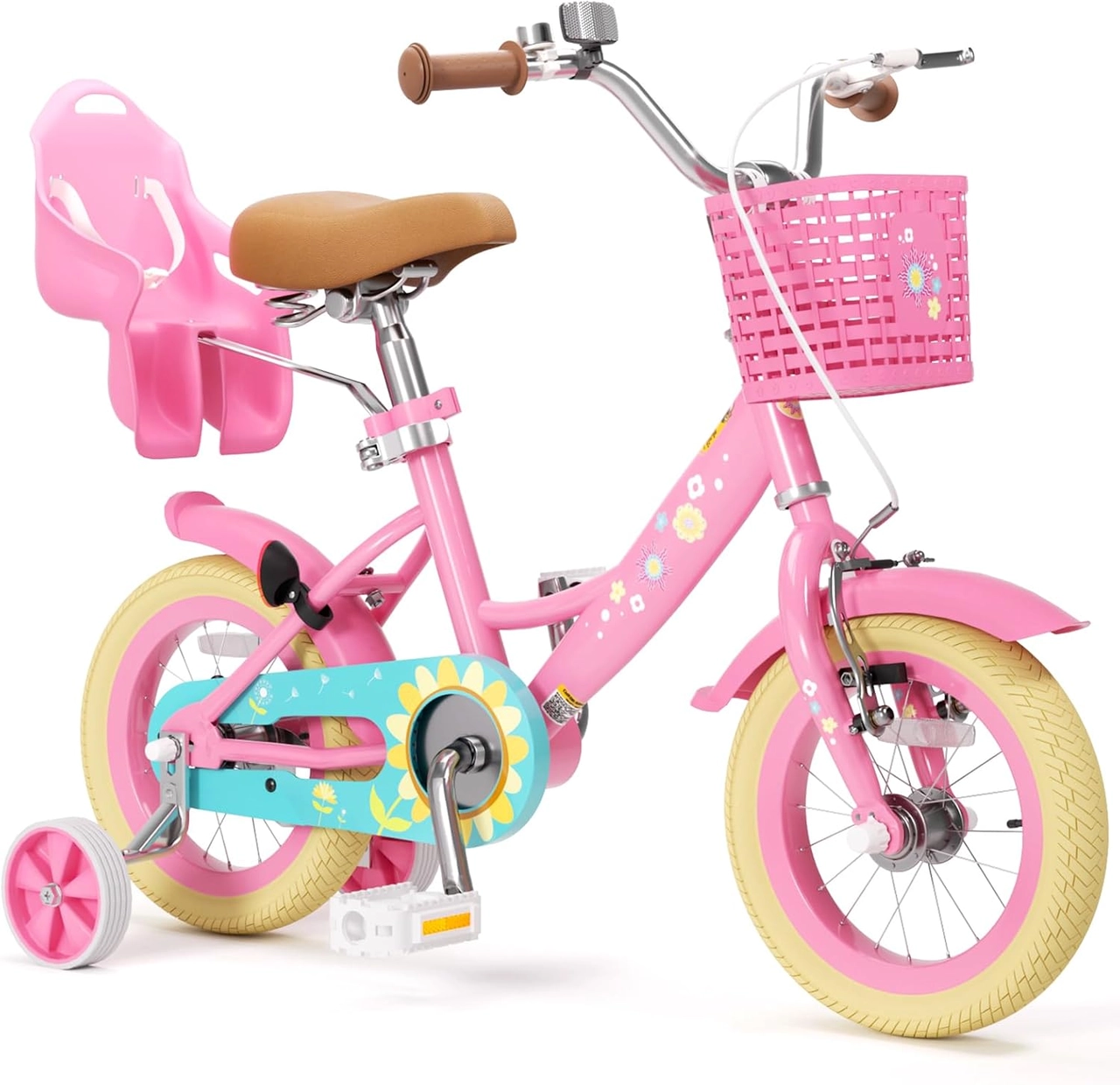 Flower Pink XJD Girls Bike with Doll Seat & Basket
A Training Wheel Bike offered in 12 Inch, 14 Inch and 16 Inch labels. It is relevant only for a ready independent rider whose measured height and individual fit support the selected size.
 Purple XJD Girls' Bike with Doll Seat & Basket
This Training Wheel Bike has 12 Inch, 14 Inch and 16 Inch labels. Use it as a size comparison for a child ready to ride independently, not as an infant passenger product.
 Black XJD Kids' BMX Bicycle with Training Wheels
Cataloged as a Kids' BMX Bike with training wheels, this model offers 12 Inch, 14 Inch and 16 Inch labels. Its relevance depends on measured height, stand-over, reach, brake control and confidence.
The Flower Pink XJD Girls Bike with Doll Seat & Basket and Purple XJD Girls' Bike with Doll Seat & Basket are both cataloged as Training Wheel Bikes, with 12 Inch, 14 Inch and 16 Inch labels. The Black XJD Kids' BMX Bicycle with Training Wheels is cataloged under Kids' BMX Bikes and has the same three size labels.
These facts do not establish a particular child’s fit, brake reach, readiness or required setup. Training wheels in a title or category do not turn an infant-sized rider into a suitable rider, and the products should not be treated as baby bicycles. Compare the exact selected size on the child and consult its manual for any specifications not stated here.
Helmet and first-ride decision
Before every ride, use a bicycle helmet that fits properly. It should sit level, with its straps adjusted according to the helmet manufacturer’s instructions. A helmet cannot correct a bicycle that is too large or controls the child cannot operate.
Choose a calm, traffic-free practice area with direct adult supervision. Postpone the ride if the child cannot straddle the bike appropriately, reach the handlebar and brakes, or start and stop with present confidence.
What to do next
- Decide whether the child is an infant passenger or a prospective independent rider; these products apply only to the latter.
- Measure standing height and inseam.
- If the child is below the earliest 12 Inch starting point—age 3–4 and 34–40 in (86–102 cm)—do not select one of these bikes yet.
- If a chart range is plausible, try that exact size and verify stand-over, reach, brake control and confidence.
- Proceed only when the measured child fits and controls the exact bicycle now; otherwise wait and reassess rather than sizing up for growth.
Bikes for your next adventure
-

Kids Bike Helmet by XJD for Boys & Girls – Black, Blue, Green, Pink, Purple
The XJD Kids Bike Helmet covers a wide 2-to-8-year age range thanks to two head-…$59.99
-

Kids Bike Helmet by XJD for Girls – Pink
The XJD Kids Bike Helmet in Pink is a lightweight multi-sport helmet for girls r…$59.99
$99 -

XJD Kids Bike for Girls – Pink, 12/14/16/20 Inch with Training Wheels
The XJD Kids Bike for Girls in Pink is a training-wheel bike built to carry your…$139
$159