

When can baby ride in bike trailer
A baby should ride in a bike trailer only after they can sit unsupported, hold their head steady while wearing a helmet, and meet the trailer maker’s minimum age, size and developmental requirements. If any condition is unmet, wait.
Use readiness, not a birthday alone
A trailer ride exposes a child to vibration, turns and stops. The child therefore needs enough neck and trunk control to remain upright without being propped into position. Test this off the bike: can the child sit steadily for the duration of a likely ride, turn their head, and recover from a small lean while wearing the intended helmet?
Age can be a screening clue, but it cannot establish readiness. Guidance and products differ, so check the exact trailer manual for its minimum age, approved seating arrangement, passenger dimensions and load limit. If the manual is missing or unclear, contact the manufacturer or ask a qualified bicycle mechanic. Do not improvise with cushions, inserts or an infant seat unless the trailer maker explicitly approves that configuration for cycling.
Measure and compare before the first ride
Record the child’s current weight and seated size as required by the manual rather than relying on an old medical or clothing measurement. Then compare those measurements with every applicable limit in the exact trailer documentation.
- Body control: The child sits unsupported and keeps their head stable with the helmet on.
- Helmet fit: The helmet is the correct size, sits level, and its straps are adjusted according to the helmet manufacturer’s instructions.
- Harness fit: The trailer’s supplied restraint can be positioned exactly as its manual directs, without adding unapproved padding.
- Clearance: The helmet and body have the clearances required by the trailer maker.
- Limits: The child and all carried items remain within the stated passenger and load limits.
A child who slumps, cannot tolerate the helmet, or falls outside even one stated limit is not ready for that trailer, regardless of age.
Check the towing setup separately
Child readiness does not make an incompatible bicycle-and-trailer combination acceptable. Confirm that the trailer hitch is approved for the towing bicycle and that every safety retention device is installed as directed. Follow the bicycle and trailer manuals for assembly, tire pressure, maintenance, compatibility and load placement; use a qualified bicycle mechanic when compatibility or installation is uncertain.
Before carrying the child, inspect the tires, wheels, hitch, frame, harness and enclosure for damage or looseness. Take an unloaded test ride, then a short controlled ride with the permitted load arrangement. A trailer changes the bicycle’s width, stopping distance, turning path and balance, so the adult rider should be comfortable with those changes first.
Make the first outing deliberately easy
Choose a short route away from traffic, steep slopes, rough surfaces and tight gaps. Secure the child as the trailer manual specifies, close the protective enclosure, and check that clothing, straps and small objects cannot reach moving parts. Ride smoothly and stop promptly if the child slumps, becomes distressed, overheats, gets cold or repeatedly loses head position.
Recheck helmet and harness position during the outing. A helmet that looked correct indoors may shift once the child moves. The U.S. Consumer Product Safety Commission advises that a bicycle helmet should fit properly, sit level and use its straps according to the manufacturer’s instructions.
Where the supplied kids’ bikes fit
The supplied catalog items are not bike trailers and cannot establish whether a baby is ready to ride in one. They become relevant later, when a child is developmentally ready to control a bicycle. The Girls 12/14/16 Inch Kids Bike by XJD with Training Wheels – Peach is offered in 12, 14 and 16 Inch labels. The XJD Light Purple Girls Bike with Basket, Training Wheels, 12/14/16/20 Inch is also supplied here with available 12, 14 and 16 Inch SKU labels.
These particular options help answer the title by separating two decisions: trailer-passenger readiness now and independent bicycle fit later. They are comparison points for a future transition, not substitutes for a trailer or evidence that a baby can ride.
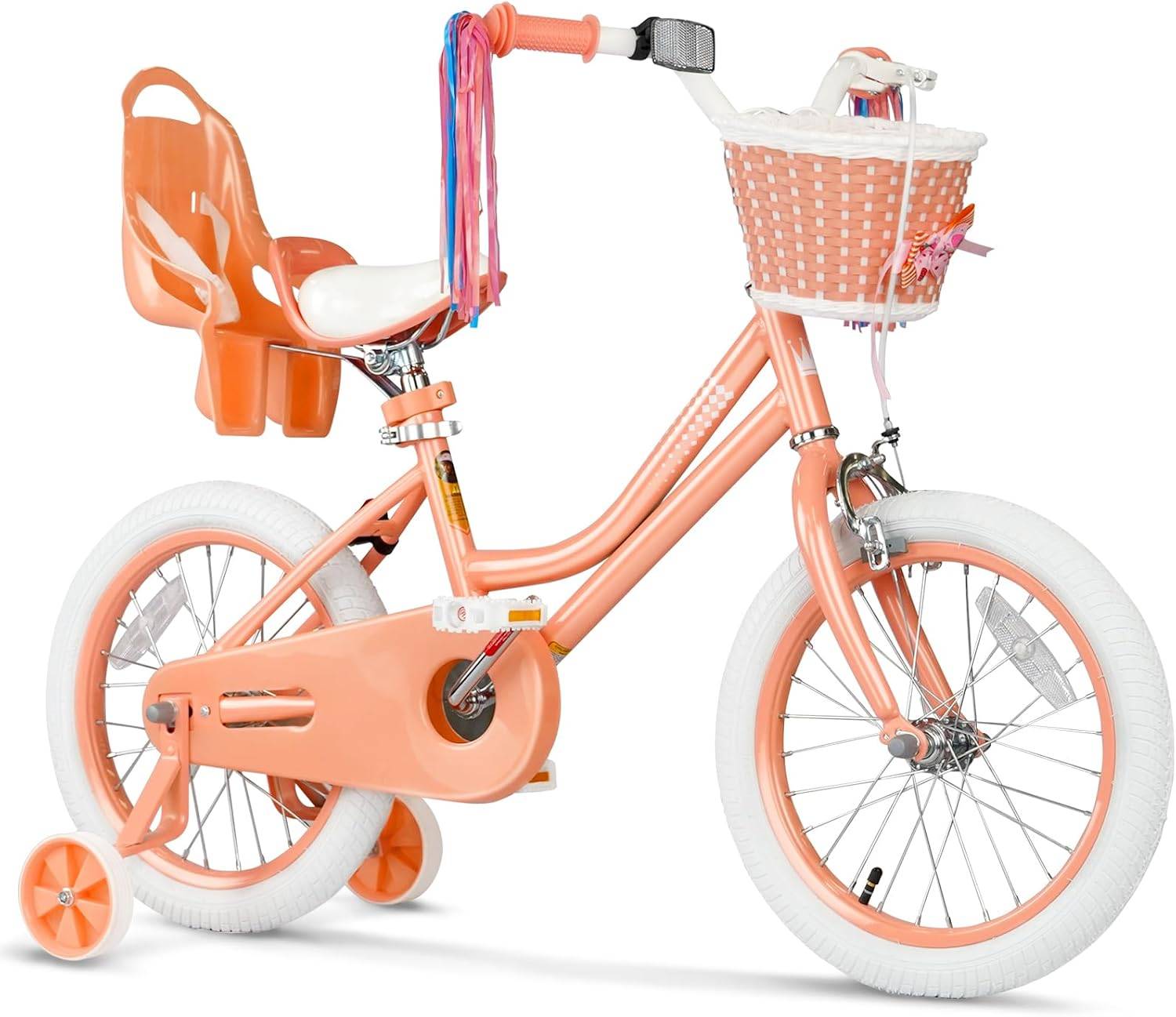 Girls 12/14/16 Inch Kids Bike by XJD with Training Wheels – Peach
A later-stage training-wheel bicycle offered in 12, 14 and 16 Inch labels. It is relevant only for comparing a future independent-bike fit, not for determining whether a baby is ready for a trailer.
 XJD Light Purple Girls Bike with Basket, Training Wheels, 12/14/16/20 Inch
This training-wheel bicycle has supplied 12, 14 and 16 Inch SKU labels. It may support a later bicycle-fit comparison but is neither a trailer nor evidence of a baby’s passenger readiness.
For that later bicycle decision, XBikes uses these starting points: 12 Inch for heights 34–40 in (86–102 cm), 14 Inch for 37–45 in (94–114 cm), and 16 Inch for 40–48 in (102–122 cm). Measure the rider and prioritize height, inseam, reach, brake control and confidence over age. Have the child try the bicycle, check stand-over and brake reach, and never choose an oversized bike merely for growth.
Your go-or-wait decision
Proceed only when the child sits unsupported, maintains steady helmeted head control, fits the restraint correctly, and meets every requirement in the exact trailer manual—and when the towing setup is confirmed compatible. Otherwise, wait and reassess as development or measurements change. The supplied kids’ bikes do not change that trailer-readiness decision.
Bikes for your next adventure
-

Kids Bike Helmet by XJD for Girls – Pink
The XJD Kids Bike Helmet in Pink is a lightweight multi-sport helmet for girls r…$59.99
$99 -

Blue XJD Kids Bike Helmet for Boys & Girls
The Blue XJD Kids Bike Helmet is a lightweight, adjustable multi-sport helmet fo…$59.99
$99 -
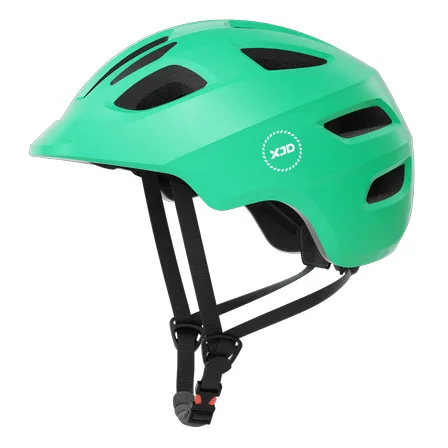
Green XJD Kids Bike Helmet for Boys & Girls
The Green XJD Kids Bike Helmet is a lightweight multi-sport helmet for toddlers …$59.99
$99